
Wadi Rum is a UNESCO World Heritage protected area of 74,200 hectares in Jordan's far south, inscribed in 2011 as a mixed cultural and natural site, holding 25,000 petroglyphs, 20,000 inscriptions and 154 archaeological sites that testify to 12,000 years of human occupation. A visit runs through the Rum Visitor Centre: you pay the entry fee at the gate (no Jordanian authority publishes the amount online, and the Jordan Pass includes Rum entry), and tours are scheduled, in the Tourism Board's words, "with your camp or through the visitor's center", at prices each camp sets itself, because no official camp tariff exists.
The previous version of this guide dressed guesses up as facts. It gave the desert "70 million years of erosion" and towers of "800 meters"; no authority publishes either figure. It said tourism accounts for "roughly 12% of Jordan's GDP", unsourced; the Central Bank's actual figure, in its own different terms, is below. It framed your safety around a news channel's conflict coverage instead of the travel advice your own government currently publishes, which is also below, in full, including the parts that are not comfortable. And it carried a first-person biography claiming its author had led tours for over a decade, which has been removed. What follows is the desert as UNESCO, the Tourism Board and the Central Bank actually describe it.
A protected area, in UNESCO's numbers
| Fact | As published |
|---|---|
| World Heritage status | Wadi Rum Protected Area (list ref. 1377), inscribed 2011, a mixed cultural and natural property under criteria (iii), (v) and (vii) |
| Area | 74,200 hectares (UNESCO; the Department of Antiquities gives the same figure) |
| The cultural record | "25,000 petroglyphs, 20,000 inscriptions, and 154 archaeological sites", evidencing "continuity of habitation and land-use over a period of at least 12,000 years" (UNESCO, criterion iii) |
| The scripts | "Thamudic, Nabataean and numerous Arabic inscriptions in four different scripts" (UNESCO) |
| Management | A Special Regulation Area administered by ASEZA, the Aqaba Special Economic Zone Authority; established 1997 and extended 2002, with its own protected-area director and ranger unit |
| Rum Village | Sits in the property's buffer zone at its edge; visits begin there and at the visitor centre |
The 12,000 years deserve a sentence of their own, because they are the rare round number in desert writing that an authority will sign. UNESCO's summary says the petroglyphs, inscriptions and remains "testify to 12,000 years of human occupation and interaction with the natural environment", spanning, in its archaeological summary, all eras from the Neolithic to the Nabataean, the figures "engraved on boulders, stones, and cliff faces" along the routes pastoral peoples actually travelled. The writings matter as much as the pictures: UNESCO notes the inscriptions testify to widespread literacy among those pastoral societies, and Jordan's Department of Antiquities adds that they document the early development of the alphabet.
The landscape, without invented measurements
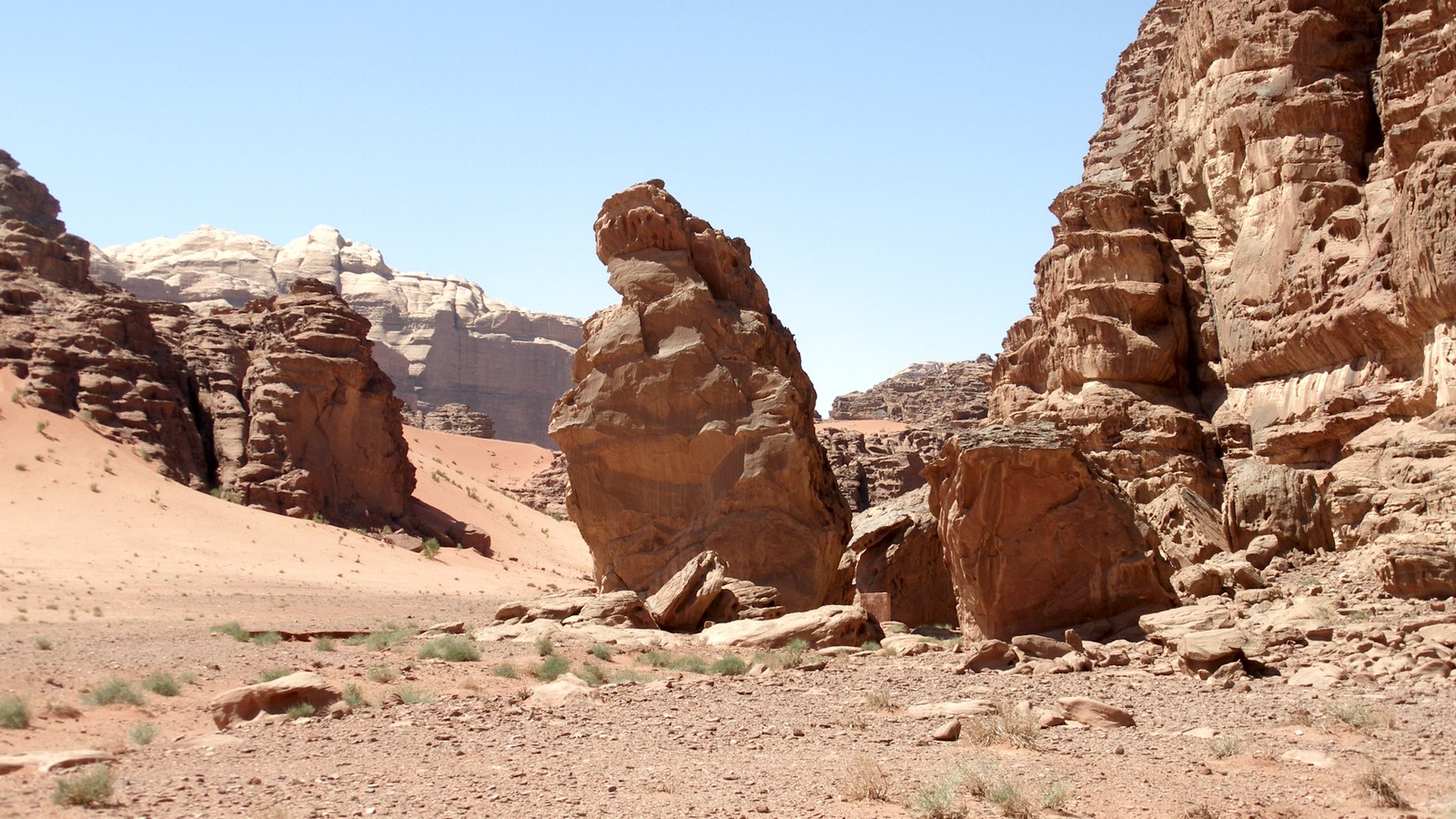
UNESCO's natural criterion describes "an iconic desert landscape, renowned for its spectacular series of sandstone mountains and valleys, natural arches, and the range of narrow gorges, towering cliffs, massive landslides, and dramatic cavernous weathering forms", including "the world's most spectacular networks of honeycomb weathering features". The sandstone does not stand alone: the Tourism Board's trail writing for the Rum to Aqaba stage describes "sandstone domes and granite and basalt striated mountains" in the same view. On timescale, the authorities stay deliberately approximate: UNESCO says the landforms represent millions of years of ongoing landscape evolution, shaped by the rock itself, by tectonic uplift, faulting and jointing, and by weathering and erosion, and the Department of Antiquities repeats "millions of years". Any guide that gives you a precise count of those years, or a height for the towers, is inventing both. One peak in the area does carry an authority's figure: Jebel Rum, the massif above the village, rises to 1,754 metres per Encyclopaedia Britannica.
Lawrence, and what he actually left here
The Lawrence connection is literary before it is anything else, and UNESCO says so: criterion (vii) records that the property's "associations with the writings of T.E. Lawrence" have "ensured a high profile for the property" and reinforced its reputation "as a classic desert landscape". The Tourism Board quotes his description of Rum as "vast, echoing and God-like", and its itinerary writing presents Rum as the protected area "where Sir Lawrence wrote the 'Seven Pillars of Wisdom'", the book whose title the famous rock formation at the visitor centre end of the valley now carries. The desert's second fame is the screen: the Tourism Board's sponsored features name Lawrence of Arabia (1962) and The Martian as films that used Rum as their otherworldly backdrop, the second of them quite literally, with Rum standing in for Mars. Longer filmographies circulate on operator sites; the two titles above are the ones with the Tourism Board's name behind them.
How a visit works
Every visit funnels through the same gate: the Rum Visitor Centre, at the edge of the protected area by Rum Village, which sits in the buffer zone. You pay the protected area's entry fee there. This guide does not print the amount, for a specific reason: the protected area's own website is currently offline, no other Jordanian authority publishes the fee online, and the figures in circulation elsewhere (5 JOD here, 7 JOD there) cannot both be right. What can be verified is the alternative: the Jordan Pass, in its own current wording, offers "Hassle-free entry to over 40 of Jordan's tourist attractions including Petra, Jerash, Wadi Rum, and much more", so pass holders' Rum entry is covered. From the gate, the Tourism Board's instruction is the whole system: "Schedule a tour with your camp or through the visitor's center." Jeep tours run into the protected area from the village with local operators; camps sit inside the desert; and the Board's own page lists the experiences on offer, from stargazing and Bedouin-life visits to camel racing, a hot air balloon and the Hijazi railway, without publishing a price for any of them. In a longer trip, Rum pairs with Petra, about 1.5 hours and roughly 100 kilometres away on the Tourism Board's day-trip figures; our 7-day Jordan itinerary builds the two together.
The sights a jeep tour strings together
The standard circuit is a necklace of the valley's named places, and the authorities name the same anchor points. The Tourism Board's trail writing lists Lawrence's Spring (Ain Shellaleh) and the remains of the Nabataean Temple among the main sites of the Rum area, and notes the Nabataeans "left their mark in the desert of Wadi Rum", in temples, water systems, carvings and route markers from the ancient trade roads. Jabal Khazali is among the named massifs your tour passes, its canyon walls carrying the kind of petroglyphs UNESCO's testimony describes. The natural arches need no ranking to justify the drive: arches are one of the property's listed natural attributes, and your guide will stop at the ones the circuit passes. Between the named stops, the real content is the valley floor itself, the inscriptions in four scripts that appear on boulders and cliff faces all along it, and the scale that made Lawrence reach for the word God-like.
Camps and the night sky
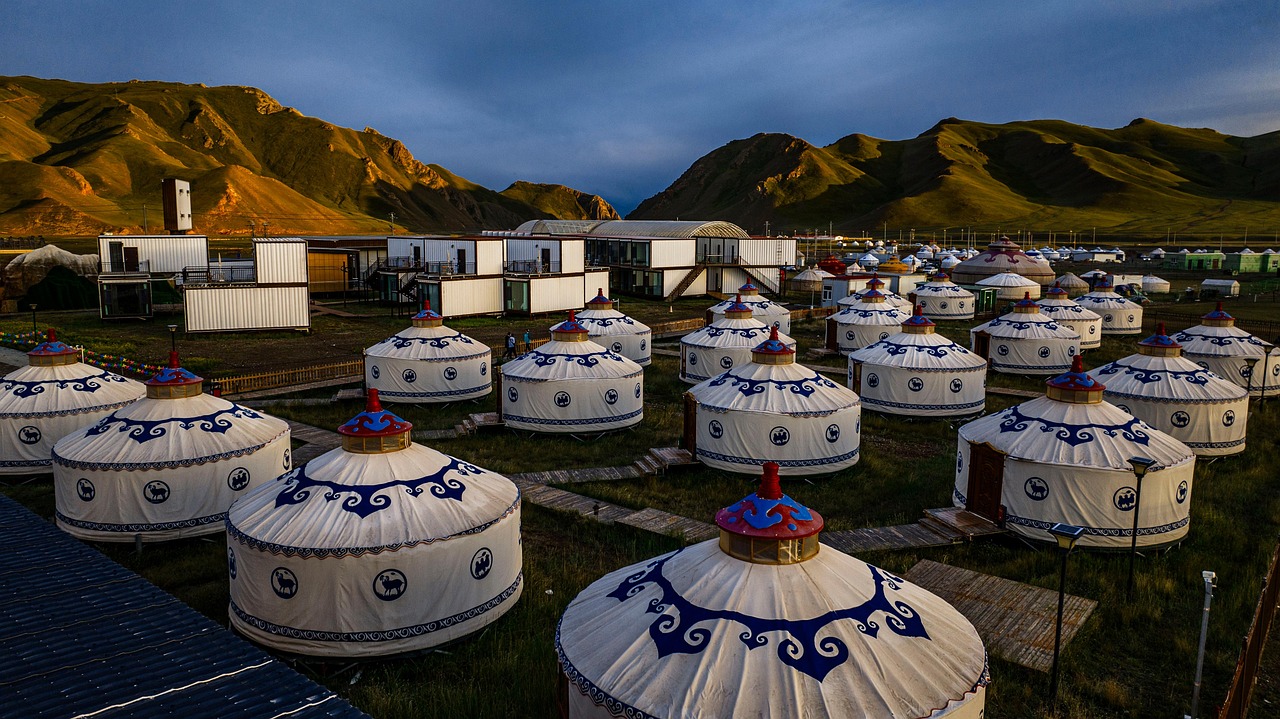
Sleeping in Rum means a Bedouin camp, and the honest pricing position is the one this site now takes everywhere in Jordan: camps are private businesses, no official tariff exists anywhere, and prices are set per programme, bundling the jeep hours, meals and the tent, so compare whole programmes rather than nightly numbers quoted from nowhere. The Tourism Board describes the pattern as Bedouin-style camping booked through the camp itself. What the night gives you needs no tariff and no designation: Rum has no international dark-sky designation, and this guide will not invent one, but a protected desert a long way from any city delivers the thing itself, darkness, a sky full of stars, and silence, which is why the Tourism Board lists stargazing among the area's experiences. Ask your camp what their night programme includes, telescope, guided session or simply chairs and tea, because that, too, varies by camp and is part of the programme you are comparing.
Safety, in the governments' current words
Read this section as a snapshot dated October 2026, and re-check both governments' pages before you travel, because this is the fastest-moving part of any Jordan guide. The UK's Foreign, Commonwealth and Development Office (Jordan page updated 10 September 2026) advises against all travel only to within 3 km of the border with Syria, in Jordan's far north, and raises no objection to travel in the rest of the country. The same page's regional-tensions section is not comfortable reading and belongs in an honest guide: it records strikes and interceptions in the region through 2026, including renewed attacks and interceptions in and around Aqaba, Rum's gateway city, in early September 2026, and warns travellers to be prepared for possible flight cancellations and periodic airspace closures. The United States rates Jordan at Level 3, "Reconsider Travel", for terrorism and armed conflict (raised in March 2026), with Do Not Travel zones within 3.5 km of the Syrian border, east of Ruwayshid toward Iraq, at designated Syrian refugee camps and in named northern towns, and a Reconsider note for Ma'an City and parts of its governorate. The geography cuts both ways and the guide will state both halves: every named exclusion in both governments' advice is in Jordan's north or north-east, hundreds of kilometres from Rum, and neither government names Wadi Rum or Aqaba in an exclusion; and Rum's gateway, Aqaba, has seen the interceptions the UK page records, so build flexibility into flights and keep an eye on the advice until you go. Jordan's desert tourism is operating; travel informed, not frightened and not complacent.
What your visit is worth to Jordan
The old version of this article reached for an economic statistic and got it wrong twice, unsourced and mislabelled. Here is the real figure, in the Central Bank of Jordan's own terms: its Annual Report for 2025 records travel receipts of JD 5,523.3 million in 2025, equal to 12.6 percent of GDP. That is a receipts figure, everything visitors and Jordanian expatriates spent travelling, not a tidy "tourism contributes X percent" claim, and it is printed here in exactly the Bank's terms. Its relevance to Rum is structural rather than statistical: the visitor system the Tourism Board describes, tours scheduled with your camp or through the visitor centre, routes your spending to the village at the desert's gate and the operators who live there, which is the part of the economics a traveller can actually choose.
Sources
- UNESCO World Heritage Centre, Wadi Rum Protected Area listing (ref. 1377): inscribed 2011, mixed property, criteria (iii), (v) and (vii); 74,200 hectares; 25,000 petroglyphs, 20,000 inscriptions, 154 archaeological sites; 12,000 years of occupation; the Lawrence association; ASEZA administration: whc.unesco.org/en/list/1377
- Department of Antiquities of Jordan: World Heritage Sites in Jordan (inscription 2011; 74,200 ha; millions of years of geological evolution; inscriptions and the early alphabet): doa.gov.jo
- Jordan Tourism Board: Wadi Rum destination page ("Schedule a tour with your camp or through the visitor's center"; the experience list; Lawrence "vast, echoing and God-like"; Nabataean remains) and the Amman day-trip guide (Petra to Rum about 1.5 hours, roughly 100 km; Rum to Amman about 4 hours): international.visitjordan.com
- Jordan Pass: "Hassle-free entry to over 40 of Jordan's tourist attractions including Petra, Jerash, Wadi Rum, and much more": jordanpass.jo
- Encyclopaedia Britannica, "Jordan" and "Mount Ramm": Jebel Rum at 1,754 metres; sandstone and granite outcrops of the southern desert: britannica.com
- UK Foreign, Commonwealth and Development Office, Jordan travel advice (updated 10 September 2026): against all travel within 3 km of the Syrian border; regional tensions, including interceptions in and around Aqaba in early September 2026 and possible flight disruption: gov.uk
- US Department of State, Jordan Travel Advisory (Level 3: Reconsider Travel, terrorism and armed conflict; named Do Not Travel zones in the north and north-east): travel.state.gov
- Central Bank of Jordan, Annual Report 2025: travel receipts JD 5,523.3 million in 2025, 12.6 percent of GDP: cbj.gov.jo
- Jordan News Agency (Petra), June 2026: ASEZA's Wadi Rum works programme and the Protected Area Director: petra.gov.jo