
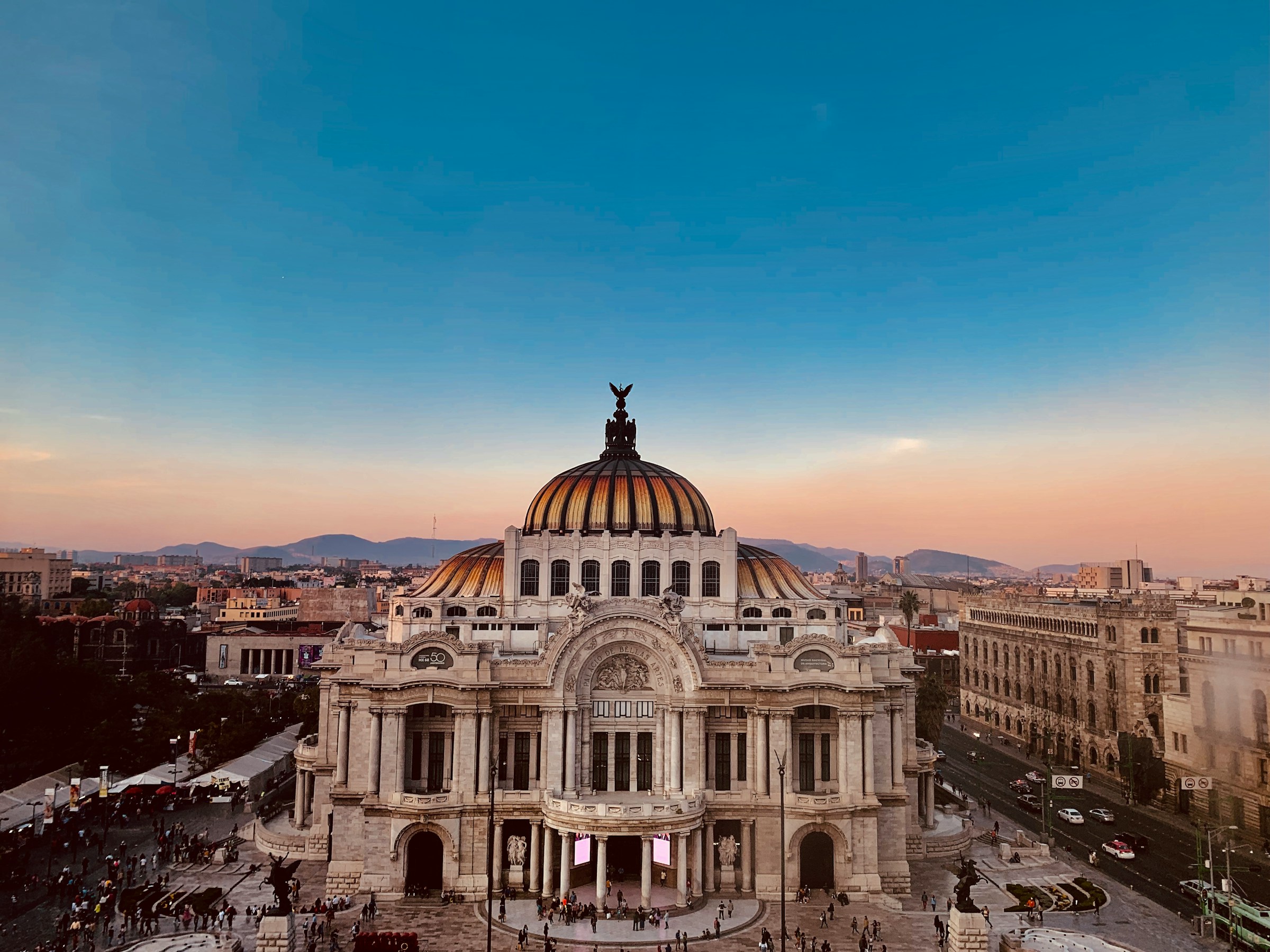
Ten places that deliver what the title promises, this time actually listed: five icons (Mexico City, Chichen Itza, Oaxaca with Monte Alban, Tulum and Puebla) and five quieter corners (Tolantongo, Bernal, Bacalar, Celestun and Guanajuato), each with its real status from the authority that records it, UNESCO, INAH, CONANP or SECTUR, and its real entry price where one exists, in pesos, from the operator or the institute itself. Nothing here is called hidden that is not, no pass is sold that does not exist, and the one price this guide is most often asked about, Tolantongo, is 230 pesos, not the 150 the old version printed four times.
The previous version of this article promised "10 hidden gems" and never listed them. Its body ran on an invented 4x4 "Mexico Travel Matrix" matching traveller personas to categories, while its actual places were Cancun, Tulum, Playa del Carmen and Chichen Itza, among the most visited sites in the country. It priced Grutas de Tolantongo at 150 pesos in four separate places (the operator's published price is 230, and 150 is the figure on an imitator website), asserted meal prices to the dollar without a source, and implied a Mexico Tourist Pass that no Mexican authority publishes, sells or endorses, as the entry section below sets out. This replacement keeps the promise and drops the machinery: ten named places, honestly split between the famous five and the quieter five, with fees stated as the authorities publish them, conflicts between official pages flagged rather than averaged away.
The ten, at a glance
| Place | Kind | Its authority | Entry, as published |
|---|---|---|---|
| Mexico City | Icon | UNESCO 1987 (Historic Centre and Xochimilco) | Templo Mayor museum: 100 pesos on the museum's own site |
| Chichen Itza | Icon | UNESCO 1988 | 697 pesos total for foreigners (INAH 105 + CULTUR 592) |
| Oaxaca and Monte Alban | Icon | UNESCO 1987 (joint inscription) | Monte Alban: 210 pesos general, 105 nationals and residents |
| Tulum | Icon | INAH zone inside the Jaguar Park | 265 pesos unified for foreigners since 20 July 2026 |
| Puebla | Icon | UNESCO 1987 | Open historic district, no gate fee |
| Grutas de Tolantongo | Quieter | The ejido operator's own site | 230 pesos per person per day, all attractions included |
| Pena de Bernal | Quieter | SECTUR Pueblo Magico (2005) | An open town under the monolith |
| Bacalar | Quieter | SECTUR Pueblo Magico (2006) | The lagoon town; a Wednesday no-navigation programme runs |
| Celestun | Quieter | CONANP biosphere reserve (2000) | Flamingo reserve of 81,482 hectares |
| Guanajuato | Quieter | UNESCO 1988 | Open historic mining city |
The five icons
1. Mexico City, the capital built on a capital
UNESCO inscribed the Historic Centre of Mexico City and Xochimilco in 1987 as a single property: a city built on the ruins of Tenochtitlan, whose monumental Templo Mayor complex bears, in UNESCO's words, exceptional witness to the cults of an extinct civilization. The Templo Mayor museum, beside the Zocalo, is the place to start the whole country's story, and its own official site publishes a flat entry of 100 pesos covering museum and zone (INAH's wider 2026 tariff table gives different category figures; this guide follows the museum's own published price and says so). The capital earns its own two guides on this site: for eating, work through the Mexico City street food guide, whose seven stops are each named by the Michelin Guide or the city itself.
2. Chichen Itza, and the two tickets
UNESCO inscribed Chichen Itza in 1988 as the most important archaeological vestige of the Maya-Toltec civilization in Yucatan, and its fame is entirely earned, which is why it belongs in the icons column and not under any "hidden" label. What surprises visitors is the till: you pay two authorities. INAH charges 105 pesos, the same for everyone, and the state of Yucatan's CULTUR charges 592 pesos for foreigners and 205 for Mexican nationals, so CULTUR's official tariff, effective 1 February 2026, publishes totals of 697 pesos for foreigners and 310 for nationals, with Yucatan residents paying only the 105. INAH's own visitor page still shows superseded CULTUR amounts, so take the totals from CULTUR's tariff document, as this guide does, and expect the federal and state charges to be collected separately.
3. Oaxaca and Monte Alban, one inscription, two places
Oaxaca's historic centre and Monte Alban were inscribed together in 1987, a single UNESCO property of two distinct sites: the colonial city, founded in 1529 on its checkerboard plan with some 1,200 inventoried historic monuments, and above it the great Zapotec capital, inhabited over 1,500 years and flourishing from 500 BC to 850 AD, which UNESCO calls the most important archaeological site of the Valley of Oaxaca, its terraces and pyramids literally carved out of the mountain. INAH's own zone page prices Monte Alban at 210 pesos general entry and 105 for Mexican nationals and foreign residents, open daily 8:00 to 17:00 with last entry at 16:00, and the site museum is listed as free. Pair the mountain morning with the city below it, which is how the inscription itself pairs them.
4. Tulum, where the ticket changed in July 2026
Tulum's cliff-top ruins now sit inside a layered park, and the price structure changed by presidential decree on 20 July 2026, so anything printed before that date, including earlier versions of guides like this one, is stale. A visitor now pays three authorities: INAH for the archaeological zone (100 pesos for foreigners, 50 for nationals after the decree's fiscal credit), CONANP for the Tulum National Park right (65 and 30), and the Parque del Jaguar (100 for foreigners, free for Mexican nationals). INAH publishes the unified position as 265 pesos for foreign visitors and 80 for nationals. The January 2026 figures that still circulate, 210 for INAH alone and a 415-peso Jaguar wristband, are superseded. Budget the 265, keep the components in mind if a gate quotes you a part rather than the whole, and check INAH before you travel, because this is the most perishable price in this guide.
5. Puebla, the open-air icon
Puebla's historic centre, inscribed by UNESCO in 1987, was founded ex nihilo in 1531 on the route between Veracruz and Mexico City, and UNESCO credits its Baroque style, fusing European and indigenous elements in the azulejo tilework that still skins its churches and houses, with export across the region. Unlike the gated sites above, Puebla is an open historic district: there is no entry fee to wander its centre, which is worth stating plainly because the old version of this guide treated every place as a ticket. It is the natural pairing with Mexico City, a short hop east, and the home state of chiles en nogada in their late-summer season, as the street food guide's calendar sets out.
The five quieter corners
6. Grutas de Tolantongo, at the operator's real price
Tolantongo is a thermal canyon in Hidalgo run by its ejido, and its own official site (the operator warns it is the only one) publishes the general entry at 230 pesos per person per day in its official brochure. That ticket includes all the natural attractions across its two areas, La Gruta and Paraiso Escondido: the grotto, tunnel, river, pools, thermal pozas, hanging bridge, waterfalls and hiking, plus the 24-hour bathrooms, showers, changing rooms and guarded camping zones. The zip line is extra at 300 pesos, food and lodging are separate, payments inside the park are cash, and the ticket runs 7 am to 8 pm rather than around the clock. Two warnings travel with the price: the operator's own homepage still carries an older banner saying 200, and the 150 figure in older guides matches an imitator domain, so the brochure's 230 is the number to budget.
7. Pena de Bernal, the monolith town
Bernal, in Queretaro, is a Pueblo Magico, SECTUR's designation, which the town has held since 2005, and it lives in the shadow of its rock: SECTUR's own profile of Bernal opens by calling the Pena the third-largest monolith in the world. The fuller ranking and measurements, after Gibraltar and Sugarloaf, at 288 metres high and 2,515 metres above sea level, are Queretaro state tourism's wording and are attributed to it here rather than stated as fact. The town itself is open to wander, the climb is the exertion, and Bernal pairs with Queretaro's wine and cheese country for the traveller crossing the Bajio who wants one place that is genuinely off the standard circuit without being hard to reach.
8. Bacalar, the lagoon of seven colours
Bacalar, in Quintana Roo, has been a SECTUR Pueblo Magico since 2006, and SECTUR itself frames its lagoon as a lagoon of seven tones of blue; the state's Caribbean tourism board carries the name Laguna de los Siete Colores, the Lagoon of Seven Colors. The fact that governs a visit is in the municipality's own development plan for 2024 to 2027, which lists the continuation of its Miercoles sin navegacion programme, Wednesdays without navigation on the lagoon. The operational details of that programme are not published by any authority found for this guide, so plan around the published fact, a midweek pause on the water, and verify the current week with the town rather than trusting any guide's version of the rules, this one included.
9. Celestun, the flamingo reserve
Celestun, on Yucatan's west coast, is the gateway to the Reserva de la Biosfera Ria Celestun, a CONANP biosphere reserve decreed on 27 November 2000 across 81,482 hectares, and first protected as far back as 19 July 1979 expressly to protect the pink flamingo, on CONANP's own management programme. The bird is not a historical footnote: in September 2025 CONANP reported 546 Caribbean flamingo chicks banded across Ria Lagartos and Ria Celestun, 70 of them in Celestun's own ria. Go for a reserve doing documented conservation work, reached by boat through the ria, and take Celestun as the quiet counterweight to Chichen Itza on the same peninsula: one trip for the monument, one for the estuary.
10. Guanajuato, silver and colour
Guanajuato, inscribed by UNESCO in 1988 for its historic town and adjacent mines, was the world's leading silver extraction centre in the 18th century, on UNESCO's account, across a protected core of 190 hectares that runs from its funicular-stitched hillsides down to mine mouths such as the Boca del Infierno, a shaft 600 metres deep. It is an open city, not a gated site, and its colour comes from the alleys and tunnels of a mining town built into a ravine. Of the ten places here it is the one that best rewards simply walking, and it anchors the quieter list's mainland end: Bernal, Guanajuato and Tolantongo together make a Bajio-and-Hidalgo loop that most first itineraries skip entirely.
Entering Mexico, and the pass that does not exist
US visitors enter as tourists without a visa, as visitantes sin permiso para realizar actividades remuneradas in the immigration law's terms, on a valid passport. Entry is now recorded digitally: the FMM has become the FMMd at airports, downloaded by QR code through the autonomous filters. The number to understand correctly is 180: under INM's own rules the officer at the point of entry sets the length of your stay, which may not exceed 180 days, so 180 is a ceiling, not an entitlement, and the stay stamped or recorded for you is the one that governs. Keep the QR or record accessible, because it is your proof of legal stay. For the southeast, the Tren Maya now crosses the region this guide's Yucatan places sit in: its official site describes a 1,554 km passenger railway across the five southeastern states, Chiapas, Tabasco, Campeche, Yucatan and Quintana Roo. And the pass: no Mexico Tourist Pass exists. Searches of SECTUR and gob.mx material found no national combined attractions or transport pass published, sold or endorsed by any Mexican authority. The only official product actually named Pase Turistico is Mexico City's, a free SEDEMA permit that exempts out-of-state and foreign-plated cars from the Hoy No Circula driving restrictions; it covers no attractions and no transport. Commercial city cards exist and are sold privately; they are neither national nor governmental, and any guide presenting a national pass is inventing it, as the previous version of this article did.
Sources
- UNESCO World Heritage List: Historic Centre of Mexico City and Xochimilco (1987), the Templo Mayor bearing exceptional witness; Pre-Hispanic City of Chichen Itza (1988), the most important archaeological vestige of the Maya-Toltec civilization in Yucatan; Historic Centre of Oaxaca and Archaeological Site of Monte Alban (1987), the most important archaeological site of the Valley of Oaxaca; Historic Centre of Puebla (1987), founded ex nihilo in 1531; Historic Town of Guanajuato and Adjacent Mines (1988), the world's leading 18th-century silver centre: whc.unesco.org
- INAH: Museo del Templo Mayor, entry 100 pesos as published on the museum's own site (INAH's 2026 category tariff table differs; the museum figure is used and flagged in the text); Monte Alban zone page, 210 pesos general and 105 nationals and residents, hours 8:00 to 17:00, site museum free; Tulum, the unified 265 pesos foreign and 80 national position following the presidential decree of 20 July 2026 published in the Diario Oficial, with components INAH 100/50, CONANP 65/30 and Parque del Jaguar 100/free for nationals: inah.gob.mx; templomayor.inah.gob.mx
- CULTUR, Government of Yucatan: the official tariff document effective 1 February 2026 for Chichen Itza, INAH 105 plus CULTUR 592 foreign and 205 national, totals 697 and 310, Yucatan residents 105 only (INAH's visitor page still shows superseded CULTUR amounts): transparenciacultur.com
- Grutas de Tolantongo, the operator's official site and brochure: general entry 230 pesos per person per day, all natural attractions across La Gruta and Paraiso Escondido included, zip line 300 extra, cash payments inside, ticket 7 am to 8 pm (the operator homepage banner still shows 200; the 150 in older guides matches an imitator domain): grutastolantongo.com.mx
- SECTUR (gob.mx): Bernal, Pueblo Magico since 2005, its profile calling the Pena the third-largest monolith in the world (the fuller ranking and the 288 m and 2,515 msnm figures are Queretaro state tourism's, queretaro.travel); Bacalar, Pueblo Magico since 2006, the lagoon of seven tones of blue; no national Mexico Tourist Pass found in SECTUR or gob.mx material. Mexico City SEDEMA: the Pase Turistico driving permit.
- CONANP (gob.mx): Reserva de la Biosfera Ria Celestun, decreed 27 November 2000, 81,482 hectares, first protected 19 July 1979 for the pink flamingo; September 2025, 546 flamingo chicks banded across Ria Lagartos (476) and Ria Celestun (70): gob.mx/conanp. Municipality of Bacalar, Development Plan 2024-2027: continuation of the Miercoles sin navegacion programme (operational details not authority-published).
- INM (gob.mx): visitor entry without a visa, the digital FMMd recorded by QR at airport filters, and the rule that the entry officer sets the stay, which may not exceed 180 days: gob.mx/inm. Tren Maya: a 1,554 km passenger railway across Chiapas, Tabasco, Campeche, Yucatan and Quintana Roo: trenmaya.gob.mx