

The famous Pink Sand Beach Bahamas is on Harbour Island, just off the northeastern coast of Eleuthera. Facing the Atlantic Ocean, this long stretch of sand is known for its soft blush color, clear water, and distinctive island setting. The beach is commonly called Pink Sands Beach, while the official Bahamas tourism site refers to it as Pink Sand Beach.
The color is real, but it is not always equally bright. Light, moisture, weather, tide, and viewing angle can change how pink the shoreline appears. For travelers planning a visit, the important questions are where the beach is, why the sand is pink, how to reach Harbour Island, and when the conditions are most suitable for a beach day.
Where Is the Pink Sand Beach in the Bahamas?
The famous pink beach Bahamas travelers search for is Pink Sand Beach on Harbour Island. Harbour Island is a small island located just off northeastern Eleuthera and separated from mainland Eleuthera by water. The Bahamas tourism authority identifies Harbour Island as the home of the well-known pink sand shoreline.
This means the beach is not on Nassau or Paradise Island. Travelers arriving through Nassau normally need to continue to Eleuthera or take a passenger ferry route directly to Harbour Island, depending on their travel plans and available schedules.
The official Bahamas tourism page describes Pink Sand Beach as extending for more than three miles and being approximately 50 to 100 feet wide. Its eastern, Atlantic facing position is an important part of the beach's character.
Official Bahamas Pink Sand Beach information
Harbour Island at a glance
- Location: Harbour Island, off northeastern Eleuthera, The Bahamas
- Coast: Eastern Atlantic side of Harbour Island
- Length: More than three miles according to the Bahamas tourism authority
- Width: Approximately 50 to 100 feet
- Nearby settlement: Dunmore Town
- Common names: Pink Sand Beach and Pink Sands Beach
Harbour Island is more than a beach destination. Dunmore Town, colorful architecture, small island roads, restaurants, and local accommodation give visitors reasons to stay beyond the shoreline itself.
Why Is the Sand Pink?
The pink color comes from a mixture of natural marine materials, with foraminifera shells playing an important role. Foraminifera are tiny, single celled marine organisms that produce hard shells. Some varieties have pink or reddish shells, and when their remains accumulate and break down, they can become part of beach sand.
On Harbour Island, these microscopic shell remains become mixed with pale coral, shell fragments, and other sand material. Wave action helps break down and redistribute the material along the shoreline.
The Bahamas tourism authority specifically identifies microscopic foraminifera as a major contributor to the beach's color. Scientific sources classify foraminifera as single celled protists rather than insects, even though older tourism descriptions may use more informal terminology.
The science also explains why the beach looks different from ordinary white or tan sand. Sand is made from many possible materials, including rocks, minerals, shells, coral, and the remains of marine organisms. The exact mix determines its appearance.
Why does the color change?
One of the most important things to understand about a pink sand beach is that the color is not necessarily a uniform bubblegum pink from every viewpoint.
The pink tone is often easier to notice where the sand is damp near the waterline. Direct sun, cloud cover, the angle of the light, and the amount of moisture in the sand can all affect what you see in photographs and in person.
That is why two photographs of the same section of beach can look surprisingly different. A pale rose tone in one image does not mean another photograph showing stronger pink color is necessarily misleading. Lighting and wet sand can make a significant visual difference.
What Is Pink Sands Beach Like?
Pink Sands Beach combines a broad sandy shoreline with Atlantic scenery and clear tropical water. The experience is more about walking, swimming, relaxing, and enjoying the landscape than about visiting a tightly developed urban beach.
The shoreline is long enough for extended walks, while the surrounding Harbour Island setting makes it possible to combine beach time with a visit to Dunmore Town.
| What to expect | Practical reality |
|---|---|
| Sand color | Usually a soft pink or blush tone that varies with conditions |
| Beach length | More than three miles |
| Activities | Swimming, walking, photography, snorkeling, and relaxation |
| Atmosphere | Scenic island beach with access to nearby Harbour Island attractions |
| Water conditions | Can vary with wind, waves, tides, and weather |
Visitors should also avoid treating every photograph online as a guarantee of exactly how the beach will look on a particular day. The pink coloration is a natural feature rather than a permanent artificial surface.
Things to Do at Pink Sand Beach
You do not need a packed activity schedule to enjoy Harbour Island. The beach itself provides plenty to do, especially for travelers who want a slower pace.
Swim and relax
Swimming is one of the main reasons people visit the beach. Before entering the water, check the day's wind, surf, tide, and local conditions. Atlantic conditions can change, so a calm looking shoreline should not be treated as a permanent guarantee of calm water.
Walk the shoreline
The beach's length makes a long shoreline walk one of its simplest attractions. Walking also gives photographers different perspectives on the sand color, water, dunes, vegetation, and distant shoreline.
Take photographs
Photography is particularly rewarding here because the appearance of the sand changes with natural light. Look for areas where wet sand meets dry sand to capture the contrast between the pinkish shoreline and blue water.
Snorkel or enjoy water activities
Marine activities are available around Harbour Island, but conditions and local services vary. Use appropriate equipment, follow local guidance, and avoid contact with coral or marine life.
Spend time in Dunmore Town
A visit to Pink Sands Beach can be combined with time in Dunmore Town. Exploring the settlement adds cultural and architectural context to what could otherwise be a very beach focused trip.
Best Time to Visit Pink Sand Beach
There are two different questions here: the best time of day for the beach's appearance and photography, and the best time of year for your overall trip.
Best time of day for photography
Early morning and late afternoon are useful periods for photography because softer light can produce more visible color variation in the sand. The wet shoreline can also show stronger pink tones than dry sand.
Midday sunlight can be very bright, which may reduce the visual contrast between the sand and surrounding landscape. Cloud conditions can change the appearance again, so there is no guaranteed hour when the beach will look its brightest.
Best season to visit
The Bahamas has warm weather throughout the year, but rainfall, heat, wind, and tropical weather risks vary by season. The official Bahamas tourism information identifies hurricane season as running from June through November.
That does not mean every day during this period is unsuitable for travel. It does mean visitors planning trips during hurricane season should monitor forecasts and remain flexible with flights, ferries, and outdoor activities.
For a current forecast, consult the Bahamas Department of Meteorology island forecasts before traveling.
How to Get to Pink Sand Beach
The most important logistical point is that you have to reach Harbour Island first. Because Harbour Island is separate from mainland Eleuthera, the final stage of the journey involves a ferry or boat transfer.
From Nassau
Travelers starting in Nassau have two broad approaches. One option is to fly onward toward North Eleuthera and then transfer across the water to Harbour Island. Another is to use a passenger ferry service from Nassau when its current schedule fits the trip.
Bahamas Ferries currently lists passenger service between Nassau and Harbour Island, with schedules subject to change, holidays, and weather conditions. Always check the operator's current schedule before building a same day itinerary around a ferry departure.
Check current Bahamas Ferries passenger schedules
From North Eleuthera Airport
For many travelers, North Eleuthera is the practical air gateway to Harbour Island.
- Fly to North Eleuthera Airport.
- Take ground transportation from the airport toward the Harbour Island crossing point.
- Continue by water taxi or ferry to Harbour Island.
- Use local transportation or walk onward toward your accommodation and the beach.
The Bahamas tourism authority confirms that visitors staying in Harbour Island commonly fly into North Eleuthera Airport. The final boat crossing is part of the normal journey rather than an inconvenience to be treated as a separate destination.
Getting around Harbour Island
Once on Harbour Island, travelers can use local transportation such as taxis, bicycles, or golf carts depending on their accommodation and plans. On smaller Bahamian islands, golf carts are a common way to get around, according to the Bahamas tourism authority.
Planning Your Visit
A beach visit is easier when you plan for both sun and changing island conditions.
- Bring reef conscious sunscreen and reapply as needed.
- Carry drinking water, especially during long beach walks.
- Bring sunglasses, a hat, and lightweight clothing for strong sun.
- Use a waterproof bag for phones and valuables when traveling by boat.
- Pack swimwear and a lightweight towel.
- Bring a camera or phone lens suitable for landscape photography.
- Check local weather and marine conditions before swimming or boating.
- Wear suitable footwear if exploring rocky areas away from the main sandy shoreline.
Facilities, shade, food service, beach chairs, and other amenities can depend on where you access the beach and whether you are staying at a nearby property. Do not assume that every beach entrance provides the same services.
Day Trip or Overnight Stay?
| Travel style | What it offers | Best suited to |
|---|---|---|
| Day trip | Beach time and a brief look at Harbour Island | Travelers with limited time who can coordinate transport carefully |
| Overnight stay | More relaxed beach time, local dining, photography, and exploration | Travelers who prefer a slower island experience |
A day trip can work, but transportation connections leave less room for delays. An overnight stay gives you greater flexibility to visit the beach in different light, spend time in Dunmore Town, and avoid turning the entire visit into a race between transport connections.
Where to Stay Near Pink Sand Beach
Harbour Island has several accommodation styles, from boutique hotels and inns to beachfront properties. The right area depends on whether you want to prioritize direct beach access, proximity to Dunmore Town, dining, or a quieter setting.
Some established properties are positioned directly beside or overlooking the pink sand shoreline, while others are located closer to the settlement and provide access to the beach from town.
Rather than choosing accommodation solely because it uses the phrase "pink beach" in its description, confirm the property's current location, beach access arrangements, included amenities, and transportation options before booking.
Pink Sand Beaches Around the World
Harbour Island is not the only destination associated with pink sand. Several beaches around the world have pink or blush colored shorelines, but the reasons for their coloration are not identical.
| Beach | Location | Main color source or characteristic | Known for |
|---|---|---|---|
| Pink Sand Beach | Harbour Island, Bahamas | Foraminifera shells mixed with coral and sand | Long walks, swimming, and photography |
| Horseshoe Bay | Bermuda | Foraminifera and coral material | Scenic pink shoreline and beach facilities |
| Elafonisi | Crete, Greece | Marine organisms, shell, and coral material | Shallow water and lagoon scenery |
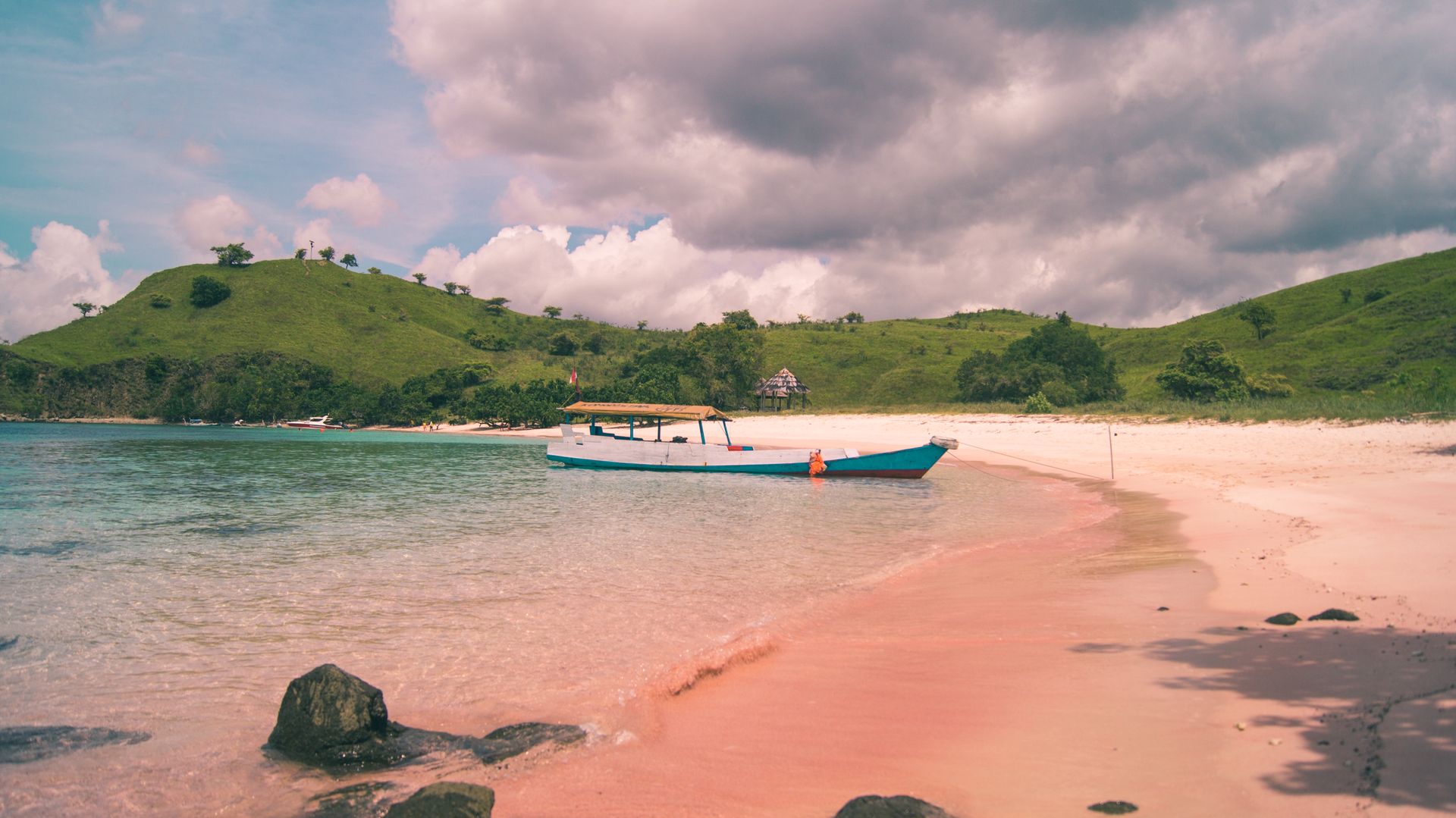
| Pink Beach | Komodo, Indonesia | Red coral fragments mixed with sand | Snorkeling and natural scenery |
| Pfeiffer Beach | California, USA | Mineral rich sand producing purple and pink tones | Dramatic coastal landscapes and photography |
This comparison is useful because "pink sand" is a visual description rather than a single geological process. Different beaches can develop similar colors from different combinations of minerals, shells, coral, and other marine material.
Responsible Beach Travel
Pink sand is part of the natural environment, so visitors should leave the shoreline as they found it.
Do not collect sand, coral, shells, or other natural material as souvenirs. Removing small amounts may seem harmless, but beaches depend on the continued movement and accumulation of sediment and biological material.
Travelers should also avoid standing on coral, feeding wildlife, leaving litter, or using products that can harm marine ecosystems. Where local signs or guides provide specific environmental instructions, follow them.
Responsible behavior is particularly important in destinations where reefs and marine organisms contribute directly or indirectly to the character of the coastline.
Frequently Asked Questions
Where is the pink sand beach in the Bahamas?
The famous Pink Sand Beach is on the eastern Atlantic facing coast of Harbour Island, just off northeastern Eleuthera in The Bahamas. It is not on Nassau or Paradise Island.
Why is Pink Sands Beach pink?
The pink color comes largely from microscopic foraminifera shells mixed with pale coral, shell fragments, and sand. Wave action helps break and redistribute these materials along the shoreline.
Is Pink Sands Beach really pink?
Yes. The sand has a genuine pink or blush coloration, but the intensity varies with sunlight, moisture, tide, weather, and viewing angle. Wet sand near the waterline can make the color easier to notice.
Can you swim at Pink Sand Beach?
Swimming is a popular activity, but conditions vary. Check local wind, surf, tide, and weather conditions before entering the water, especially when Atlantic conditions are unsettled.
How do you get to Pink Sand Beach from Nassau?
Travelers can typically reach Harbour Island by flying toward North Eleuthera and then crossing by boat, or by using a current passenger ferry service from Nassau when available. Transport schedules can change, so check current information before booking connecting travel.
How long is Pink Sands Beach?
The Bahamas tourism authority describes Pink Sand Beach as more than three miles long and approximately 50 to 100 feet wide. The shoreline therefore offers considerably more space than a small scenic viewpoint.
Conclusion
Pink Sand Beach Bahamas is located on Harbour Island, off northeastern Eleuthera, and its distinctive color is a natural result of marine material that includes microscopic foraminifera shells. The beach is more than a photo opportunity. Its long shoreline, Atlantic setting, swimming opportunities, and proximity to Dunmore Town make it a destination that can fit both relaxed beach trips and broader Bahamas itineraries.
The most useful approach is to plan the logistics first, especially the connection through North Eleuthera or the current ferry options from Nassau. Check transport and weather information close to your travel date, choose your beach time around the light you want for photography, and leave the natural sand and marine environment undisturbed.