
Madeira is a year-round island, but it is not one climate. The sheltered south coast around Funchal, the wet north coast around Santana and Porto Moniz, and the cold mountains around Pico do Areeiro are three different weathers on one small island. A February day in Funchal can be warm enough for lunch outside, while the same afternoon on the summit can be cold, windy and wrapped in fog. This guide gives you the figures first, then explains what they mean for where to stay, what to do each day and what to pack. For the island as a whole, start with our Madeira: the complete guide for UK travellers.
Every temperature, rainfall and rain-day figure in the table comes from one source: the IPMA climate normals for 1991 to 2020 for Funchal, station 522 at the Observatório, 58 m above sea level. IPMA is the Instituto Português do Mar e da Atmosfera. Sunshine hours come from the German Meteorological Service series for 1991 to 2020, as published with the same station data, because IPMA dropped sunshine from its later normals. Sea temperatures are the exception: IPMA has never printed a sea-temperature normal, so the sea column uses the older normals relayed by madeirainfo.com, with December using the DREM figure for Funchal harbour. Where two sources disagree, this guide says so.
Madeira weather month by month: the Funchal table
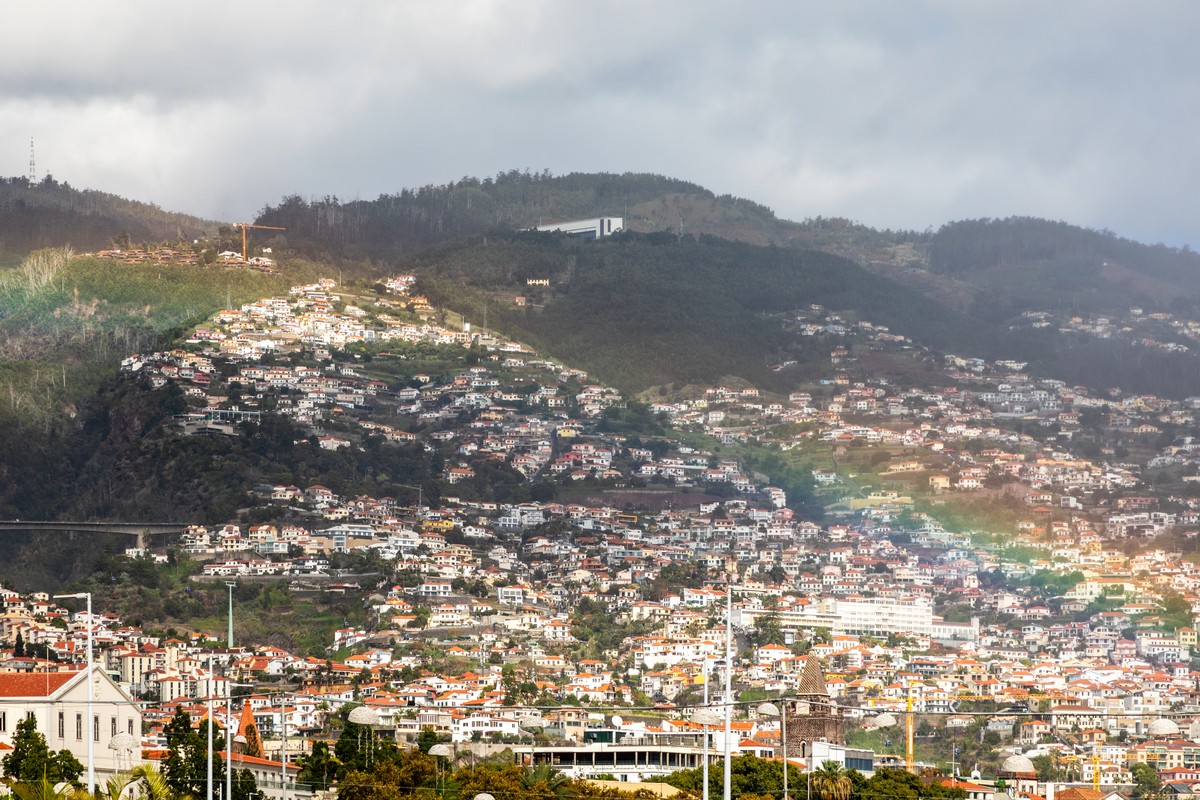
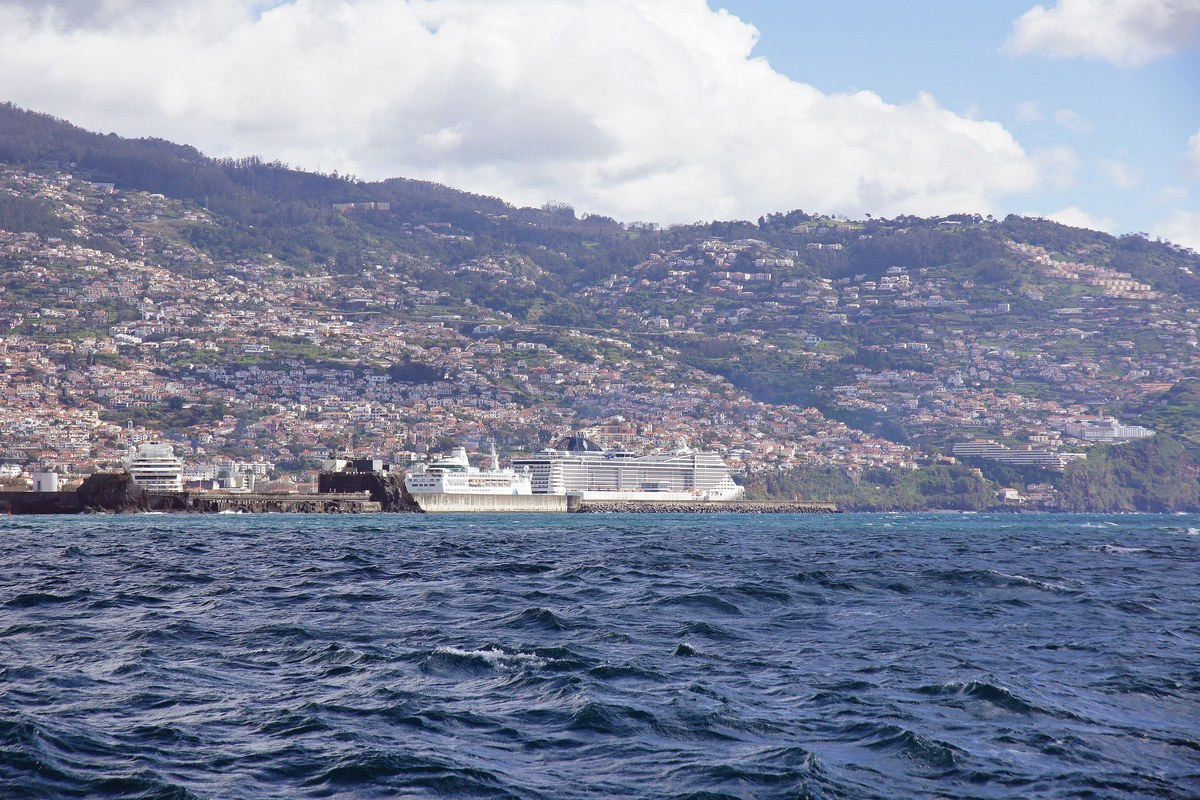
Read this table as the weather of the sheltered south coast only. Funchal sits in a natural bowl above the bay, protected from the north-east trade winds by the central ridge. It is the warmest, driest and sunniest part of the island, and it is where most UK travellers stay.
| Month | Mean daily max | Mean daily min | Rainfall | Rain days (1 mm or more) | Sea temp | Sunshine hours in the month |
|---|---|---|---|---|---|---|
| January | 20.0°C | 14.3°C | 67.1 mm | 6.2 | 19°C | 160.9 |
| February | 19.9°C | 13.9°C | 72.4 mm | 5.5 | 18°C | 166.8 |
| March | 20.6°C | 14.3°C | 62.3 mm | 5.8 | 18°C | 197.7 |
| April | 21.0°C | 14.9°C | 45.2 mm | 4.7 | 18°C | 194.8 |
| May | 22.0°C | 16.2°C | 27.2 mm | 3.3 | 19°C | 208.6 |
| June | 23.7°C | 18.2°C | 7.8 mm | 1.0 | 20°C | 194.0 |
| July | 25.4°C | 19.7°C | 1.7 mm | 0.3 | 21°C | 232.5 |
| August | 26.8°C | 20.7°C | 1.3 mm | 0.4 | 22°C | 236.7 |
| September | 26.6°C | 20.4°C | 23.1 mm | 3.1 | 23°C | 210.8 |
| October | 25.2°C | 19.2°C | 91.2 mm | 7.0 | 23°C | 194.3 |
| November | 22.8°C | 17.0°C | 80.3 mm | 7.3 | 22°C | 165.9 |
| December | 21.0°C | 15.5°C | 94.8 mm | 8.6 | 19.5°C | 151.1 |
Annual figures on the same normals: mean daily maximum 22.9°C, mean daily minimum 17.0°C, mean temperature 20.0°C, rainfall 574.3 mm, and 104.1 days a year above 25°C. Total sunshine is 2,314.1 hours. Funchal has never gone below 8.5°C in the thirty-year record. Days at 30°C or more stay below one a month.
Three notes on the table. First, the rain-day column includes June, July and August, at 1.0, 0.3 and 0.4 days, from the IPMA table as published with the Funchal station data. Second, the sunshine column is monthly hours, not hours per day: February works out at about 6 hours a day and August at about 7 to 8. Third, the sea column is the least exact in the table. January to November are the older normals relayed by madeirainfo.com, rounded to whole degrees. December uses 19.5°C at Funchal harbour per DREM, against 19°C per the German Meteorological Service, and other sources put September at 24°C rather than 23°C.
The table shows a small annual range in temperature and a large seasonal change in rain. The coldest month by day is February at 19.9°C and the warmest is August at 26.8°C, a gap of under 7 degrees. Rain is the real seasonal signal: July and August together bring 3.0 mm in Funchal, while October, November and December bring 266.3 mm between them. December is the wettest month at 94.8 mm, and July is the driest at 1.7 mm.
Three weathers on one island: the microclimates
The Funchal table is honest only if you know what it leaves out. Madeira is a steep volcanic ridge, and the north-east trade winds hit the north-facing slopes first, bringing cloud, humidity and rain to the north, while the south sits in the shelter of the ridge. The interior rises to 1,861 m at Pico Ruivo, and temperature falls with height, so the mountains are a third climate. A day that is sunny and 24°C in Funchal can be drizzling and 16°C in Santana and cold and foggy at 1,600 m.
The south coast: Funchal, Calheta and Ponta do Sol
The south coast is the warmest, driest and sunniest side. Funchal sits in a natural bowl, sheltered from the wind, and the south-west coast around Calheta and Ponta do Sol is the sunniest of all: Ponta do Sol means point of the sun. If your trip is built around sitting outside, swimming and eating outdoors, base yourself on the south coast, and check the forecast for the specific place and height before you set out.
The north coast: Santana, São Vicente and Porto Moniz
The north coast is greener, lusher and wetter, because the mountains catch moisture from the trade winds and feed the laurel forests and the levada system. Santana, at about 380 m, proves it: its rainfall from January to July is about 1.97 times Funchal's, and in July it is 15.18 times Funchal's. The monthly figures, from the IPMA regional bulletins for January to July, are 106.9 mm in January, 129.1 mm in February, 117.5 mm in March, 84.5 mm in April, 59.9 mm in May, 34.2 mm in June and 25.8 mm in July. August to December figures have not been published anywhere, so they are not guessed here. Santana's mean daily maximum is 16.1°C in January, 16.7°C in March and 22.0°C in July, against Funchal's 20.0°C, 20.6°C and 25.4°C, and its February mean temperature is 13.1°C, against Funchal's 16.8°C.
For a traveller, the north coast is a day-trip climate, not a base climate, unless you specifically want green valleys, waterfalls and laurel forest and accept the rain that makes them green. Go north for Santana's thatched houses, the São Vicente waterfalls, the Seixal pools and the Fanal forest, on the driest morning you can find, with a waterproof layer in the bag even in July.
The mountains: Pico do Areeiro and the high interior
At Chão do Areeiro, about 1,590 m, rainfall from January to July is 225.4 mm in January, 245.8 mm in February, 252.8 mm in March, 166.6 mm in April, 92.2 mm in May, 39.7 mm in June and 14.3 mm in July, and in March the mountain station records 4.06 times Funchal's rainfall. August to December figures have not been published, as with Santana. The mean daily maximum there is 8.7°C in January, 9.7°C in March and 19.1°C in July, against Funchal's 20.0°C, 20.6°C and 25.4°C. The January mean temperature at the Areeiro station, at 1,610 m, is 5.5°C. Above 1,500 m, snowfall and frost can occur in winter, and the island record low is minus 9.5°C at Bica da Cana, at 1,580 m, in March 1993.
Two mountain effects catch visitors out. The first is fog: the interior can be covered by fog or low cloud while both coasts are sunny, and the Rabaçal plateau has fog on more than 240 days a year. The second is wind: in the mountains the wind can reach 100 km/h, while Funchal is quite sheltered. From June to October the Leste, a hot, dry wind from the Sahara, can raise the temperature and bring a fine red powder. Check the summit forecast the evening before and carry a warm layer even in summer.
Porto Santo: drier than Madeira Island
Porto Santo, about 42 km north-east of Madeira, is smaller, flatter and more arid: an annual mean of 19.1°C and 381.7 mm of rain, against Funchal's 20.0°C and 574.3 mm. It holds the one long natural sandy beach, 9 km of golden sand, but it is flatter and quieter, with far less to do than Madeira Island. The ferry from Funchal takes about 2 hours 30 minutes, and a day trip leaves about 7 hours on the island.
Sea temperatures and swimming: when the water is warm enough
The sea around Madeira sits between about 18°C and 23°C through the year on the older normals, coolest in February to April and warmest in September and October. That is warmer than the mainland Atlantic coast in winter, and it never gets bath-warm.
By month, the sea is 19°C in January, 18°C in February, March and April, 19°C in May, 20°C in June, 21°C in July, 22°C in August, 23°C in September and October, 22°C in November and 19.5°C in December. June through November the sea is 20°C or warmer, peaking at 23°C in September and October. May sits at 19°C, swimmable but bracing. December to April the sea is 18°C to 19.5°C, and most swimmers want a wetsuit for anything longer than a quick dip. September is the sweet spot: the sea is at its warmest, the air is still hot, and the crowds are thinner than in August.
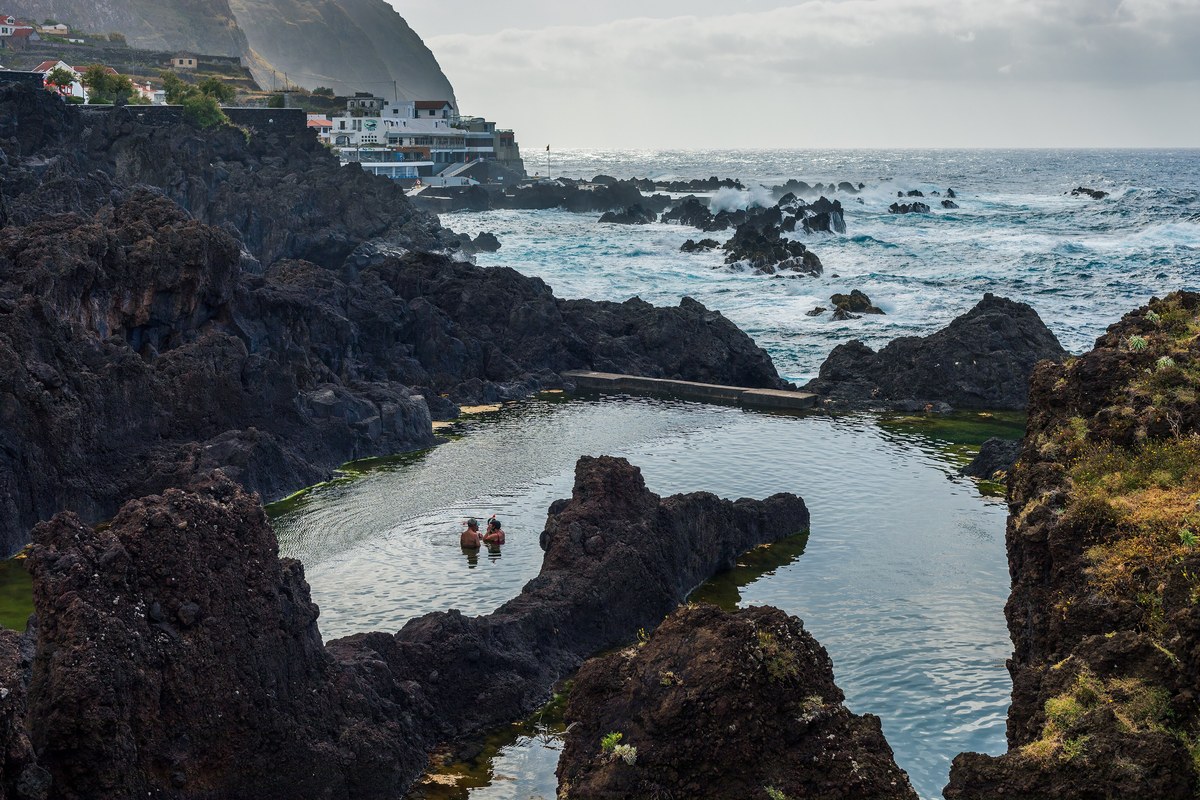
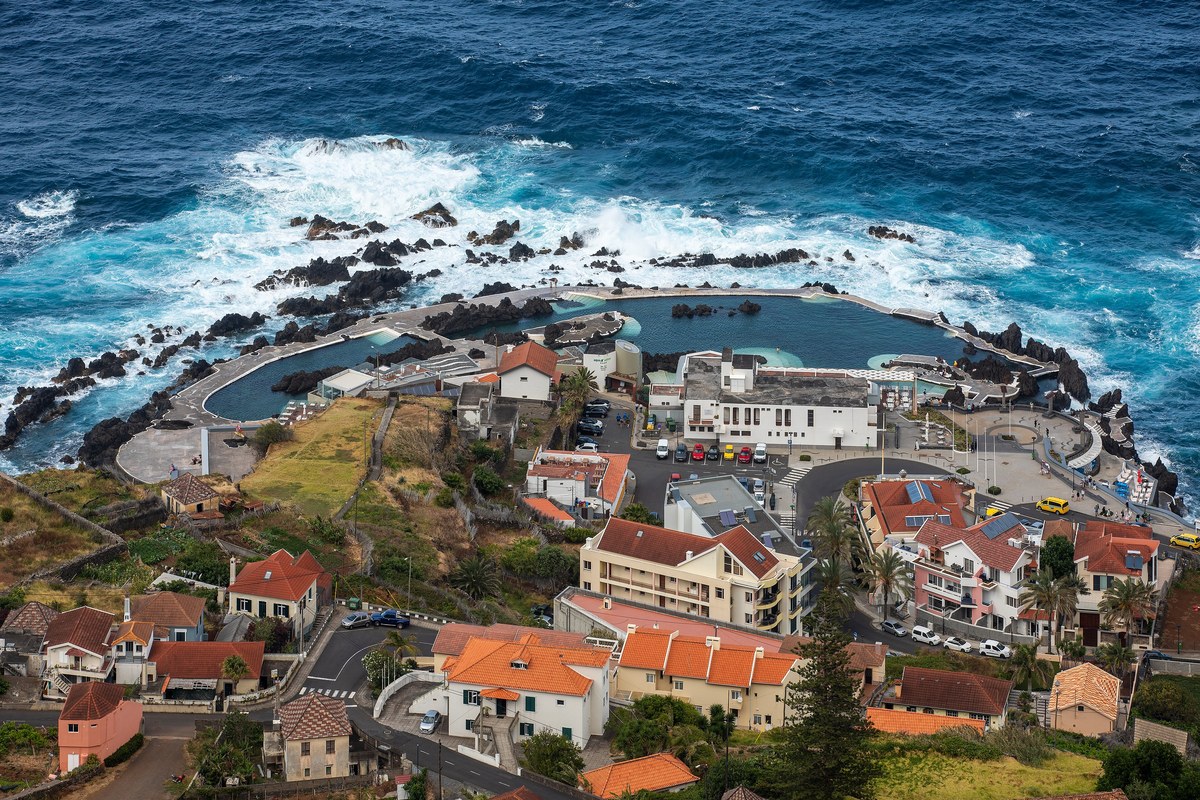
The pools are the year-round alternative, because the coast is mostly pebbles, rock and cliffs rather than sand. The natural pools at Porto Moniz, lava-rock sea pools of about 3,800 sq m, are the best swimming spot for families, with lifeguards and facilities, and the Lido Bathing Complex in Funchal is the best choice for families staying in Funchal. The Christmas guide records the Lido as open all year from 09:30 to 17:30 and the Porto Moniz pools as open 09:00 to 17:00 in winter, but pool hours, entry fees and facilities were not established in the pillar research, so check them on the day. Seixal's pools warn of sudden large waves. For the full beaches and pools picture, see the beaches section of our Madeira island guide.
A short rule of thumb: to swim in the sea without thinking about it, come between June and November. For children who will want to be in the water for an hour, September and October are kindest, because the sea is at its warmest.
Best months to visit, by trip type
There is no single best month for Madeira. The table answers a different question for each kind of trip, and the right month depends on what you want the weather to do.
| Trip type | Best months | Why, from the table |
|---|---|---|
| Walking and levadas | April, May, September, October | Days 21.0°C to 26.6°C, nights 14.9°C to 20.4°C, rain 23.1 to 45.2 mm in the driest three |
| Beach and pools | July, August, September | Days 25.4°C to 26.8°C, sea 21°C to 23°C, rain 1.3 to 23.1 mm |
| Festivals | February, late April to May, June, late August | Carnival, Flower Festival, Atlantic Festival, Wine Festival; weather is secondary to the dates |
| Winter sun | December, January, February | Days 19.9°C to 21.0°C, nights 13.9°C to 15.5°C, but December is the wettest month |
| Quietest months | January, February, November | Low season, fewest visitors, coolest days, most rain; February has Carnival |
Walking and levadas: April, May, September and October
Walking wants mild days, cool nights and dry paths, and that combination peaks in late spring and early autumn. April gives 21.0°C by day with 45.2 mm of rain, May gives 22.0°C with 27.2 mm, September gives 26.6°C with 23.1 mm, and October gives 25.2°C with 91.2 mm, so October is the warmest walking month and also the wettest of the four. May and September are the sweet spot. Summer walking needs an early start, because August has 28 days at 25°C or more. Winter walking is green and quiet, but levadas close briefly after heavy rain, so check the trail status the day before and the morning of the walk. Since January 2026 every official hiking trail needs an advance reservation through the SIMplifica platform, with bookings opening 30 days ahead.
Beach and pools: July, August and September
For swimming and sunbathing, the table points to one answer: July, August and September. July has 25.4°C by day, a 21°C sea and 1.7 mm of rain. August has 26.8°C by day, a 22°C sea and 1.3 mm of rain. September has 26.6°C by day, a 23°C sea and 23.1 mm of rain. September is best for most people, because the sea is warmest and the peak-summer crowds have thinned. June is the shoulder, at 23.7°C by day and a 20°C sea. October is the last warm swimming month, but rain jumps to 91.2 mm. Madeira has pebbles, pools and cliffs, two imported-sand beaches at Calheta and Machico, and one true natural sandy beach on Porto Santo.
Festivals: February, late April to May, June and late August
Festival trips are fixed by the calendar, not by the weather. Carnival runs 3 to 14 February 2027, in the coldest month. The Flower Festival runs 29 April to 30 May 2027, in the mildest walking weather. The Atlantic Festival runs 4 to 27 June 2027, in the driest month. The Wine Festival runs 22 August to 12 September 2027, in the warmest weeks. Christmas and New Year run 1 December 2026 to 10 January 2027, in the wettest month.
Winter sun: December, January and February
Winter is the mildest winter sun in reach of the UK on a direct flight of about four hours, at 19.9°C to 21.0°C by day and 13.9°C to 15.5°C at night from December to February. The part left out is the rain: December brings 94.8 mm over 8.6 rain days, January 67.1 mm over 6.2 days and February 72.4 mm over 5.5 days, and the north coast brings roughly double. Expect several fine days, a few wet mornings and one or two days when the mountains disappear into cloud. For a wider comparison, see our best places to visit in December for UK travellers, and the December detail is in our guide to Madeira at Christmas: lights, Market Night and fireworks.
Quietest months: January, February and November
The quiet months are January, February and November, when tourist numbers are lowest. January suits walkers, February is quiet outside Carnival week, and November is the locals' favourite month for laurel forest walks. Pack a waterproof, plan a wet-day backup, and base yourself in Funchal. Flight fares and hotel prices were not checked live for this article, so no cheapest month is named here.
Madeira in February: what it actually feels like
February is the month UK travellers search for: it is the coldest month on the island, it is Carnival month, and it is the middle of the British winter.
February in Funchal averages 19.9°C by day and 13.9°C by night, with a daily mean of 16.8°C, 72.4 mm of rain over 5.5 rain days, a sea temperature of 18°C and 166.8 hours of sunshine in the month, about 6 hours a day. That makes February the coldest month of the year by daily mean. In Santana, February is wetter and cooler still: 129.1 mm of rain and a mean temperature of 13.1°C. At Chão do Areeiro, February brings 245.8 mm of rain.
Daylight in February is generous for a winter month. The average length of day in Funchal in February is 11 hours 2 minutes. On 1 February the sun rises at 08:02 and sets at 18:39, and on the last day of February it rises at 07:35 and sets at 19:04, roughly an hour more daylight than a February day in London. The average UV index in February is 5.9, against 3.4 in December, so sun protection matters even in the coolest month.
What February feels like is mild and changeable rather than cold. Mornings in Funchal are often bright, with a short shower in the afternoon, then clearing again for the evening. A typical day means a light jacket in the morning, a T-shirt in the midday sun, and a jumper after sunset, when the temperature drops towards 14°C. It never freezes at sea level, and snow is a mountain sight, not a Funchal one.
Carnival is the reason February fills up. In 2027 the festivities run from 3 to 14 February, with the Grand Carnival Parade over two consecutive days for the first time, on Friday 5 and Saturday 6 February, and the Trapalhão Parade on Shrove Tuesday, 9 February. The Festa dos Compadres in Santana runs on the weekend before Carnival. For Carnival, base yourself in Funchal and book early. For quiet walking, come in the first days of February or after Shrove Tuesday.
What is open in February is almost everything, with two cautions. The cable car and toboggan operate as normal, the levadas are open subject to the SIMplifica reservation and to closure after heavy rain, and restaurants and museums run normal hours. Check opening times before you travel, and check the trail status the day before and the morning of a walk. Whale watching runs from Funchal and Calheta, though the best months were not established in the pillar research, and winter trips can be cancelled in rough weather. February is also almond blossom season, and the island is green from the winter rain.
What to pack for Madeira, season by season
Packing for Madeira is packing for three climates and one changeable day, not for one temperature. The rule in every season is layers: a moisture-wicking base layer, a mid layer such as a fleece, and a waterproof shell on top, with no cotton next to the skin on a walking day.
Winter: December to February
Pack spring or autumn clothes, not winter clothes. A light fleece or jumper, a jacket, and a raincoat or umbrella are the core. Evenings in Funchal drop to 13.9°C to 15.5°C, so a warm layer for after sunset is essential, and a hat and gloves earn their place in the mountains, where the January mean at the Areeiro station is 5.5°C. Footwear is waterproof hiking boots with grip. Add water shoes for rocky beaches and pool areas. Bring a headlamp for tunnel sections, a daypack of 20 to 25 litres with 1.5 to 2 litres of water, sun cream and a power bank. Sun protection still matters in winter: the UV index averages 5.9 in February.
Spring: March to May
Spring is the easiest season to pack for. Lightweight, breathable fabrics work for the coast, with a light jacket for cooler evenings and for the mountains. Keep the waterproof shell in the bag: March still brings 62.3 mm of rain and April 45.2 mm. A fleece is worth carrying even on a warm day, because a walk that starts at 20°C on the coast can be much cooler at 1,200 m. Sun cream, sunglasses and a hat become essential by May, when the UV index averages 10.4.
Summer: June to August
Summer packing is light clothing plus the layers you would not expect to need. Bring swimwear and sun protection at full strength: SPF 50, sunglasses and a hat, because the UV index averages 11.0 in June, 10.8 in July and 10.1 in August. Bring a scarf for the wind, a sweatshirt and a light jacket for the evening, because evenings drop to 18.2°C to 20.7°C. For the peaks, pack a sweatshirt and a jacket for the evening, even in August: the mountains are 8 to 12°C cooler than sea level all year. A waterproof jacket is still non-negotiable, because mountain weather shifts in minutes. A poncho earns its place on the wettest trails, such as PR9 Caldeirão Verde.
Autumn: September to November
Autumn packing is summer packing with the waterproof layer moved to the top of the bag. September is still warm, at 26.6°C by day and a 23°C sea, so light clothing and swimwear stay in. October turns: rain jumps to 91.2 mm, so the waterproof shell and boots return as daily kit, and a fleece becomes the evening layer as nights drop to 19.2°C. November, at 80.3 mm over 7.3 rain days, is pack-as-for-winter territory.
Rain, wind and cloud: the honest picture
Madeira's rain is concentrated from October to mid-April, and frequent in that half of the year, while in summer it is very rare, especially on the southern side. December is the wettest month in Funchal at 94.8 mm over 8.6 rain days, and July is the driest at 1.7 mm over 0.3 rain days.
First, rain is usually showers, not all-day rain. A rain day in the IPMA table is a day with at least 1 mm of rain, and most winter rain days still have dry, bright spells. The north coast is different: Santana's February brings 129.1 mm. Second, rain falls hardest where you walk: Chão do Areeiro records 252.8 mm in March. Third, cloud and wind shape the day as much as rain does: the interior can be foggy while both coasts are sunny, and the wind in the mountains can reach 100 km/h, while Funchal is sheltered.
A rainy day still works, if you plan it by altitude rather than by hope. Stay low and stay south: Funchal's museums, the market, the wine lodges on Avenida Arriaga, the gardens and the Old Town are all dry-weather-proof, and the Lido is open all year. Drive to the south-west coast, to Calheta and Ponta do Sol, which are the sunniest and driest corners and often clear when Funchal is cloudy. Save the mountains and the north coast for the next dry morning. For December, the full rain picture is in our guide to Madeira at Christmas: lights, Market Night and fireworks, covering the six-week season from 1 December 2026 to 10 January 2027. This article does not repeat that December detail beyond the short summary in the best-months section above.
Conclusion
Madeira rewards the traveller who plans by the table and by the slope, not by the postcard. Stay on the south coast for the sun, go north and up for the green, carry a layer for the mountains in every month, and pick the month that matches the trip: May and September for walking, July to September for swimming, February for Carnival. Check the forecast for the place and the height you are actually going to, not just for Funchal.