
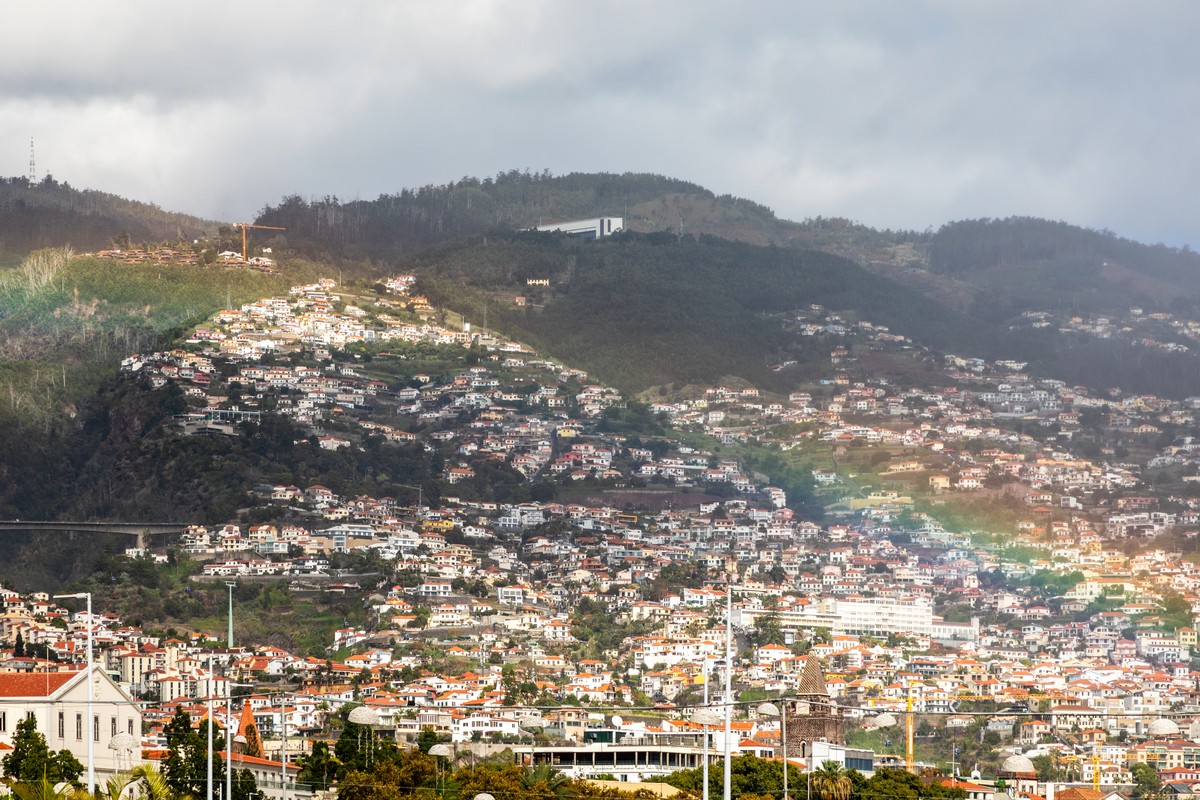
Funchal is the capital of Madeira, Portugal, on the south coast of Madeira Island in the Atlantic, about 805 km southwest of mainland Portugal and north of the Canary Islands. It sits in a natural amphitheatre-shaped valley, with slopes rising from the coast to about 1,200 m, which shelters the city. This guide, the city companion to our Madeira travel guide for UK travellers, covers Funchal in depth.
One day covers the highlights, two days is comfortable, and three days is unhurried. The city is flat along the seafront and steep behind it, so the plan below follows the ground.
Where is Funchal?
Funchal is the capital, largest city and municipal seat of Portugal's Autonomous Region of Madeira. The name is widely believed to come from funcho, the fennel plant the first settlers found growing there. Settlement began in about 1424, founded by João Gonçalves Zarco. The town became a city by royal charter from King Manuel I on 21 August 1508, and Funchal still marks City Day on 21 August. The sugar trade made it the island's industrial centre.
The population is 105,795 from the 2021 census, the sixth largest city in Portugal. The wider urbanised core, including Câmara de Lobos, Santa Cruz, Machico, Caniço and Ribeira Brava, is about 150,000.
The city is laid out from the sea upward: the seafront promenade, Avenida do Mar, along the coast; the Old Town, or Zona Velha, around Rua de Santa Maria; the City Centre around the Sé Cathedral and Avenida Arriaga; Santa Catarina Park above the harbour; the Lido hotel zone west along Estrada Monumental; and Monte, the hillside parish with over 7,500 residents. The Old Town is flat at sea level; the city rises steeply up its hills behind it.
The Old Town (Zona Velha)
Zona Velha means Old Zone, and it is Funchal's historic heart: narrow cobbled streets, traditional architecture, and its liveliest nightlife. Its main street is Rua de Santa Maria, about 600 m long and pedestrian-only, running from just south of the Mercado dos Lavradores to the Igreja de Santa Maria Maior at the north end and the Forte de São Tiago at the south end. It is one of the oldest streets in Funchal, dating to about 1430.
The street's fame is the Arte de Portas Abertas project, the Art of Open Doors. Launched by the municipality in 2010 to revive a run-down area, it invited artists to paint the doors and facades of buildings on Rua de Santa Maria. Over 200 painted doors now line the street.
At the heart of the old city is the Sé Cathedral, commissioned by King Manuel I. The first stone was laid in 1493, it was elevated to cathedral on 12 June 1514 by Pope Leo X, and it was consecrated on 18 October 1517. It is Gothic and Manueline, built of local volcanic stone brought from Cabo Girão, and it is famous for its Mudéjar ceiling of local cedar wood with ivory inlay, one of the finest in Portugal.
At the southern end of Rua de Santa Maria stands the Forte de São Tiago, a 17th-century fortress with bright yellow walls, built to defend Funchal from pirate attacks. Sources disagree on its current use, museum or restaurant, so check before you go. On the same street is the Corpo Santo Chapel, a 15th-century fishermen's chapel still standing.
For shopping, Rua Dr. Fernão de Ornelas mixes old shops and new businesses, and the streets around the cathedral sell traditional regional products.
Mercado dos Lavradores
Funchal's main covered market is an Art Deco building designed by architect Edmundo Tavares and inaugurated on 24 November 1940, at the edge of the Old Town. It is still a working daily market for residents as well as a visitor stop: flowers and fruit and vegetables on the ground floor and upper galleries, and the fish hall, the lota, in the basement.
Friday is the best day: the stalls are at full capacity and the fish is freshest. Arrive before 09:00 for the best fish selection; the fish market is most active from 07:00 to 10:00. Buy exotic fruit, cut flowers, and fish. The centrepiece of the fish hall is espada, the black scabbardfish, caught at night by longline at 800 to 1,200 m depth southwest of Madeira.
| Area | Monday to Friday | Saturday | Sunday |
|---|---|---|---|
| Ground floor (flowers, fruit, vegetables) | 07:00-19:00 | 07:00-14:00 | Closed |
| Fish hall | 07:00-14:00, Friday to 15:00 | 07:00-13:00 | Closed |
Two official sources disagree on the Friday closing time for the ground floor: the municipal markets site gives 19:00 and Visit Madeira gives 20:00. The market is closed on Sundays and public holidays. Visitor advice warns that fruit sellers charge tourists high prices, so ask the price before accepting a taste or a bag. The upper floor hides lunch counters where market workers eat fresh tuna and espetada sandwiches at honest prices; go before 13:30.
On 23 December the market stays open through the night for Noite do Mercado, Market Night, from 19:00 to 04:00, with carols, folk dancing and food. It is covered in full in our guide to Madeira at Christmas: lights, Market Night and fireworks.
Monte: the cable car, the gardens and the toboggan
Monte is the classic Funchal day: cable car up, gardens at the top, toboggan down. The three parts are separate services with separate tickets.
The cable car up
The Teleférico do Funchal runs from Rua Dom Carlos I on the seafront to Largo das Babosas in Monte, about 3.2 km and 560 m up, in 15 to 18 minutes. The 2026 official fares are €16 one way and €22 return, with children up to 6 free and ages 7 to 14 at half price. Hours are 08:45 to 17:45 daily except Christmas Day, although some guides give a 09:00 start.
Buy a one-way ticket only if you come down by toboggan, because a return is wasted money then. On a Sunday the toboggan does not run, so buy the return.
The wicker toboggan down
The Carros de Cesto are two-seat wicker sledges, pushed and steered downhill by two carreiros in white uniforms and straw hats. They start beside the Church of Nossa Senhora do Monte and finish at Livramento, covering about 2 km in about 10 minutes at speeds up to 30 km/h.
Hours are Monday to Saturday 09:00 to 18:00, closed on Sundays and public holidays, including Good Friday, 14 and 15 August, 25 and 26 December and 1 January. There is no online booking: tickets are bought on site, same day only, cash only.
Fares are the one honest conflict in this guide: the operator figure for 2026 is €30 for one, €40 for two and €60 for three, but other guides quote lower figures. Visitor reviews from September and October 2026 support the operator set, so check at the gate.
The run ends at Livramento, not in central Funchal. Taxis wait there, and buses serve a Livramento stop, but the old line numbers 20, 21 and 22 were renumbered in March 2026, so check the current numbers on siga.madeira.gov.pt.
A separate cable car runs between Monte and the Botanical Garden; its 2026 fares and hours are in the table below.
| Service | 2026 fare | Hours | Notes |
|---|---|---|---|
| Funchal to Monte cable car | €16 one way, €22 return; under 7 free, 7-14 half price | 08:45-17:45 daily except Christmas Day | 3.2 km, 15-18 min; one-way only if tobogganing down |
| Wicker toboggan | €30 one, €40 two, €60 three; check at the gate | Mon-Sat 09:00-18:00 | Cash only; closed Sundays and public holidays; about 2 km, 10 min |
| Monte Palace Tropical Garden | €18 adult; children up to 14 free with an adult | Apr-Sep 09:00-19:00; Oct-Mar 09:00-18:00 | Closed 25 Dec; palace building closed |
| Botanical Garden | €10 over 12; €3 ages 6-12; free under 6 | Daily 09:00-18:00 except Christmas Day | Tickets until 17:30 |
| Monte to Botanical Garden cable car | €11 one way, €16 return; 7-14 €6/€9, under 7 free | 09:00-17:00 (one guide gives 09:30-17:30) | Separate ticket; about 1,600 m |
The gardens
Funchal has three gardens worth a morning each, different enough to visit all three.
Monte Palace Tropical Garden
The Jardim Tropical Monte Palace is a large hillside tropical garden above Funchal Bay, about 70,000 sq m on steep terraces, with centuries-old cycads, Buddhist sculpture, a tile collection, lakes with swans and koi, and peacocks. The main gate sits beside the cable car top station.
Entry in 2026 is €18 for an adult, and children up to 14 are free with an adult. The price rose from €15 on 1 January 2026, so any older figure is out of date. Hours are daily 09:00 to 19:00 from April to September and 09:00 to 18:00 from October to March, with last admission 45 minutes before closing, and the garden is closed on 25 December. Allow 2 to 3 hours.
Madeira Botanical Garden
The Jardim Botânico da Madeira is the regional botanical garden, run by IFCN at Quinta do Bom Sucesso, about 3 km from central Funchal, with reference collections of Madeiran and exotic flora, a succulent garden, an arboretum and Loiro Park. Allow 1.5 to 3 hours.
Entry from 1 January 2026 is €10 for visitors over 12, €3 for ages 6 to 12, and free for under 6s; any lower figure is out of date. Hours are daily 09:00 to 18:00, every day except Christmas Day, with tickets sold until 17:30. Do not mix the two child-age thresholds up: Monte Palace admits children up to 14 free, while the Botanical Garden charges from age 6. Getting there takes about 10 minutes by car or taxi, or by bus, although route numbers changed in March 2026, so check siga.madeira.gov.pt.
Santa Catarina Park
The Parque de Santa Catarina is one of Funchal's largest public parks, about 36,000 sq m, created in 1966 on a slight hill above the harbour and marina. Entry is free. It has lawns, flowerbeds, an ornamental lake, a playground, statues of Prince Henry the Navigator and Christopher Columbus, and the small Capela de Santa Catarina, built of wood in the early 1400s and rebuilt in stone in the 1600s. It is the best free viewpoint over Funchal Bay. Hours are daily 07:00 to 22:00 in summer and 07:00 to 20:00 in winter.
Museums and culture
Funchal's museums are small and specific, and most take under an hour.
The Museu CR7 is dedicated to Cristiano Ronaldo, Funchal's most famous son, at Praça CR7, Avenida Sá Carneiro 27, by the harbour and marina, beneath the Pestana CR7 hotel. It opened on 15 December 2013 and moved in 2016 to its current larger space. The museum covers about 400 sq m and holds more than 100 trophies, including five Ballon d'Or awards and four Golden Boots, with photographs, videos and a wax figure. Entry is €5. Hours are given as Monday to Friday 10:00 to 17:00 in the better-supported sources, although one source gives daily 10:00 to 19:00. Allow 30 to 45 minutes.
The Madeira Story Centre, at Rua Dom Carlos I 27 in the Old Town beside the cable car station, was inaugurated on 1 July 2004. Its chronological exhibition runs from volcanic formation through discovery, pirates, sugar and wine to the present day, in themed zones. There is a rooftop restaurant and bistro with terrace views. Entry is €5 for adults and €3 for children, cash only. Hours are given as daily 09:00 to 19:00 in one 2026 guide and 10:00 to 19:00 in another.
The Museu de Arte Sacra, the Museum of Sacred Art, sits in the former episcopal palace on Largo do Colégio, with its entrance on Rua do Bispo. It opened to the public in 1955 and holds religious art from the 15th century onward, including Flemish paintings and silverwork. Entry is €10, free for children under 12. Hours are Monday to Friday 10:00 to 17:30, Saturday 10:00 to 13:30, closed Sundays.
The Museu a Cidade do Açúcar, the City of Sugar Museum, stands at Praça do Colombo 5, on the site of the former home of Flemish sugar merchant João Esmeraldo. It opened in 1996 and covers the sugar trade at its height in the 15th to 17th centuries. Entry is free. Hours are Monday to Friday 10:00 to 17:30, closed Saturday, Sunday and public holidays.
Eating and drinking in Funchal
Funchal's restaurant scene divides into three worlds: hotel dining rooms, the marina tourist strip, and backstreet taverns where Madeirans eat.
Learn the dishes by name before you sit down. Espetada is beef cubes rubbed with garlic, sea salt and bay leaf, threaded on a bay laurel skewer and grilled over wood or charcoal, served with bolo do caco, salad and milho frito. Espada com banana is black scabbard fish with fried banana. Lapas grelhadas are limpets grilled in their shells with garlic butter and lemon. Bolo do caco is a round flatbread of wheat flour and sweet potato, cooked on a hot basalt slab and served warm with garlic butter. Picado is a shared starter of cubed beef in garlic and wine, eaten with toothpicks and bolo do caco.
The espetada tip is worth following: the classic place is in the hills west of Funchal around Estreito de Câmara de Lobos, where families have grilled it for decades. Skip the espetada on tourist menus in the Old Town where it comes on a metal kebab skewer. Avoid restaurants on Avenida do Mar with menus in five languages and photos of food.
Poncha is aguardente de cana, sugar cane rum, with honey and fresh lemon juice. It costs about €2 to €3 in the numbered taverns on Rua de Santa Maria and the fishermen's bars of Câmara de Lobos. Two is plenty.
Madeira wine in town means Blandy's Wine Lodge, at Avenida Arriaga 28 in the centre, the heart of the Blandy family business for 7 generations, ageing wine by the traditional canteiro method for 211 years. Guided tours and tastings run by organised tour, lasting 30 minutes to 1 hour 45 minutes. Tours are listed from €17 to €150, and 2026 reviewers report €23 each for a guided tour with a three-wine tasting. Hours are Monday to Friday 10:00 to 18:30 and Saturday 10:00 to 18:00; Sunday hours conflict between sources, so check before you go.
Named places from 2026 guides, each to verify still trades before you plan around it, include Il Gallo d'Oro at The Cliff Bay, which holds two Michelin stars under chef Benoît Sinthon; O Tapassol on Rua Dom Carlos I, a tavern with a candlelit courtyard; Armazém do Sal on Rua da Alfândega, a converted salt store; and O Tasco in the Old Town for grilled espetada at honest prices.
Where to stay in Funchal
Within Funchal there are three distinct zones: the Old Town, or Zona Velha; the City Centre around the Sé, in São Pedro; and the Lido hotel zone on Estrada Monumental in São Martinho parish. Caniço, 10 minutes east, is the usual value alternative outside the city.
| Trip type | Best base | Why |
|---|---|---|
| First-timers | Funchal, any zone | Near the market, marina, cable car and restaurants; no car needed |
| Families | Lido hotel zone | Pools and kids' clubs, flat promenade, Lido Bathing Complex and Doca do Cavacas |
| Couples | Old Town, or a boutique hotel | Evenings and atmosphere; Reid's Palace on its Lido cliff has run since 1891 |
| Budget travellers | Self-catering apartment in Funchal or Caniço | A kitchen cuts costs; Caniço is the usual value pick |
| Walkers | Funchal, plus a north-coast night or two | Funchal for the south; a northern night cuts the driving |
Two traps apply all year. A bay-view room is not the same as a sea-view room, so confirm the room orientation in writing before booking. And a sea view in the steep streets far above the centre is real, but so is the climb home.
For a longer trip, split the stay: four nights in Funchal plus three nights in the north, at São Vicente or Quinta do Furão; four nights in Funchal plus three in the mountains for walkers; or Funchal plus Ponta do Sol for maximum sun.
Getting around Funchal
The Old Town and the seafront are flat and walkable, and the Avenida do Mar promenade is flat. The city rises steeply behind them, so expect hills and steps away from the waterfront, and use buses and taxis for the climbs.
Buses run as one island-wide network called SIGA, Transportes Públicos da RAM, since July 2024. One brand, one fare table, one set of route numbers. The official portal is siga.madeira.gov.pt. Route numbers changed island-wide on 9 March 2026 to three-digit numbering, so check current numbers on the SIGA portal. Useful lines include Line 021, Funchal to Monte, every 30 minutes from 07:00 to 21:00.
| Way to travel | 2026 fare | Notes |
|---|---|---|
| Funchal urban bus | €2.05 on board, €1.45 with a Giro card | Cash, exact change preferred; Giro card costs €0.50 to issue |
| Intercity bus | €2.65 on board, €2.00 with a Giro card | Flat fare to anywhere on the island since April 2026; child 6-12 €1.30/€1.00 |
| Aerobus 500/500R | €6.70 on board, €5.55 with a Giro card; child €3.30/€2.75 | Roughly hourly, 40-50 min; 08:30-22:00; no service 25 Dec |
| Public bus 113 to the airport | €2.65 | 50-70 min, many stops |
| Taxi | Base €4.00; airport to Funchal €25-€35 | 20% surcharge 21:00-06:00 and weekends/holidays |
| Bolt | Across Funchal €4-€8; airport €18-€28 | About 06:00-01:00; pickup at the TVDE kerb |
Taxis are cream and yellow with a blue stripe, metered, with fixed tariffs to main destinations posted at every rank. The base fare is €4.00, with a 20% surcharge from 21:00 to 06:00 and on weekends and holidays. Airport to Funchal runs €25 to €35, city hops €5 to €10, and Funchal to Monte €10 to €15. A bespoke island loop runs roughly €120 to €180 a day: agree the route and the price before leaving. Bolt works in Funchal and along the south coast, usually a few euros cheaper than a taxi, with surge pricing during cruise-ship arrivals and New Year's Eve. Airport to Funchal centre runs €18 to €28 depending on demand, with pickup at the TVDE kerb, not the taxi rank.
Car hire is only needed for island days: parking in Funchal is scarce and often paid. Buses do not run to Pico do Arieiro, Pico Ruivo, the Levada das 25 Fontes car park, Achadas da Cruz, or Fanal, so those need a car, a taxi or an organised tour.
Day trips from Funchal
The island itself is covered in our Madeira travel guide for UK travellers. These are the day trips that start from the city, one line each.
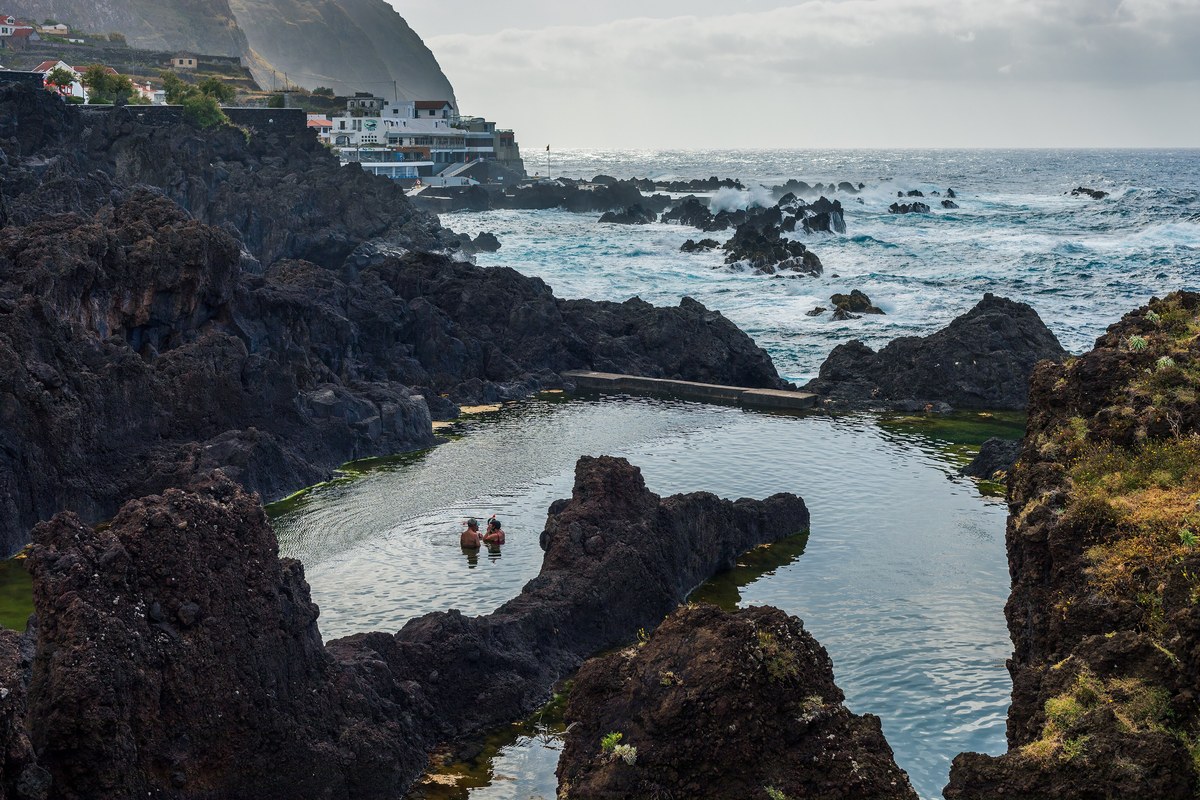
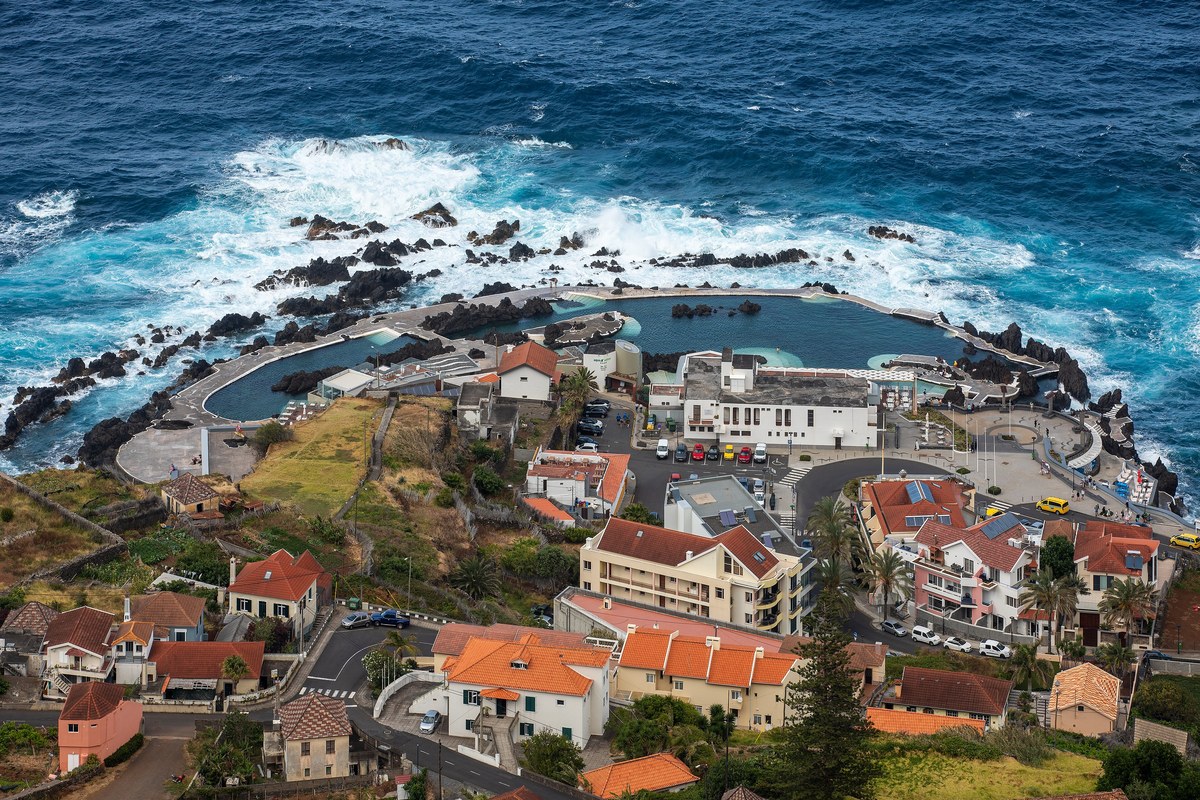
Pico do Arieiro sunrise: no public bus, so car, taxi or organised tour only. Levadas: since 1 January 2026 every official trail needs a booked slot on the government's SIMplifica portal, opening up to 30 days ahead, at €4.50 per trail in 2026 figures. West coast pools: Porto Moniz is about 75 minutes by car from Funchal, a full west-coast day. Porto Santo ferry: the Lobo Marinho sails from Funchal harbour in about 2 hours 30 minutes, and a day trip leaves about 7 hours on the island. Câmara de Lobos: 15 minutes by bus, a fishing village with espada boats and poncha bars. Curral das Freiras, the Nuns' Valley: about 40 minutes by bus. Santana: about 1 hour 30 minutes by bus.
When to go and how long to stay
Funchal is visitable all year. Spring, from March to June, and autumn, from September to November, are the usual recommendation for the best balance of weather and crowds. Winter is mild but wetter, and July and August are the busiest and most expensive. The figures below are IPMA climate normals for 1991 to 2020 for Funchal station, at 58 m above sea level, and they describe the sheltered south coast only, not the north coast or the mountains.
| Month | Day maximum | Night minimum | Rainfall | Rain days |
|---|---|---|---|---|
| January | 20.0°C | 14.3°C | 67.1 mm | 6.2 |
| February | 19.9°C | 13.9°C | 72.4 mm | 5.5 |
| March | 20.6°C | 14.3-16.2°C * | 62.3 mm | 5.8 |
| April | 21.0°C | 14.3-16.2°C * | 45.2 mm | 4.7 |
| May | 22.0°C | 14.3-16.2°C * | 27.2 mm | 3.3 |
| June | 23.7°C | 18.2-20.7°C * | 7.8 mm | 1.0 |
| July | 25.4°C | 18.2-20.7°C * | 1.7 mm | 0.3 |
| August | 26.8°C | 18.2-20.7°C * | 1.3 mm | 0.4 |
| September | 26.6°C | 20.4°C | 23.1 mm | 3.1 |
| October | 25.2°C | 19.2°C | 91.2 mm | 7.0 |
| November | 22.8°C | 17.0°C | 80.3 mm | 7.3 |
| December | 21.0°C | 15.5°C | 94.8 mm | 8.6 |
* Exact monthly night minimums for March to August were not published in the sources checked; the ranges are from the IPMA station sheet via the pillar research. Rain days are days with at least 1 mm. Sea temperatures run from about 18°C in February and March to about 23°C in September and October, with December averaging about 19.5°C at Funchal harbour.
One day covers the highlights: the market, the cable car, Monte Palace and the toboggan, then Rua de Santa Maria and the Sé Cathedral, and dinner in the Old Town. Two days is comfortable, and three days is unhurried.
Funchal's year runs on its festivals. Carnival runs from 3 to 14 February 2027; parade dates vary between sources. The Flower Festival runs from 29 April to 30 May 2027, with the Wall of Hope ceremony on 1 May, the Allegoric Flower Parade on 2 and 16 May, and flower concerts from 13 to 16 May. The Atlantic Festival runs from 4 to 27 June 2027, with the Madeira International Fireworks Contest on Saturdays 5, 12, 19 and 26 June. The Festival of the Popular Saints is listed for 8 June to 1 July, and Santo Amaro for 14 to 17 January 2027; both need a check against the official calendar.
Funchal at Christmas and New Year
December in Funchal is covered in full in our guide to Madeira at Christmas: lights, Market Night and fireworks. The lights switch on on 1 December 2026 and stay on until 10 January 2027. Noite do Mercado runs on 23 December from 19:00 to 04:00. The fireworks go up at midnight on 31 December from 59 launch points, 57 in Funchal and 2 on Porto Santo.
25 December and 1 January are public holidays: most shops and restaurants are closed, public transport is reduced, and museums and monuments are often closed. 24 and 31 December are not public holidays, but many shops and services close early. On Christmas Day hotel restaurants are open, some with a special menu, but very few other restaurants or bars. On Boxing Day most shops and restaurants are still closed, and on New Year's Day most shops and restaurants are closed. The Lido Bathing Complex is open on Christmas Day from 09:30 to 17:30, the cable car does not run, and the market is closed on 25 December and 1 January. For the wider December picture, see the best places to visit in December for UK travellers.
Practical checklist
Passport: yes, you need one. Madeira is part of Portugal, which follows Schengen area rules, and the rule is verified from GOV.UK, updated 11 August 2026. Your passport must have a date of issue less than 10 years before the date you arrive, and an expiry date at least 3 months after the day you plan to leave the Schengen area. The six-month rule some guides quote does not apply here. You can travel without a visa to the Schengen area for up to 90 days in any 180-day period. The EU Entry/Exit System is now being implemented, so on your first visit you may be asked to register biometric details at the border. If children aged 17 and under travel without a parent or legal guardian, they must carry a certified letter of authorisation plus a copy of the parent's or guardian's passport. Check the current rules on GOV.UK before you travel.
Money, health and safety: the currency is the euro. Cards are widely accepted, but carry cash: the toboggan is paid in cash. No special vaccinations are required, tap water is safe to drink, and the emergency number is 112. Madeira is safe for tourists, with low crime, and the main risks are natural: trails, roads and surf, not crime.
Time and language: there is no time difference with the UK in winter, but in summer Madeira is one hour behind the UK. Portuguese is the official language, and English is widely spoken in tourist areas. Funchal marks City Day on 21 August, a municipal holiday.
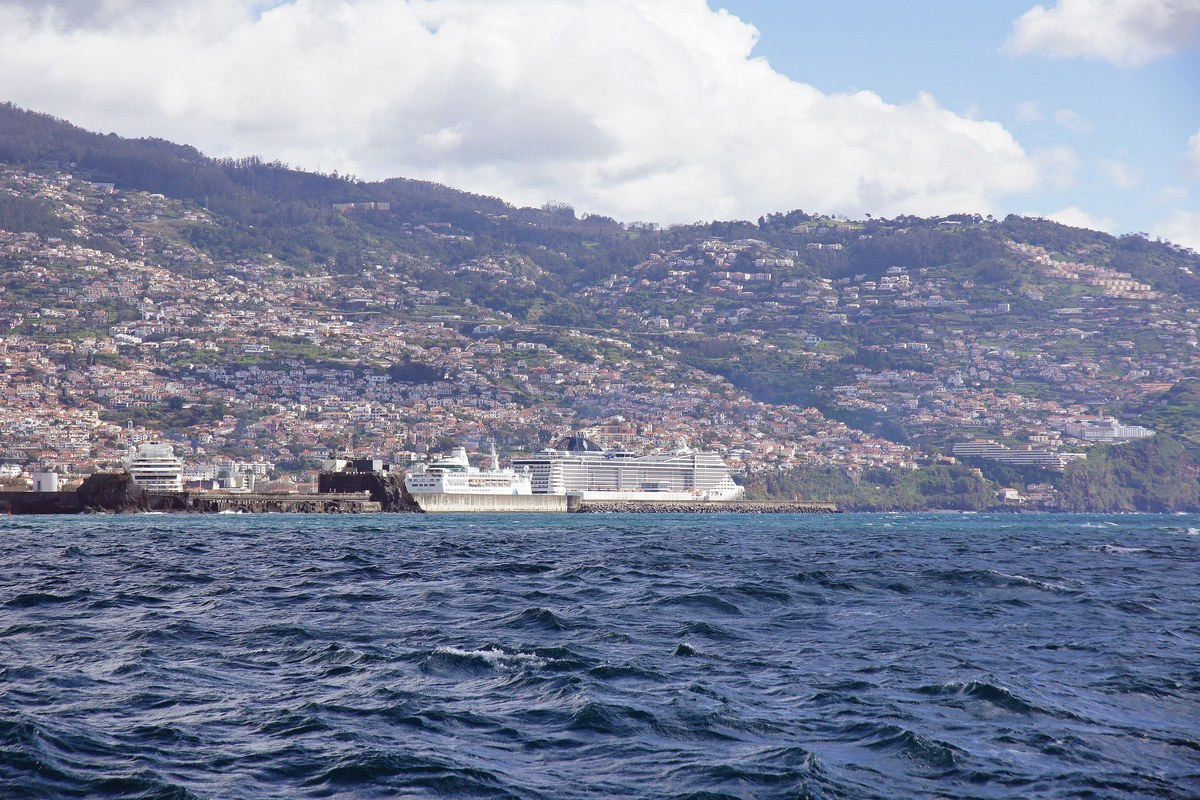
Cruise visitors: ships dock at Pontinha Quay, less than 2 km from the city centre, a 15 to 20 minute walk along the waterfront promenade. A typical call is about 9 hours.
Conclusion
Funchal is the city that makes a Madeira holiday work: a walkable old town with painted doors and a working market, a cable car to gardens above the bay, and a toboggan ride that no other European capital offers. Give it two days and use it as the base for the island. Our complete guide to Madeira for UK travellers covers the island itself, and our guide to Madeira at Christmas covers the festive season in full.