
Banff in winter is a proper winter trip, not a summer destination with snow on top. From December to March the town sits inside a national park of frozen lakes, three ski resorts and one of the great winter drives in the world. This guide is written for UK first timers: what to do in Banff in winter, what is open and what is closed, how much the park pass costs, how to get there from the UK, and how to plan three or five days without a car if you do not want one.
Quick answer: Go between December and March for skiing, skate on Lake Louise from mid December to mid April, walk the Johnston Canyon icewalk, soak in the Upper Hot Springs, and drive the Icefields Parkway to Jasper if the weather allows. Stay in Banff town for restaurants and buses, or at Lake Louise for the lake itself. You need a Parks Canada pass, an eTA to fly to Canada, and winter tyres on the Icefields Parkway from 1 November to 31 March.
Is Banff worth visiting in winter?
Yes, if you want winter itself rather than just a snowy backdrop. Banff in winter has three ski resorts within a short drive of one town, a frozen lake you can skate on, a canyon walk past frozen waterfalls, and hot springs to finish the day in. It is quieter than the summer, the light is low and sharp, and the town stays open through the season.
The trade off is the cold and the short days. January is the coldest month, with an average high of minus 3.5°C and an average low of minus 13.5°C, on Environment and Climate Change Canada 1991 to 2020 normals for Banff. Parks Canada warns that wind chill can make minus 20°C feel like minus 30°C, and that the temperature falls about 1°C for every 200 metres of elevation gain. Dress for standing still outdoors, not just for walking, and plan your days around the early sunset.
If you want the same mountains without the deep cold, read the best places to visit in November for USA travellers for shoulder season trips, or the Northern Lights in Europe guide for a shorter winter break closer to home.
Things to do in Banff in winter
This is the core of the trip. Banff in winter splits cleanly into ski days and non ski days, and the town works for both, which is why it suits couples and families where only some people ski.
Skiing at Sunshine, Lake Louise and Norquay
Banff has three ski resorts, all on one SkiBig3 pass, with a free shuttle between them from Banff town. Lake Louise Ski Resort is the biggest, with long runs and lake views. Sunshine Village sits higher and holds its snow into May. Mount Norquay is the smallest and closest to town, and the best pick for a first half day or a night ski.
For the 2026/27 season, Lake Louise opened on 1 November 2026, a week earlier than planned, with Sunshine Village and Mount Norquay following on 6 and 7 November. Check lift ticket prices and the free shuttle terms on the SkiBig3 site before you book, because prices change by date and by how far ahead you buy. If you are comparing ski seasons, the best time to visit Switzerland guide sets out European ski windows in the same way.
Skating on Lake Louise
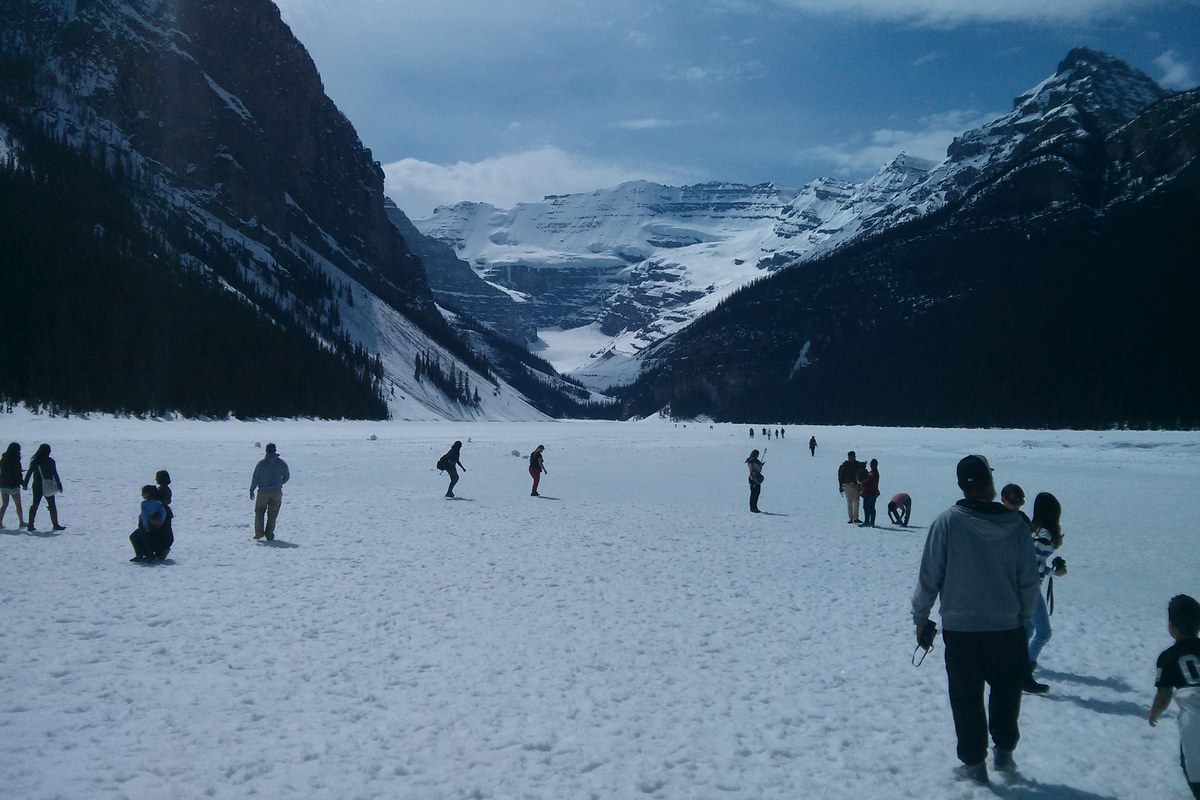
Skating on Lake Louise is the single most photographed winter activity in Banff, and it is free once you have a park pass, apart from skate hire. The lake usually freezes well enough to skate from mid December to mid April, and the Fairmont Chateau Lake Louise clears a rink on the ice and builds an ice castle on the lake when conditions allow. Go early in the morning for the clearest ice and the fewest people, and check the current season dates with Banff and Lake Louise Tourism before you plan a day around it, because the opening depends on the ice, not the calendar.
Johnston Canyon icewalk
The Johnston Canyon icewalk is a walk along steel catwalks through a narrow canyon to two frozen waterfalls, the Lower Falls and the Upper Falls. In winter the falls freeze into blue ice, and the trail is icy underfoot the whole way. Wear ice cleats or grippers, dress in layers you can add at the falls, and allow about two to three hours for the return walk to the Upper Falls. Guided icewalks run through the season if you would rather not go alone.
Banff Upper Hot Springs
The Banff Upper Hot Springs stay open through winter, and they are at their best on a cold evening after a day outdoors. The pool is outdoors and steaming, with the mountains around it. Check the current hours on the Parks Canada site before you go, and bring a warm layer for the walk back to town.
Banff Gondola
The Banff Gondola runs year round from the town up Sulphur Mountain, with a summit restaurant, viewing decks and a short boardwalk at the top. In winter the views run across the snow covered Bow Valley. Book ahead on ski weekends and check the hours before you go.
The Icefields Parkway drive
The Icefields Parkway, Highway 93 from Lake Louise to Jasper, is one of the great winter drives, and it is also the one that needs the most respect in winter. Winter tyres are required on the parkway from 1 November to 31 March, and you should check Alberta 511 for conditions and closures before you set off. Fill up before you leave, allow far more time than the summer drive takes, and be ready to turn back if the weather closes in. The full parkway is covered in detail in the planned Icefields Parkway in winter child guide.
Banff Avenue food and apres ski
Banff Avenue is the town's main street, and in winter it is where the day ends: steakhouses, pubs, cafes and hot chocolate stops, all within walking distance of most hotels. No booking is needed for most places on a weekday, but book ahead for Friday and Saturday nights in the ski season.
Wildlife watching in winter
Elk are common around Banff town and the golf course in winter, and bighorn sheep are often seen on the roads around the town. Keep the distance Parks Canada asks for, never approach or feed them, and keep dogs on a lead. For a fuller wildlife trip, read the best national parks in the USA guide and the Great Smoky Mountains trails guide.
Lake Louise in winter
Lake Louise in winter is a separate day from Banff town, and it deserves one. The lake freezes, the skating rink opens, the Fairmont Chateau Lake Louise sits at the far end of the lake, and the ski resort is a short shuttle ride away. The village itself is small, with a handful of hotels and restaurants, so most first timers stay in Banff town and travel up for the day.
Getting there in winter is by Roam Transit bus from Banff town, by the SkiBig3 shuttle if you are skiing, or by car. Parking at the lake is limited and fills early on fine weekends, so the bus is the safer choice if you do not need a car. The lake, the skating, the ice castle and the walk to the far shore are covered in full in the planned Lake Louise in winter child guide.
Johnston Canyon icewalk in winter
The Johnston Canyon icewalk deserves its own section because it is the best non ski activity in Banff in winter, and the one first timers most often underprepare for. The trail follows the canyon on catwalks bolted to the rock, past frozen waterfalls that turn blue in the cold. The Lower Falls are about an hour in, the Upper Falls about another hour beyond them.
Wear proper winter boots with ice cleats or grippers, because the catwalks ice over and the trail is slippery even in sunshine. Dress in layers: you will be warm walking uphill and cold standing at the falls. Bring water and a snack, and carry a head torch if you start late, because the canyon darkens early in winter. Guided walks provide cleats and poles if you do not have your own.
Icefields Parkway in winter
The Icefields Parkway runs from Lake Louise to Jasper through the heart of the Rockies, past the Columbia Icefield, Peyto Lake and the Weeping Wall. In winter it is quiet, snow covered and very beautiful, and it is also a mountain road in winter conditions.
Winter tyres are required from 1 November to 31 March. Check Alberta 511 for closures and conditions before you leave, because sections can close in severe weather. Services are thin along the parkway in winter, so fill up in Lake Louise, carry food and water, and keep your phone charged. If you are driving on to Jasper, this is the road the Semrush question "can you drive from banff to jasper in winter" is asking about, and the answer is yes, subject to weather, with winter tyres and a conditions check first. The full drive, with stops and the tyre rule, is covered in the planned Icefields Parkway in winter child guide.
Where to stay in Banff in winter: Banff town or Lake Louise
Stay in Banff town if it is your first trip. The town has the widest choice of hotels, the restaurants and bars on Banff Avenue, the Roam Transit buses, and the SkiBig3 shuttles to all three resorts. You can have a full winter trip without a car from Banff town, which is not true of Lake Louise.
Stay at Lake Louise if the lake itself is the point of your trip, or if you want the quietest base. The village is small, with a few hotels including the Fairmont Chateau Lake Louise, and far fewer restaurants and shops. It is also colder than Banff town and further from the ski resorts other than its own. Book early either way for Christmas, New Year and February ski weekends, because the best rooms go first.
Getting to Banff from the UK
There is no direct flight from the UK to Banff, because Banff has no airport. The route is London to Calgary, then road or coach to Banff.
- Flights: Direct flights from London to Calgary take about 9 to 10 hours. Manchester and Edinburgh also have seasonal and connecting options. Calgary is the closest major airport to Banff.
- Calgary to Banff: About 90 minutes by road. The Brewster Express coach runs from Calgary Airport to Banff town, and Roam Transit runs local buses around Banff, Lake Louise and Canmore.
- Car hire: Hire from Calgary Airport if you want to drive the Icefields Parkway or visit Lake Louise on your own schedule. Winter tyres are required on the Icefields Parkway from 1 November to 31 March, so confirm them with the hire company before you book.
- Entry rules: British citizens flying to Canada need an eTA, an electronic travel authorisation, applied for online before travel. Check the Government of Canada site and GOV.UK for the current rules and passport validity requirements.
- Health cover: A GHIC is not valid in Canada, so take travel insurance that covers winter sports and mountain rescue before you travel.
If you are weighing winter trips closer to home, the Scandinavia coolcation guide covers cold weather travel with real temperatures and train times, and the best places to visit in December for UK travellers covers winter sun and Christmas markets from the UK.
How much does Banff in winter cost?
Prices below are in Canadian dollars, as checked in October 2026. Verify the current prices on the Parks Canada site before you pay, because they change between seasons.
Every visitor who stops in Banff National Park needs a Parks Canada pass, including the town itself. The pass is admission only: it does not pay for the gondola, the hot springs, Lake Louise parking or ski lift tickets.
| Pass | Price (2026, CAD) |
|---|---|
| Adult (18 to 64), per day | C$12.25 |
| Senior (65 and over), per day | C$10.75 |
| Family or group (up to 7 people in one vehicle), per day | C$24.50 |
| Youth (17 and under) | Free |
| Discovery Pass, adult, 12 months | C$83.50 |
| Discovery Pass, senior, 12 months | C$71.50 |
| Discovery Pass, family or group, 12 months | C$167.50 |
A daily pass is valid until 4pm the next day, and it also covers Jasper, Kootenay, Yoho, Mount Revelstoke, Glacier, Waterton Lakes and Elk Island on the same ticket. The Discovery Pass pays for itself on day 7 for a solo adult traveller, and at once for a family, because one family pass covers the whole car. Parks Canada waived entry fees for part of summer 2026, from 19 June to 7 September, but that window has ended and standard fees apply again, so do not plan a winter trip around free admission.
Beyond the pass, the big winter costs are flights, hotels, ski lift tickets and car hire. Skating on Lake Louise is free apart from skate hire. The Johnston Canyon icewalk is free apart from cleats if you hire them. Book hotels and lift tickets early for the Christmas and February peaks, when prices are highest.
Banff winter weather and what to wear
Banff winter weather is cold, dry and sunny more often than people expect, but the cold is real and the wind chill is what catches first timers out. The figures below are Environment and Climate Change Canada 1991 to 2020 normals for Banff town.
| Month | Average high | Average low | Daily mean |
|---|---|---|---|
| December | minus 4.6°C (23.7°F) | minus 13.4°C (7.9°F) | minus 9.0°C (15.8°F) |
| January | minus 3.5°C (25.7°F) | minus 13.5°C (7.7°F) | minus 8.5°C (16.7°F) |
| February | minus 0.5°C (31.1°F) | minus 12.6°C (9.3°F) | minus 6.6°C (20.1°F) |
| March | 3.7°C (38.7°F) | minus 8.2°C (17.2°F) | minus 2.2°C (28.0°F) |
January is the coldest month, and it also has the shortest days, with about 8 hours of daylight. Parks Canada warns that a temperature of minus 20°C can feel like minus 30°C with wind chill, and that the temperature falls about 1°C for every 200 metres of elevation gain, so the ski resorts and the Icefields Parkway are colder than the town.
What to wear: a warm waterproof jacket, insulated waterproof boots with grip, thermal base layers, a hat, gloves and a neck warmer, and sunglasses for the glare off the snow. Dress in layers you can add or remove, because you will be warm walking uphill and cold standing still at a viewpoint or a frozen waterfall. If you are skiing, hire or bring proper ski clothing rather than relying on a town coat.
Winter driving in Banff
Winter driving in Banff is straightforward on the main roads and serious on the mountain roads, and first timers should know the difference before they hire a car.
- Winter tyres are required on the Icefields Parkway from 1 November to 31 March. On other roads in the park they are strongly recommended in winter, and a hire car with all season tyres is not the same thing. Confirm winter tyres with the hire company before you book.
- Check Alberta 511 for road conditions and closures before every mountain drive, and again before you set off back.
- Keep the fuel tank above half, carry food, water and a charged phone, and tell someone your route if you are driving the parkway in poor weather.
- Daylight is short in December and January, so plan mountain drives for the middle of the day and be off the parkway well before dark.
- If you do not want to drive at all, Banff town works without a car: Roam Transit covers the town, Lake Louise and Canmore, and the SkiBig3 shuttle covers the resorts.
A first timer plan for Banff in winter
3 day plan
- Day 1, Banff town: Arrive from Calgary, settle in, walk Banff Avenue, ride the Banff Gondola in the late afternoon, and finish at the Upper Hot Springs.
- Day 2, Lake Louise: Early bus to Lake Louise, skate on the lake, walk to the far shore, lunch at the Fairmont, and back to Banff town for dinner.
- Day 3, Johnston Canyon or skiing: Non skiers walk the Johnston Canyon icewalk in the morning and browse the town in the afternoon. Skiers take the shuttle to Mount Norquay for a first day, or to Sunshine Village if they are confident.
5 day plan
Add a full ski day at Lake Louise Ski Resort and a day driving the Icefields Parkway as far as the weather allows, with the Columbia Icefield and Peyto Lake as the turn around points if conditions are good. Keep one day flexible: in a Banff winter, weather moves plans, and a spare day is what lets you ski on the clear day and do the icewalk on the calm one.
Best time to visit Banff in winter
- December: The ski season is under way, the town is festive, and the skating rink usually opens mid month. The coldest days have not arrived yet, and Christmas week is the busiest and priciest time of the winter.
- January: The coldest and quietest month after New Year. The best snow, the fewest crowds, and the lowest hotel prices of the ski season, if you can handle minus 13°C nights.
- February: The best all round winter month for most first timers. Reliable snow, longer days than January, and the Lake Louise skating season still running. It is also the busiest month after December, so book ahead.
- March: Longer days, softer snow and spring skiing, with Sunshine Village running into May. The skating season ends around mid April, and the icewalk is at its most dramatic before the thaw.
For the rest of the year, read the best time to visit Switzerland guide for European ski windows, and the Sapporo Snow Festival 2027 guide for another February winter festival, running 4 to 11 February 2027.
Conclusion
Banff in winter is one of the few winter trips that works as well for non skiers as for skiers, and it is the first Canada guide on RoamFeast. Ski at Sunshine, Lake Louise or Norquay, skate on Lake Louise, walk the Johnston Canyon icewalk, and drive the Icefields Parkway if the weather allows. Stay in Banff town, take the buses and shuttles, and keep one day flexible for the weather.
If Banff leaves you wanting more winter, the Sapporo Snow Festival 2027 runs 4 to 11 February 2027, the Northern Lights in Europe guide covers aurora trips from the UK, and the best places to visit in December for UK travellers covers winter sun and Christmas markets for a second winter trip. For a quieter winter city break in Europe, see the things to do in Ghent in January and February guide.