

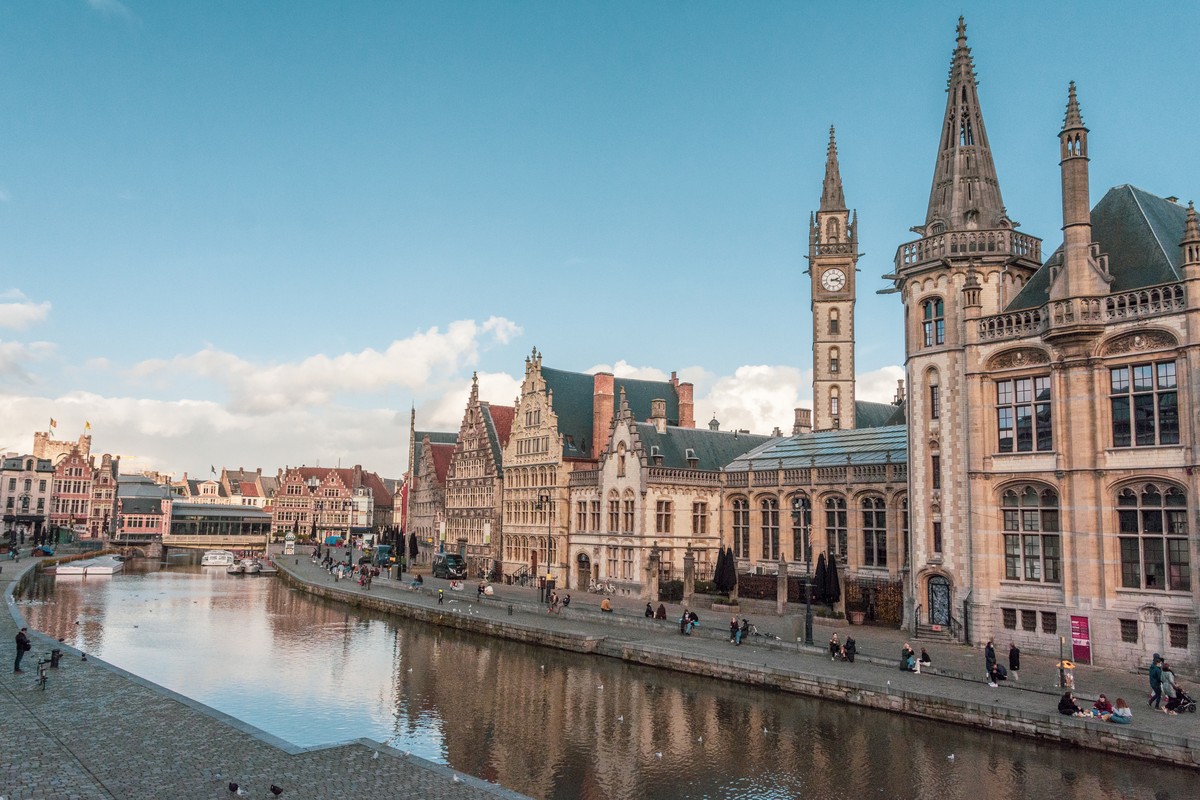
Ghent in January and February is the city at its most honest. The Christmas market closes on 3 January, the tour groups thin out, and what is left is a medieval city that belongs to the people who live there: a 12th-century castle, a van Eyck masterpiece, three towers over a canal, and some of the best eating in Belgium. It is quieter than Bruges, cheaper than Brussels, and an easy train ride from London by Eurostar, which makes it one of the best winter city breaks from the UK.
Quick answer: In January and February, Ghent is for the castle, the altarpiece, the museums and the food, not for the Christmas market, which closes on 3 January 2027. Go for 2 days. Day 1 is the medieval core: Gravensteen, St Bavo's Cathedral and the Ghent Altarpiece, the Belfry, the Graslei quays and St Michael's Bridge at dusk. Day 2 is museums, the Patershol quarter and the winter sales. A 48 hour CityCard Gent costs 49 euros and pays for itself if you visit the castle, the Belfry and a museum. Expect 4 to 7 degrees, rain on about half the days, and a warm waterproof coat.
Is Ghent worth visiting in January and February?
Yes, if you want a city break rather than a Christmas market. The market season ends on 3 January 2027, and after that Ghent changes character. Hotel rooms are easier to find, the castle and the altarpiece have short queues, and the restaurants and cafes along the Graslei feel local again. The trade off is the weather: cold, grey and wet at times, with about 4 degrees on average and rain on roughly half the days in January.
January has one clear advantage over December: the winter sales, which traditionally run from 3 to 31 January. February has its own reason to go: Valentine's Day on 14 February 2027, when the restaurants in the Patershol and along the canals fill up, so book a table ahead if you travel that weekend.
Ghent is not a beach destination and it is not a ski destination. It is a walking city, and January and February suit walkers who like museums, food and medieval streets without crowds. If you want guaranteed sun, go elsewhere. If you want a quiet European city break in winter, Ghent is one of the strongest choices, and it works well as one of the Europe city breaks under £150.
Things to do in Ghent
This is the heart of the guide. Everything below is in the historic centre, within walking distance of the Graslei, so you can cover it on foot in 2 days.
Gravensteen, the Castle of the Counts
Gravensteen is the one sight people come to Ghent for. A 12th-century moated castle of the Counts of Flanders, right in the city centre, with a rooftop circuit over the roofs and canals, a collection of armour and weapons, and a medieval torture chamber that children find far more exciting than adults expect. Allow about 1.5 hours.
Adult entry is 15 euros, and entry is free with a CityCard Gent. The castle is open daily, usually 10am to 6pm with last admission at 4:40pm, and it is closed on 24, 25 and 31 December and on 1 January. Go at opening to beat the groups, and check the official site before you go, as winter hours can vary.
St Bavo's Cathedral and the Ghent Altarpiece
St Bavo's Cathedral is free to enter, but the Ghent Altarpiece, Jan van Eyck's Adoration of the Mystic Lamb, completed in 1432, sits in a separate chapel with its own timed ticket. The altarpiece costs 12.50 euros without the virtual reality experience and 16 euros with it, and CityCard Gent holders get 10 euros off. Book a timed ticket in advance, especially at weekends, and go on a weekday morning for the quietest visit.
The cathedral itself is open Monday to Saturday 8:30am to 5:30pm and from 1pm on Sundays. The altarpiece viewing hours are shorter, usually 10am to 5pm, so check times before you plan your day.
The Belfry of Ghent
The Belfry is one of Ghent's three towers, and the climb is the best view in the city: the Graslei, the castle, St Bavo's spire and the canal network from above. There is a lift for part of the way, so it is easier than it looks. Entry is free with a CityCard Gent. Go late in the afternoon, when the light over the old town turns the stonework gold, and then walk straight to St Michael's Bridge for the classic view of the three towers in a row.
The Graslei and Korenlei
The Graslei and Korenlei are the two quays facing each other across the River Leie, lined with medieval guild houses. They are free, open all day, and they are the best place in Ghent for no money at all. Come back at dusk, when the buildings are lit and the water reflects the lights, and walk the short stretch between St Michael's Bridge and the castle. This is the walk to do on your first evening, and it is the reason Ghent photographs so well in winter.
St Michael's Bridge
St Michael's Bridge is where the three towers line up: St Bavo's Cathedral, St Nicholas' Church and the Belfry, all in one frame. It is the most photographed spot in the city, and it is free. Go at dusk, when the towers are lit, and again in the morning, when the light is different and the bridge is quiet.
STAM, the Ghent City Museum
STAM tells the story of the city itself, from its medieval trading past to the present day, in a former abbey with a huge aerial photograph of Ghent on the floor that you walk across. Individual entry is 14 euros, and entry is free with a CityCard Gent. Under 19s go free at the city museums. Allow about 1.5 hours, and go on a rainy afternoon, which is when it is at its best.
SMAK and the Museum of Fine Arts
SMAK, the Municipal Museum of Contemporary Art, and the Museum of Fine Arts (MSK) sit next to each other in the Citadel Park, a short walk from the centre. Both are included in the CityCard Gent. If you like contemporary art, SMAK is the one to choose. If you prefer old masters, the Museum of Fine Arts is the better pick. Doing both in one afternoon is possible, but one museum done properly beats two rushed.
The Christmas market and the ice rink, until 3 January
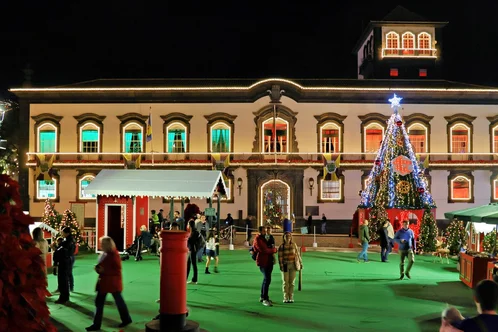
If you travel in the first three days of January, you can still catch the Gentse Winterfeesten, Ghent's Christmas market, which runs from 3 December 2026 to 3 January 2027 across the historic centre, from Sint-Baafsplein past the Belfry to the Korenmarkt, with more than 150 wooden chalets. The ice rink under the Stadshal runs on the same dates, 3 December 2026 to 3 January 2027, and entry to the market is free. The Gravensteen's Winterwondercastle programme runs from 4 December 2026. After 3 January, the market, the rink and the chalets are gone, and the city returns to normal. Do not plan a January trip around the market unless you arrive before it closes. For the wider Christmas season, see the Christmas 2026 guide.
Canal boats in winter
Canal boat trips are one of the best ways to see Ghent, but winter timetables are reduced. Ask at the Visit Gent tourist office on arrival which boats are running in January and February, rather than assuming a fixed timetable. A guided boat tour is included once with a CityCard Gent, which is a good reason to check whether one is running on your dates before you buy the card.
The CityCard Gent: is it worth it?
The CityCard Gent costs 49 euros for 48 hours or 55 euros for 72 hours, based on the most recent 2026 sources, including the STAM museum's own site. Some older guides still list 42 euros and 48 euros, so check the current price on visit.gent.be before you buy. The card cannot be bought online. Buy it at the Visit Gent tourist office, at participating museums and attractions, or at some hotels.
What it includes: free entry, once each, to Gravensteen, the Belfry, the Museum of Fine Arts, SMAK, STAM, the Museum of Industry, St Peter's Abbey, the House of Alijn and the Dr Guislain Museum, plus unlimited De Lijn trams and buses for the card's validity, one guided boat tour, one day of bike hire, and 10 euros off the Ghent Altarpiece.
The maths for a 2 day trip: Gravensteen 15 euros, STAM 14 euros, the Belfry, a boat tour and two days of trams. Visit the castle and one museum and the card is close to paying for itself. Visit the castle, the Belfry and two museums and it saves you money. If you only plan one paid sight and you are happy walking, skip the card. If you plan a busy cultural weekend, buy it at the tourist office on arrival and start the clock with your first visit.
A 2 day plan for Ghent in January and February
Day 1, the medieval core. Start at Gravensteen at opening, then walk to St Bavo's Cathedral for the Ghent Altarpiece. Cross to the Belfry for the view, then walk the Graslei and Korenlei, stopping for lunch in the Patershol. In the afternoon, visit STAM or the Museum of Fine Arts. At dusk, walk to St Michael's Bridge for the three towers, then dinner along the canals.
Day 2, museums and the quiet city. Start at SMAK or the Museum of Fine Arts, whichever you did not visit on day 1. Walk the Patershol quarter, the oldest part of the city, with its narrow streets and small restaurants. Use the afternoon for the winter sales in the shopping streets around the Korenmarkt, or for a canal boat if one is running. If you travel in early January, use the last afternoon for the Christmas market before it closes on 3 January.
If you have a third day, take the Bruges day trip below, or use it for a slower morning: a long breakfast, a second museum, and a walk along the Leie before your train home.
Where to eat in Ghent
Ghent is one of the best eating cities in Belgium, and January and February are a good time to eat well, because the restaurants are quieter and the tables are easier to get. Start with the street food: frites with mayonnaise from a frituur, a Belgian waffle, and a cuberdon, the cone-shaped raspberry sweet that Ghent is known for. For a sit-down meal, try waterzooi, the creamy Ghent stew, in a restaurant in the Patershol. Belgian beer is part of the meal here, not an afterthought, and most restaurants will suggest a beer to go with the food. Chocolate shops are everywhere in the centre, and a box of pralines is the souvenir to take home. Book ahead for Friday and Saturday evenings, and for Valentine's weekend in February.
Getting to Ghent from the UK
There is no direct train from London to Ghent. Take the Eurostar from London St Pancras to Brussels Midi, then change to a Belgian train to Ghent-Sint-Pieters. The whole journey takes about 2 hours 41 minutes to 2 hours 50 minutes, according to published timetables, so check times when you book, as connections vary. Ghent-Sint-Pieters is the main station, and trams run from the station to the historic centre in a few minutes. The centre itself is best explored on foot.
If you drive, the keyword data says parking in Ghent is one of the most searched practical questions, so plan it before you arrive: the historic centre is largely car free, and you should use one of the car parks on the edge of the centre and walk or take a tram in. If you fly, Brussels Airport is the nearest airport, with a direct train to Ghent.
Where to stay in Ghent
Stay in the historic centre if you want to walk everywhere, or in the Patershol if you want the quietest streets and the best restaurants on your doorstep. Both are within a short walk of the Graslei, the castle and the cathedral. Book early for Valentine's weekend in February and for the first weekend of January, when the Christmas market is still open. No hotel prices are given here, because they change by date and by booking site, so check the price for your exact dates before you commit.
Ghent winter weather and what to wear
Ghent has a mild maritime climate, which means cold and wet rather than cold and snowy. January is the coldest month, February is only slightly warmer, and rain falls on about half the days in January. Snow is rare. Pack a warm waterproof coat, waterproof shoes, layers you can add or remove, and a hat and gloves. An umbrella helps, but the wind along the canals makes a hooded coat more useful than an umbrella.
| Month | Average temperature | Average high | Average low | Rainfall |
|---|---|---|---|---|
| January | 4.0°C (39.2°F) | 6.3°C (43.4°F) | 1.7°C (35.1°F) | 67 mm |
| February | 4.3°C (39.8°F) | 7.2°C (44.9°F) | 1.6°C (34.9°F) | 57 mm |
Figures are climate-data.org averages for 1991 to 2021. Expect the temperature to feel colder beside the canals, especially after dark.
A Bruges day trip from Ghent
Bruges is a short train ride from Ghent-Sint-Pieters, which makes it the easiest day trip from the city. It is smaller than Ghent, more crowded, and more obviously pretty, with canals, chocolate shops and the Belfry of Bruges. Go on a weekday if you can, when the day trippers are fewer, and return to Ghent for dinner, when the restaurants are quieter and cheaper. Bruges follows the same winter calendar: its Christmas market and skating rink also close on 3 January, while its wider winter programme runs until 31 January 2027. If you want a second quiet Belgian city rather than a second day in Ghent, Bruges is the right choice.
Best time to visit Ghent
December is for the Christmas market, which runs from 3 December 2026 to 3 January 2027. January is for the quiet city and the winter sales, traditionally 3 to 31 January. February is for Valentine's weekend and for the city at its most local. Spring and summer bring warmer weather, longer days and more visitors, and the canals are at their best in May and June. There is no bad month to visit Ghent, but January and February are the months for travellers who prefer a quiet city to a busy one. For other winter trips, see the best places to visit in December for UK travellers and the best places to visit in Europe in November.
Conclusion
Ghent in January and February is a city break for travellers who like their cities quiet. The market is gone by 3 January, the crowds are gone with it, and what remains is a medieval city that is easy to walk, easy to eat in, and easy to reach from London. Two days is enough for the castle, the altarpiece, the Belfry, the museums and the quays, and a third day takes you to Bruges. Go for the winter sales in January, or for Valentine's weekend in February, and book the CityCard Gent if you plan a busy cultural weekend. For more winter city breaks, see the best places to visit in November for USA travellers and the best Christmas markets in the UK. For a snowy winter trip further afield, see the Banff in winter guide.