
Pink sand is real, but it is rarely the bubblegum pink of the photographs. On most pink beaches the colour is a soft blush, strongest in wet sand and low light, and palest in dry sand at midday. Once you expect that, you will not be disappointed, and you will know which beaches are worth a dedicated trip and which are worth a detour only. This guide explains how pink sand forms, compares the beaches that genuinely carry it, and helps you choose by where you are travelling from and what kind of trip you want. It also states plainly where the pink is subtle, partial, or out of reach, because a beach you cannot stand on should never be sold as a beach you can swim at. For a full destination guide to one beach, read the Pink Sand Beach Bahamas guide, the Elafonisi pink sand beach guide, or the Horseshoe Bay Bermuda guide linked below. This pillar holds the world-level facts once, so the destination guides do not have to repeat them.
Why sand turns pink
Three different processes make sand look pink, and they do not all produce the same beach. The best verified process is foraminifera. Foraminifera are tiny single-celled marine organisms that build calcium carbonate shells, called tests, usually under 1 mm across. When red and pink-shelled forms die, waves grind their shells to sand-sized grains, and those grains wash ashore and mix with white carbonate sand made of crushed coral, shell, and calcareous algae debris. The result is a pink tint whose strength depends on the proportion of red grains, on wet sand, and on low light. In Bermuda, the named species is Homotrema rubrum, which grows abundantly on the undersides of coral ledges, and scientists believe symbiotic algae give the red forams their colour. The same foraminifera process explains the Bahamas and, in general terms, Elafonisi. A second reported process is crushed red coral. Tour operators and guides attribute the pink at Komodo, Great Santa Cruz, and Tangsi Beach in Lombok mainly to fragments of red organ-pipe coral, Tubipora musica, mixed with white sand, with foraminifera as a contributor. That attribution comes from operator and guide sources, not from a peer-reviewed paper found for this guide, so it is presented here as the reported explanation, not as settled science. A third process is mineral. At Pfeiffer Beach in California, manganese garnet eroded from the Santa Lucia Mountains washes down by creeks and concentrates in patches and streaks near stream mouths and the high-tide line, strongest after rainfall. That pink is mineral, not shell, and it is patchy rather than uniform. No foraminifera role is involved there. One honest rule covers every beach below: the pink is usually soft, it shows best where the water laps the shore and in morning or late afternoon light, and any photograph taken at midday on dry sand will look paler than the postcards suggest.
How to choose
Choose by departure region first, because pink sand is scattered and most of the disappointment comes from distance, not colour. Travelling from the UK or Europe, the realistic choices are Elafonisi in Crete and Ses Illetes in Formentera. Elafonisi is the fuller pink beach of the two, reached by a drive from Chania, while Ses Illetes is a white-sand beach with pink-tinged sections, best combined with an Ibiza and Formentera trip rather than flown to on its own. Travelling from the US East Coast, the realistic choices are the Bahamas and Bermuda. Harbour Island in the Bahamas suits a dedicated beach stay, while Horseshoe Bay in Bermuda suits a cruise day or a short island trip, with a bus route that runs directly past the beach. Travelling for a family beach day, the calmest options in this guide are Port Royal Cove at Horseshoe Bay and the lagoon at Elafonisi, both shallow and sheltered. Travelling for quiet, look to the South Shore trail beaches east of Horseshoe Bay, to Barbuda, or to the sandbanks of Tikehau, all of which trade facilities for space. Travelling for adventure or a once-in-a-lifetime sight, Komodo and Great Santa Cruz are the farthest and most logistically demanding, and both need advance planning around boats, park rules, and, for Santa Cruz, current travel advice for the Zamboanga area.
The beaches
The table gives the honest verdict for each beach in one line. Read the qualifier, not just the name: genuine pink, pink-tinged, and viewing only are different promises.
| Beach | Verdict | What makes it pink | Access |
|---|---|---|---|
| Pink Sand Beach, Harbour Island, Bahamas | Genuine pink | Foraminifera shells mixed with pale coral and shell fragments and white carbonate sand | Public beach, reached via North Eleuthera plus boat, or Nassau passenger ferry |
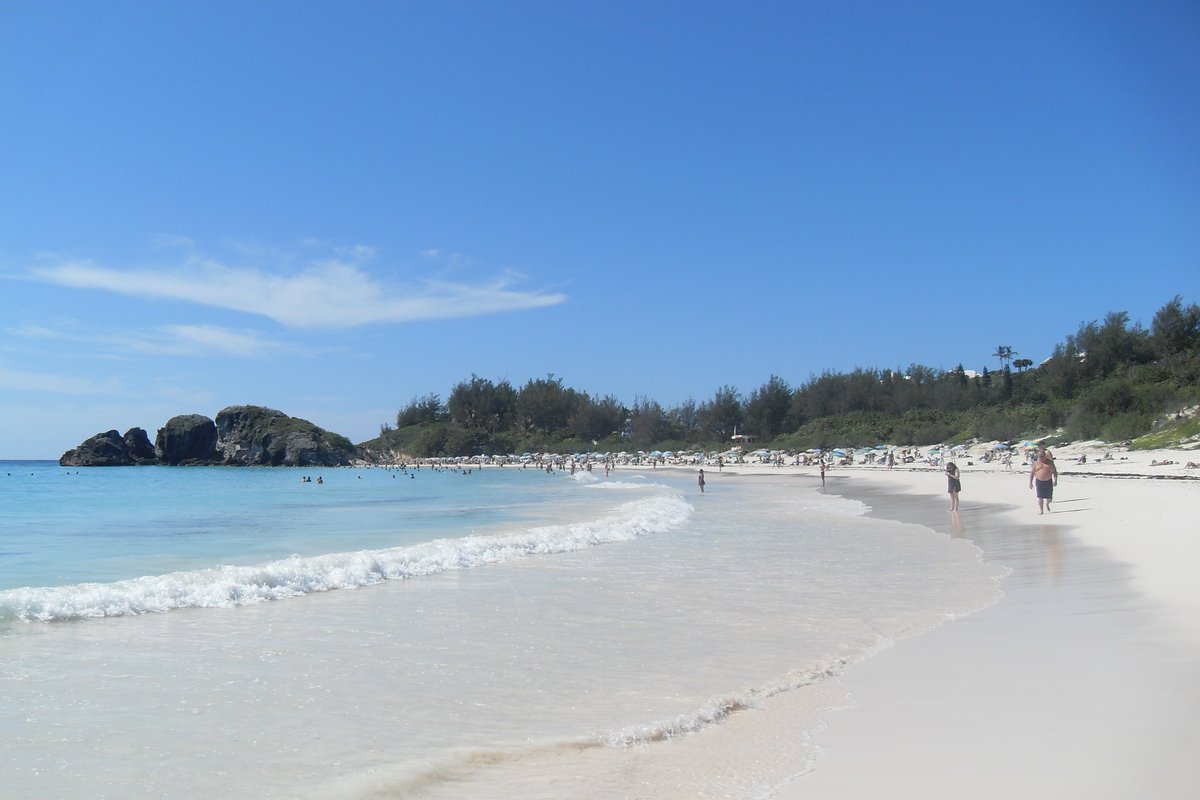
| Horseshoe Bay, Bermuda | Genuine pink, soft blush | Red foraminifera, Homotrema rubrum, mixed with very fine white sand | Public beach in Southampton parish, on bus route 7, with cafe, toilets, and showers |
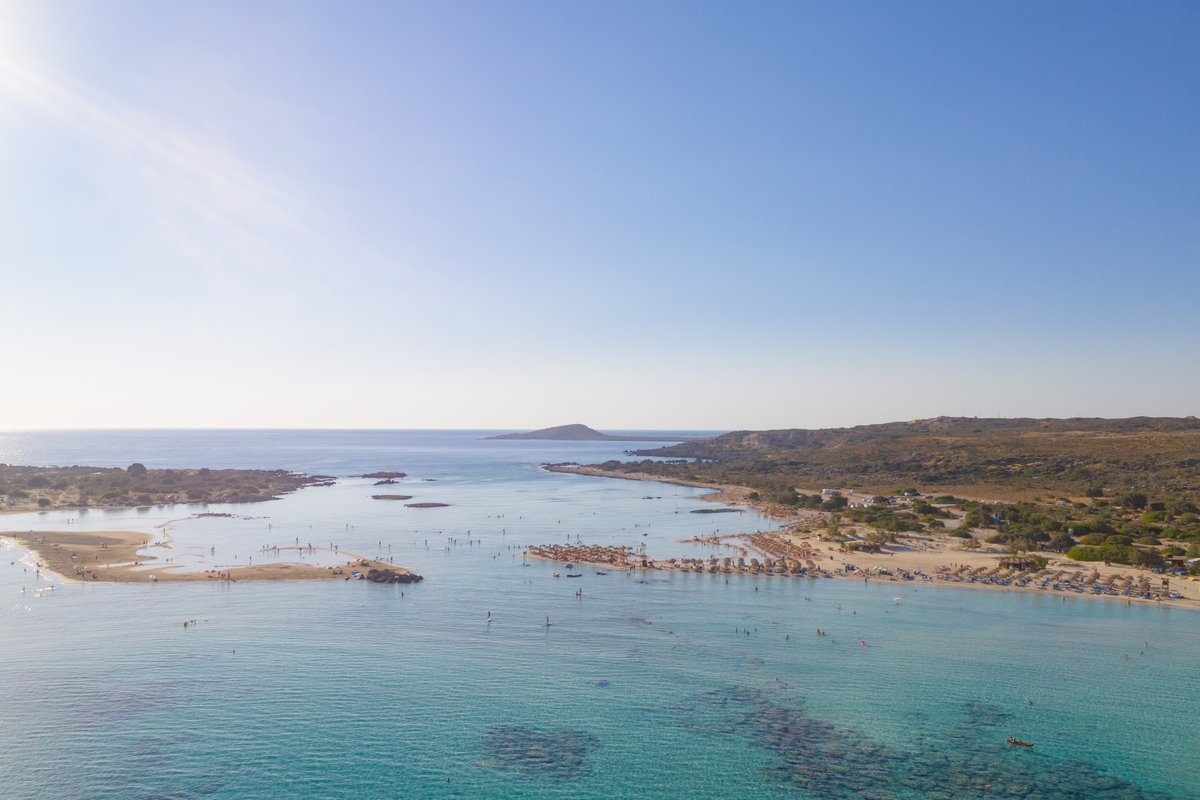
| Elafonisi, Crete | Genuine pink-tinged, subtle, not uniform | Crushed foraminifera shells, seashells, and coral fragments mixed with white sand | Paved road, roughly an hour and a half's drive from Chania, plus reported bus and boat options |
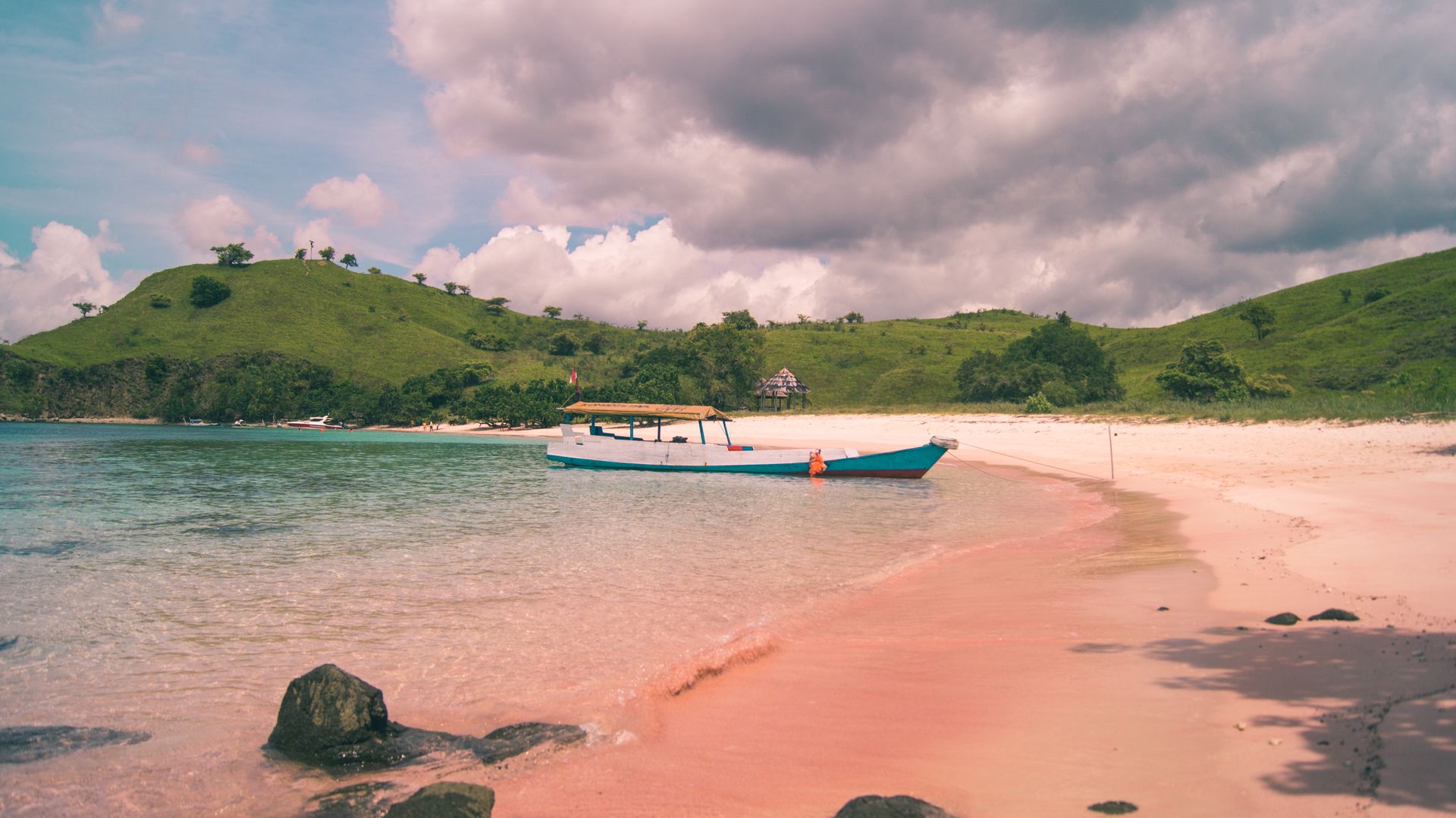
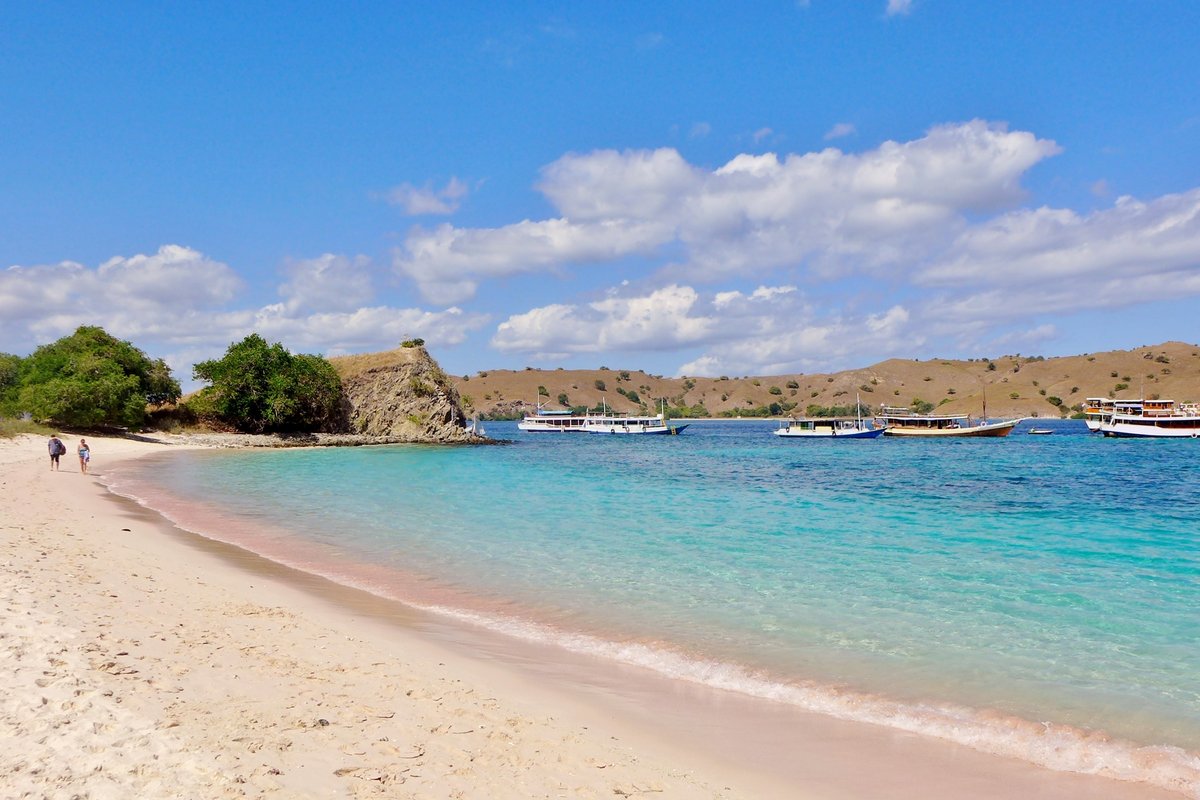
| Pink Beach, Komodo, Indonesia | Genuine pink | Reported as crushed red organ-pipe coral plus red foraminifera shells mixed with white sand | Boat only from Labuan Bajo, inside Komodo National Park, park entry or permit required |
| Great Santa Cruz Island, Philippines | Genuine pink | Reported as pulverised red organ-pipe coral mixed with white sand | Day trip only, booked through the Zamboanga City tourism office, with a mandatory briefing and limited visitor numbers |
| Spiaggia Rosa, Budelli, Sardinia | Genuine pink, but viewing only | Miniacina miniacea foraminifera shells fragmented with corals and shells | No landing and no swimming. Viewing only from boats at a distance and from an official observation point |
| Barbuda pink beaches | Genuine pink-tinted | Crushed coral and shell fragments | Remote and undeveloped, by ferry from Antigua or short flight, confirm ferries and accommodation before planning |
| Tangsi Beach, Lombok, Indonesia | Genuine pink blush, wet sand best | Reported as red coral fragments plus foraminifera shells, species unnamed, sources disagree on which dominates | Rough road from Kuta, no public transport, or private boat, minimal facilities |
| Playa de Ses Illetes, Formentera, Spain | Pink-tinged sections only, not uniformly pink | Coral dust and shell fragments mixed with white sand | Inside Ses Salines Natural Park, ferry to La Savina then bicycle, bus, scooter, car, or on foot |
| Tikehau, French Polynesia | Genuine pink-tinged, atoll level, not one named beach | Broken foraminifera pieces and tiny red coral fragments mixed with white coral sand | Boat-accessed sandbanks and motu day trips, flights from Papeete, often via Rangiroa |
| Crane Beach, Barbados | Pink-tinged, pale and blush, subtle | Crushed coral and shell, foraminifera contributor unnamed | Fully accessible, below The Crane resort, with resort facilities |
| Pfeiffer Beach, California | Not a classic pink beach, mineral purple and pink patches only | Manganese garnet eroded from the Santa Lucia Mountains, concentrated in patches and streaks, strongest after rainfall | Narrow one-lane access road, small car park, daytime only, swimming not recommended |
The classic pink beaches
Harbour Island in the Bahamas and Horseshoe Bay in Bermuda are the two beaches in this guide where the foraminifera explanation is best verified and the pink is a genuine beach-wide tint rather than a patch. Elafonisi belongs with them, with a qualifier: its pink is real but subtle, strongest along the waterline, and the beach is a lagoon and islet landscape first and a pink beach second. Read the Elafonisi pink sand beach guide for the drive, the bus, the lagoon wade, and the protection rules. Komodo and Great Santa Cruz are genuine pink beaches with harder logistics. Komodo is boat only from Labuan Bajo, inside a national park, with no facilities on the Komodo beach itself reported. Santa Cruz is day trip only, booked through the Zamboanga City tourism office, with a briefing and limited numbers, and no overnight stays. For Santa Cruz, check your government's current travel advice for the Zamboanga area before planning, as that advice was not verified at the time of writing.
Viewing only, and the partial pinks
Spiaggia Rosa on Budelli is a genuine pink beach you cannot stand on. Landing is prohibited and swimming in front of the beach is not permitted, under Zone A protection since 1998. Boat tours view it from a distance, and the nearby Budelli Natural Pools are the swim stop. Any guide that lists it without that warning misleads its readers. Barbuda, Tangsi, Ses Illetes, Tikehau, and Crane Beach are all real pink-tinged places, but none should be ranked alongside Harbour Island or Horseshoe Bay as an equal pink beach. Barbuda is pink-tinted and remote. Tangsi is a soft blush at its best in wet sand. Ses Illetes is white sand with pink hues where the water laps the shore and at sunrise and sunset. Tikehau is pink-tinged sand across an atoll, not one named beach. Crane Beach is pale and blush, a subtle tint on a cliff-backed Barbados beach. Pfeiffer Beach is different again: mineral patches, not shell pink, and swimming there is not recommended.
A name often listed that this guide leaves out
Balos Bay in Crete appears in some pink beach lists, but sources consistently describe it as white sand with pinkish patches near the shoreline, not as pink sand. Its fame is the lagoon, not pink sand, so it is not in the table above. The Elafonisi pink sand beach guide covers Balos as a nearby alternative, where that distinction is explained.
Responsible travel
Pink sand is fragile in exactly the way that makes it tempting to take home, so the rules are simple and apply everywhere in this guide. Do not take sand, shells, or coral from any pink beach, and do not stand on coral. Take all litter home with you, including small fragments that look harmless. Stay on marked paths, keep out of roped off and protected areas, and respect any local rule that limits numbers, equipment, or access, including the viewing-only rule at Spiaggia Rosa and the Natura 2000 protections at Elafonisi. Where a beach limits visitor numbers or requires a booking or briefing, as at Santa Cruz, follow that process rather than arriving unannounced. The pink survives only if the material that makes it stays on the beach.
Sources
Bermuda Institute of Ocean Sciences, Our Unique Pink Sand, https://bios.asu.edu/currents/our-unique-pink-sand.
NOAA Ocean Service, Digging into the Science of Sand, https://oceanservice.noaa.gov/podcast/july23/nop67-sand.html.
Florida State University, Molecular Expressions, Foraminifera gallery, https://micro.magnet.fsu.edu/optics/olympusmicd/galleries/darkfield/formaminifer.html.
Go To Bermuda, South Shore Park, https://www.gotobermuda.com/listings/beaches-water-activities/south-shore-park.
KTEL Chanion-Rethymnou, Popular Destinations of Chania, https://www.e-ktel.com/en/news/anakoinwseis/433-popular-destinations-of-chania.
European Environment Agency, EUNIS site factsheet GR4340002, https://eunis.eea.europa.eu/sites/GR4340002.
RoamFeast, Pink Sand Beach Bahamas: Complete Visitor Guide, https://roamfeast.com/blogs/pink-sand-beaches-around-the-world/pink-sand-beach-bahamas-complete-visitor-guide.