
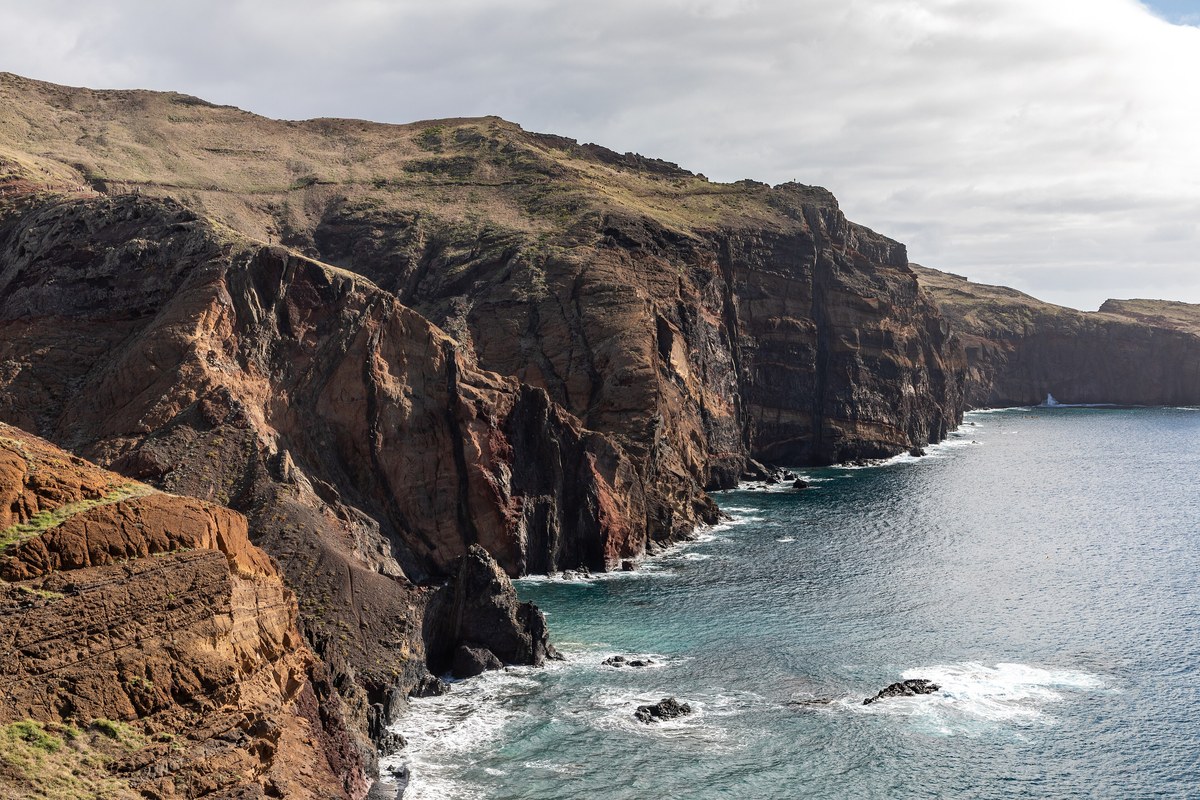
Madeira is a Portuguese island in the Atlantic, an autonomous region of Portugal, and one of the warmest places a UK traveller can reach on a direct flight of about four hours. It is not a beach island in the usual sense. It is a steep volcanic island of levada walks, laurel forest, sea pools and mountain viewpoints, with a capital, Funchal, that sits in a natural bowl above the bay. This guide covers the whole island: where it is, when to go, how to get there, where to stay, what to do, and what it costs in outline.
Where is Madeira? It sits about 805 km southwest of mainland Portugal, just under 400 km north of the Canary Islands and 520 km west of Morocco. It is on the African tectonic plate but politically and culturally European, and it is an outermost region of the European Union. The archipelago is Madeira, Porto Santo, the Desertas and the Selvagens, and only Madeira and Porto Santo are inhabited. Madeira Island itself is 57 km long and 22 km at its widest, with a coastline of about 144 km. The region covers 801 sq km and the island itself 741 sq km.
What is Madeira? The island is the top of a massive submerged shield volcano rising about 6 km from the ocean floor. Its name comes from the Portuguese word for wood, and its nickname is the Pearl of the Atlantic. Portuguese sailors claimed it in 1419 and settled it after 1420, in the service of Prince Henry the Navigator. The Laurissilva laurel forest is a UNESCO World Heritage Site, listed in 1999. The capital is Funchal, and about 251,000 people live in the region. Madeira has been autonomous since 1976. There is no time difference with the UK in winter, but in summer Madeira is one hour behind the UK, because the UK moves to British Summer Time while Madeira stays on Western European Summer Time. The UK is the largest source market for visitors, with 148,000 British visitors in 2021.
When to go: the best months, month by month
Madeira is a year-round island, but it is not one climate. The figures below are IPMA climate normals for 1991 to 2020 for Funchal, station 522, at 58 m above sea level. They describe the sheltered south coast only. The north coast and the mountains are wetter and cooler, and the difference is large: the north-coast station at Santana records about twice Funchal's rainfall from January to July, and the mountain station at Chão do Areeiro records about four times Funchal's rainfall in March.
| Month | Mean daily max | Rainfall | Rain days | Sea temp |
|---|---|---|---|---|
| January | 20.0°C | 67.1 mm | 6.2 | 19°C |
| February | 19.9°C | 72.4 mm | 5.5 | 18°C |
| March | 20.6°C | 62.3 mm | 5.8 | 18°C |
| April | 21.0°C | 45.2 mm | 4.7 | 18°C |
| May | 22.0°C | 27.2 mm | 3.3 | 19°C |
| June | 23.7°C | 7.8 mm | n/a | 20°C |
| July | 25.4°C | 1.7 mm | n/a | 21°C |
| August | 26.8°C | 1.3 mm | n/a | 22°C |
| September | 26.6°C | 23.1 mm | 3.1 | 23°C |
| October | 25.2°C | 91.2 mm | 7.0 | 23°C |
| November | 22.8°C | 80.3 mm | 7.3 | 22°C |
| December | 21.0°C | 94.8 mm | 8.6 | 19.5°C |
Mean daily minimums in Funchal are 14.3°C in January, 13.9°C in February, 20.4°C in September, 19.2°C in October, 17.0°C in November and 15.5°C in December. From March to May they range from 14.3°C to 16.2°C, and from June to August from 18.2°C to 20.7°C. The annual mean temperature in Funchal is 20.0°C, annual rainfall is 574.3 mm, and there are 104.1 days a year above 25°C. Funchal has never gone below 8.5°C in the thirty-year record. Rain days for June, July and August were not published in the sources used, so they are marked n/a above rather than guessed. Sea temperatures are from older normals; December uses 19.5°C at Funchal harbour, for consistency with the Christmas guide.
The north coast is a different climate. Santana, at about 380 m on the north coast, has a mean daily maximum of 16.1°C in January, 16.7°C in March and 22.0°C in July, and its February mean temperature is 13.1°C. Its rainfall from January to July is about 1.97 times Funchal's, and in July it is 15.18 times. The mountains are colder still: at Chão do Areeiro, about 1,590 m, the mean daily maximum is 8.7°C in January, 9.7°C in March and 19.1°C in July, and the January mean temperature at the Areeiro station, at 1,610 m, is 5.5°C. Porto Santo is drier than Madeira Island, with an annual mean temperature of 19.1°C and annual rainfall of 381.7 mm.
What is best in each season
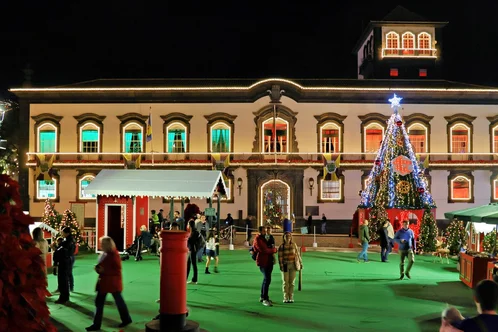
Spring, from March to May, brings the Flower Festival and mild walking weather, with Funchal maximums of 20.6°C to 22.0°C. March and April are the wettest spring months on the north coast, so keep Funchal as the base. Summer, from June to August, is the driest season, with Funchal rainfall of 7.8 mm in June, 1.7 mm in July and 1.3 mm in August, and the warmest sea. August has 28 days at 25°C or more. Autumn starts with September, the warmest month overall at 26.6°C maximum and 23°C sea, then the rain returns in October and November, roughly double on the north coast. Winter, from December to February, is the mildest winter sun in reach of the UK, at 19.9°C to 21.0°C by day and 13.9°C to 15.5°C at night, but December is the wettest month of the year at 94.8 mm in Funchal. December in depth is covered in our guide to Madeira at Christmas: lights, Market Night and fireworks, which covers the six-week festive season, the lights, Market Night and the New Year's Eve fireworks. If you want a wider December trip, see the best places to visit in December for UK travellers.
Getting there from the UK
Direct flights run year-round from London Gatwick, Stansted and Luton. There is no direct flight from Heathrow. That catches people out, because Heathrow is the usual London gateway, and the point is worth stating plainly: if you want to fly direct, book from Gatwick, Stansted or Luton. From London, Gatwick is served by British Airways, easyJet and Jet2, Stansted by Ryanair and Jet2, and Luton by easyJet and Jet2. Regional departures run from Manchester, Birmingham, Bristol, Bournemouth, Edinburgh, Glasgow, Leeds, Newcastle and Belfast. How many UK airports offer direct flights is unresolved: one guide says 13, KAYAK says 11 UK cities, so no number is stated here.
The flight takes about 3 hours 45 minutes to 4 hours 10 minutes from London. The airport is Madeira Airport Cristiano Ronaldo (FNC) at Santa Cruz, about 16 to 22 km east of Funchal, roughly a 20 to 30 minute taxi ride. It has one terminal, and its runway stands on pillars over the sea. About 5.4 million passengers used it in 2025. Do not quote flight fares from memory: prices vary sharply by season, with Christmas and New Year and the summer school holidays the priciest, and they need a fresh live check at writing time.
Getting around
Driving
Drive on the right. The expressways are toll-free, and there are about 150 tunnels. The longest tunnel is about 3.1 km, between Ribeira Brava and São Vicente. Speed limits are 50 km/h in towns, 90 km/h on rural roads and 100 km/h on the VR1, although one source says up to 120 km/h on some highways, so treat 100 km/h as the VR1 limit. The island circular route is about 160 km and under 4 hours, and the VR1 crosses the island in 45 minutes. Headlights are mandatory in all tunnels, and GPS loses signal in tunnels.
Parking in central Funchal uses the Blue Zone, or Zona Azul, paid Monday to Friday 08:00 to 20:00 and Saturday 08:00 to 14:00, with about a 2-hour limit, paid at meters or through the Frente MarFunchal or iPark Driver app. White lines are free, yellow lines mean no parking, and parking is free on Sundays, public holidays and overnight. There is no formal limited traffic zone, and the Old Town is pedestrianised. Fuel stations on the north coast are only at Ribeira Brava, São Vicente and Porto Moniz, so do not run low on the north coast. The blood alcohol limit is 0.5 g/L.
A hire car gives the most freedom, but the roads are steep and winding, so choose a car with a decent engine. A car is needed for the north coast, the levadas and the trailheads, but not for Funchal itself. Hiring only for the island days is a good compromise.
Without a car
Local buses link Funchal to most towns but are slow. The island's buses run as one network, SIGA, and routes were renumbered in March 2026, so route numbers in older guides must be ignored. Horários do Funchal runs the city buses. The Aerobus from the airport costs €6.70 one way in 2026, but fares changed on 1 April 2026, so check the current fare before you travel. It runs from 08:30 to 22:00, takes about 24 minutes to Avenida do Mar and about 35 to 47 minutes to the Estrada Monumental hotel zone, and is cash only. It does not run on 25 December.
A metered taxi takes about 20 to 30 minutes from the airport to central Funchal. The meter starts at €4.00, with a 20% surcharge from 21:00 to 06:00 and all day on Saturdays, Sundays and public holidays. Tours and transfers are good alternatives if you do not want to drive.
Where to stay
Stay in Funchal itself. It is the best base, with the widest choice of hotels and restaurants, and you need no car there. The town has three zones. The Old Town, or Zona Velha, runs about 1.5 km from Jardim Municipal to the Igreja de Santa Maria Maior, has the painted doors, is close to the cable car and the market, and is where the evening life is. It can be noisy at night, so ask for a room away from the street if you are a light sleeper. The City Centre, around São Pedro and the Cathedral, sits near the market and the marina, and is the most central base. The Lido and the hotel zone on Estrada Monumental, in São Martinho, is the seafront promenade with the Lido Bathing Complex and the large hotels, a 20 to 30 minute walk or a bus ride to the Old Town, and the best choice for families. Caniço de Baixo, 10 minutes east, is a quiet clifftop enclave.
Two traps apply all year. First, a bay-view room is not the same as a sea-view room. A sea view can mean the open Atlantic from a steep street above the centre, with a 25-minute climb home, so confirm the orientation in writing before you book. Second, book the festive season months ahead: island-wide occupancy was close to 100% last New Year's Eve, Funchal hotels for New Year's Eve had sold out by October, and harbour-front hotels sell out a year ahead. For a bay-view room, allow 6 to 12 months; for a reasonable choice, 3 to 6 months.
The other bases suit a different trip. Ponta do Sol and Calheta are the sunniest, about 40 minutes from Funchal, but they need a car, and you should sleep in Funchal on 31 December. Câmara de Lobos, 10 to 15 minutes west, has its own illuminations and a living nativity. Avoid marina-strip hotels that trade on location, and anywhere far west beyond Ponta do Pargo.
Beaches and natural pools
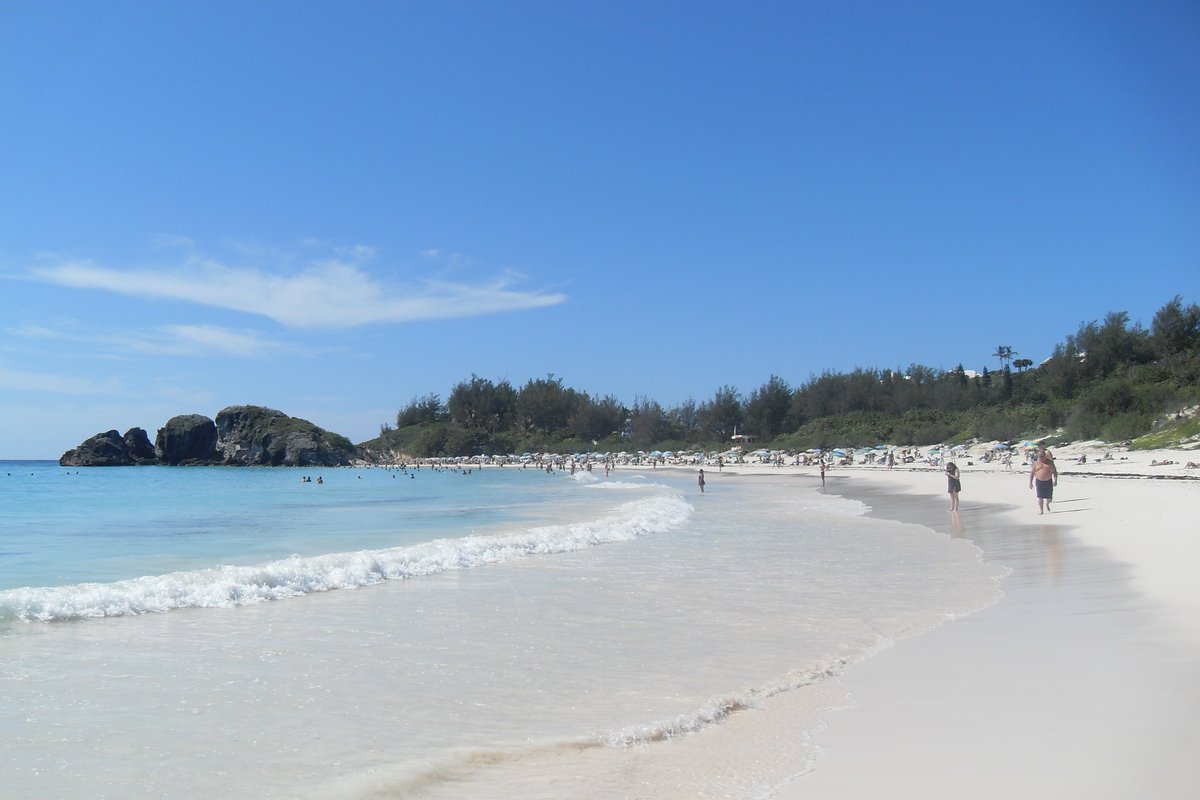
Start with the honest picture: Madeira is not a sandy-beach island. Most of the coast is pebbles, rock pools and cliffs. There are two imported-sand beaches, a handful of natural sandy spots, and one true natural sandy beach, which is on Porto Santo, a ferry ride away. If a sandy beach is the point of the trip, Madeira is the wrong island. If pools, cliffs and swimming in lava rock are the point, it is one of the best.
Calheta beach has imported golden sand from Morocco, sheltered by breakwaters, with a marina, on the sunniest side of the island. It is best for sunbathing and families. Machico beach also has imported golden sand from Morocco, sheltered by breakwaters. Machico was the first capital in the 15th century and the landing site of the discoverers, and it is about 10 minutes from the airport. Seixal, on the north coast, has a black volcanic sand beach plus natural pools. One tour page claims Seixal was voted 3rd Best Beach in Europe; that is a tour claim, not a verified award, so treat it as such.
Porto Moniz natural pools are lava-rock sea pools, about 3,800 sq m, family-friendly, with lifeguards and facilities. They are the best swimming spot on the island for families. Prainha do Caniçal is a natural sandy beach on the east coast. Doca do Cavacas, at the western end of the Funchal seafront, has natural rock pools. Praia Formosa is the longest pebble beach near Funchal, so bring a mat. Garajau, below the Cristo Rei statue, is Portugal's oldest marine reserve. The Lido Bathing Complex, on Estrada Monumental in the hotel zone, is the seafront lido and the best choice for families staying in Funchal. Ribeira Brava, Ponta do Sol and Jardim do Mar are also named in the sources, with Jardim do Mar for surf. Porto Santo has 9 km of natural golden sand, the only long natural sandy beach in the archipelago. It is dry and flat, with small volcanic peaks.
Who each suits: families should go to the Porto Moniz pools, Calheta and Machico, or the Lido. Swimmers should go to the Porto Moniz pools, Doca do Cavacas or the Lido. Sunbathing is best at Calheta, Machico, Porto Santo and Praia Formosa. Pool hours, entry fees and facilities for Porto Moniz and Seixal were not established in the research, so they are not quoted here; check them at writing time.
Levadas
Levadas are old irrigation channels that make level paths through forests and along cliffs. About 3,100 km of levadas exist and about 25 are waymarked for walking. There are 42 official PR trails. One source says 50 official PR routes, which conflicts, so 42 is used here, the figure given by the SIMplifica material.
Choosing a first levada
| Route | Length | Time | Difficulty | Best for |
|---|---|---|---|---|
| PR6.1 Levada do Risco | 3 km return | About 2 hours | Easy | The easiest first walk, family-friendly |
| PR6 Levada das 25 Fontes | 8.6 km return | About 3 hours | Moderate | The classic first levada, through laurel forest to a pool fed by dozens of small falls |
| PR9 Levada do Caldeirão Verde | 13 km return | 4-5 hours | Moderate | Longer and wilder, 4 tunnels, waterfall about 100 m |
| PR1 Pico do Areeiro to Pico Ruivo | 7 km one-way | 4-5 hours | Hard | The hard one, not a first levada; one-way, so plan a taxi, a tour or a second car for the end |
| PR8 Ponta de São Lourenço | 8 km return | 2.5-3 hours | - | Coastal walk on the wild eastern peninsula |
Allow 11 km for PR6 if the Rabaçal road walk is included. PR9 is 13 km return as the usable figure: one source gives 17.4 km return, which includes the Caldeirão do Inferno extension, and that extension is currently closed due to rockfall, so check its status at writing time. PR1 distances and times conflict: one source says about 3 to 4 hours for Areeiro to Ruivo and down to Achada do Teixeira, and another claims 12 km one-way. The majority figure, 7 km one-way and 4 to 5 hours, is used here. PR1 reopened in spring 2026 after damage from the 2024 wildfires, and the full trail has run from April 2026. PR18 Levada do Rei, 10.6 km, is another longer route. Two more routes are named in the sources but their lengths and times were not established: Balcões, from Ribeiro Frio, a short and easy walk with a view, and PR9.1 Levada do Queimadas. Check the current route details for both before you walk. The Rabaçal plateau, where PR6 and PR6.1 start, has fog on more than 240 days a year.
The SIMplifica reservation rule
Since January 2026, all 42 official trails need a booked 30-minute entry slot on the government's SIMplifica portal. An account is required. Bookings open up to 30 days ahead, and without a reservation you will be turned away at the trailhead. The slot has about 15 minutes of leeway either side. Unpaid reservations are cancelled 48 hours before the slot. No cash is taken on site, and rangers check.
Independent hikers pay €4.50 per trail, and €3 only through tour companies with an IFCN agreement. The full PR1 summit trail costs €10.50, or €7 through an IFCN-protocol operator. A day pass costs €9, a 3-day pass €22.50 and a 7-day pass €52.50, and PR1 is excluded from the passes. Each walk still needs a booked slot even with a pass. Children aged 12 and under go free but still need a slot. Madeira residents are exempt. People with a disability of 60% or more go free plus one companion. The fine amount is unresolved: one source says €50, another says €250, so no fine figure is quoted here. Trail closures must be re-checked at writing time; on 5 November 2026 the closed trails were PS3 Levada do Pico Castelo on Porto Santo, PR7 Levada do Moinho, PR10 Levada do Furado, PR20 Vereda do Jardim do Mar, PR27 Glaciar de Planalto and PR28 Levada da Rocha Vermelha.
Staying safe on the levadas
Start early, because car parks at popular trailheads fill fast. Bring layers, a waterproof and a torch for tunnels. Check trail status after storms, because levadas close briefly after heavy rain. Stick to official trails, because unmarked levadas can have sheer drops with no railing.
The island by region
Funchal, 2 to 3 days
Funchal is the capital and the best base. It has the restaurants, the Old Town, the market, the cable car to Monte and the wicker toboggan ride back down, the botanical gardens and the Madeira wine lodges. The cable car runs daily except Christmas Day and costs about €16 one way or €22 return in 2026, and the toboggan costs €30 for one person, €40 for two or €60 for three, paid in cash. Both are 2026 figures, so check the current price before you travel.
The west, 1 to 2 days
Porto Moniz and its natural pools; Ponta do Pargo and its lighthouse on the westernmost point; Paúl da Serra, the high plateau where the Rabaçal walks start; Calheta with its sandy beach and marina; Ponta do Sol, the sunniest village; Ribeira Brava with its 15th-century church. Câmara de Lobos is 10 to 15 minutes west of Funchal. Whale and dolphin watching runs from Funchal and Calheta, with the widest range of species and the calmest seas from April to September, and September the single best month. Cabo Girão is the glass skywalk on one of Europe's highest sea cliffs, 580 m above the sea. Entry is €5 for visitors over twelve, free for children twelve and under, paid and booked through SIMplifica.
The north coast, 1 to 2 days
Santana, with its triangular A-frame thatched houses and the Madeira Theme Park; São Vicente, a lush valley with a 17th-century church and the waterfalls Véu da Noiva, the Bridal Veil, and Cascata Água d'Alto on the ER101; Seixal, black sand beach and natural pools; Chão da Ribeira; the Ribeira da Janela rock formations. The São Vicente volcanic caves have been closed since 2020, so do not plan a day around them.
The east, half a day to 1 day
Machico, the first capital and the landing site of the discoverers, with its golden beach, about 10 minutes from the airport and the base for PR8; Caniço; Ponta de São Lourenço, the wild rocky easternmost point, a protected reserve, Natura 2000 site and Important Bird Area; Cristo Rei at Garajau; Santa Cruz, the airport town.
The central mountains, half a day to 1 day
Pico do Areeiro at 1,818 m, with a road to the top; Pico Ruivo at 1,861 m; Pico das Torres at 1,853 m; Ribeiro Frio, with trout pools, Laurissilva forest and the bis-bis, or Madeira firecrest; and the Fanal Forest, a misty laurel forest. The sunrise from Pico do Areeiro is the easiest great morning on the island, because the sun does not rise until 08:04 on 21 December. Check the summit forecast the evening before, because the road, ER202, can close after storms, and parking at the summit costs €4 an hour, with a shuttle on busy days.
Porto Santo as a side trip, 1 day or 2 to 3 days to stay
Porto Santo is about 42 km northeast of Madeira, dry and flat, with a 9 km golden sand beach and small volcanic peaks. The Lobo Marinho ferry runs from Funchal harbour to the port near Vila Baleira, crossing about 2 hours 30 minutes over 71 km. In November 2026 the pattern was mostly one sailing each way, Funchal 08:00 and Porto Santo 18:00, with an evening sailing on Fridays, no sailings on 10, 17 and 24 November, and no sailings on Christmas Day. Check-in closes 30 minutes before departure. A day trip leaves about 7 hours on Porto Santo. Flights from Funchal to Porto Santo run twice daily.
Food and drink
Madeira eats well, and the food is specific to the island. Espetada is beef skewers cooked over wood, traditionally on bay-leaf sticks. Bolo do caco is a warm flatbread with garlic butter, served with almost everything. Black scabbard fish is a deep-sea fish, often served with fried banana. Lapas are limpets grilled in their shells with garlic and lemon. Poncha is a strong drink of local rum, honey and lemon. Madeira wine is a fortified wine aged in warm lodges, and a tasting in Funchal is the way to try it. The wine is covered in depth in a separate guide, planned for January 2027, so this section is an introduction, not the full story. At Christmas, the food changes: bolo de mel, the honey cake, carne de vinha d'alhos and lapas are the festive dishes, and they are covered in the Christmas guide.
Festivals and events 2027
Madeira runs a festival calendar all year. The dates below are from the official Tourist Entertainment Calendar.
| Event | Dates | Notes |
|---|---|---|
| Carnival | 3-14 Feb 2027 | Allegorical parade 5-6 Feb, slapstick parade 9 Feb |
| Flower Festival | 29 Apr-30 May 2027 | Grand Allegorical Parades 2 and 16 May |
| Atlantic Festival | 4-27 Jun 2027 | Fireworks contest 5, 12, 19 and 26 Jun |
| Gastronomic Festival | 9-18 Jul 2027 | - |
| Wine Festival | 22 Aug-12 Sep 2027 | Live harvest re-enactment in Estreito de Câmara de Lobos on 11 Sep |
| Festival de Colombo, Porto Santo | 23-26 Sep 2027 | - |
| Nature Festival | 5-10 Oct 2027 | - |
| Christmas and New Year | 1 Dec 2027-9 Jan 2028 | Covered in depth in Madeira at Christmas |
Budget and costs in outline
No flight fares or hotel prices are quoted here, because they vary sharply by season and need a fresh live check at writing time. Flights are priciest at Christmas and New Year and in the summer school holidays. Funchal has the widest choice of hotels, across the Old Town, the City Centre and the Lido hotel zone, and the bay-view trap applies all year: a bay-view room is not the same as a sea-view room, so confirm the orientation in writing before booking. Book the festive season months ahead.
Car hire is best taken for the island days only if you are staying in Funchal without a car. Choose a car with a decent engine for the steep roads. Eating out has no specific prices established in the research, so no restaurant prices are quoted here; they need a fresh live check at writing time. The dated fares in this guide are 2026 figures: trail fees under SIMplifica, the cable car and toboggan in Funchal, the Aerobus from the airport and the taxi meter. Check the current price of each before you travel.
Practical info
The currency is the euro. Cards are widely accepted, but carry cash for small establishments, parking meters and pool entry fees. The language is Portuguese, and English is widely spoken in tourist areas. The emergency number is 112. Tap water is safe to drink, no special vaccinations are required, and travel insurance is recommended. Tipping of 5 to 10% is appreciated in restaurants but not mandatory; rounding up is normal.
Madeira is safe for tourists, with low crime, and very safe including for solo travellers. The main risks are natural: trails, roads and surf, not crime. Take standard precautions against pickpocketing in tourist centres. Two things are not stated as fact here because they were not verified: whether a tourist tax of up to €2 per room per night applies, and which passport validity rule applies for UK travellers. Check the current passport rules before travelling.
A 7-day itinerary
Five to seven days is ideal: Funchal, a sunrise hike, two or three levada walks, the west coast pools and the north coast. With three days you can see the highlights from Funchal. Hikers will happily fill ten days, and you can add Porto Santo for beach time. Six to eight nights is the sweet spot. No distances are given in this itinerary, because day-by-day distances must be verified before publishing.
| Day | Plan |
|---|---|
| Day 1 | Arrive at FNC; Aerobus or taxi to Funchal; evening walk through the Old Town and the market, dinner in the Old Town. |
| Day 2 | Morning cable car to Monte, Monte Palace Tropical Garden, wicker toboggan back down; afternoon botanical gardens and a Madeira wine tasting in Funchal. |
| Day 3 | Levada day: PR6 Levada das 25 Fontes or PR6.1 Levada do Risco from Rabaçal, booked through SIMplifica; evening in Funchal. |
| Day 4 | West coast: Cabo Girão, Porto Moniz natural pools, Calheta beach, Ponta do Sol; evening in Câmara de Lobos. |
| Day 5 | North coast: Santana and its thatched houses, São Vicente valley and waterfalls, Seixal pools and black sand beach. |
| Day 6 | Pico do Areeiro sunrise, then east: Machico, Ponta de São Lourenço on PR8, Cristo Rei at Garajau. |
| Day 7 | Porto Santo day trip by ferry for the sandy beach, or a last morning in Funchal and the Lido before departing. |
Conclusion
Madeira rewards the traveller who plans by region and by season: Funchal as the base, the levadas and the peaks for the walking days, the west for the pools and the north coast for the green, and Porto Santo when a sandy beach is the point. Book the trails, the rooms and the hire car early, pack layers for the mountains, and leave the afternoons for the coast. In December, the island changes again, and our guide to Madeira at Christmas: lights, Market Night and fireworks covers the six-week festive season in full.