

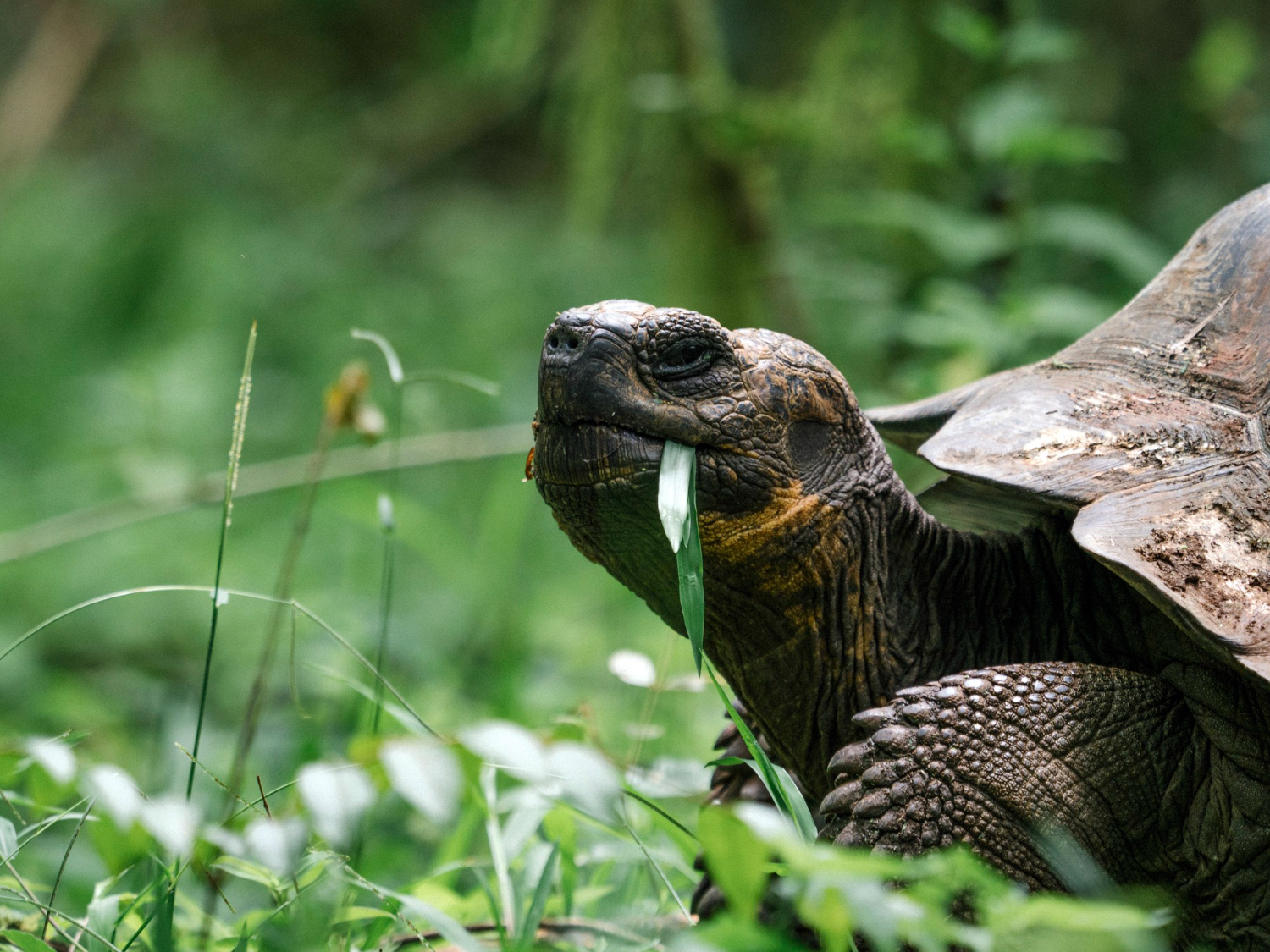
The Galapagos Islands run on two seasons: warm and wet from December to May, and cool and dry from June to November. Most visitors land at Baltra or San Cristobal and move between Santa Cruz, Isabela and San Cristobal by speedboat. Entry costs USD 200 per foreign adult for the national park, paid in cash, plus a USD 20 Transit Control Card, obtained at Quito or Guayaquil airport before you fly (it is also available online). This guide gives the real seasons, a wildlife calendar, and a 10-day land-based plan.
Quick picks
Start with the three inhabited islands most visitors use, the wildlife each one is known for, and the month that suits it best.
| Island | Known for | Best month to base here |
|---|---|---|
| Santa Cruz | Giant tortoises in the highlands, Charles Darwin Research Station, Tortuga Bay, day boats to North Seymour | Year-round hub; May for blue-footed booby courtship on North Seymour |
| Isabela | Los Tuneles lava arches and snorkeling, Sierra Negra volcano, penguins, Concha de Perla | June to September for humpback whales off the west coast |
| San Cristobal | Kicker Rock, sea lion colonies, El Junco freshwater lake, airport for your return flight | August to November for sea lion pups on the beaches |
| Espanola (cruise or day route) | Waved albatross colony, the only island where they nest | April to December, while the albatross are on the island |
The two seasons, done right
The Galapagos has two seasons, not four, and getting them the right way round decides what you see. The warm season runs December to May and is wet. The cool season runs June to November and is dry, and it is locally called the garua season after the fine mist that hangs over the highlands (Metropolitan Touring season guide).
Warm and wet: December to May
The warm season brings the sunniest skies, the calmest seas and the warmest water, roughly 24 to 27 C at the surface. Rain falls in short afternoon showers, the lowlands turn green, and snorkeling is at its easiest because the sea is flat and clear. This is the season of new life on land: green sea turtles nest on the beaches from January, marine iguanas court and nest, and land birds start nesting as the rain arrives.
Cool and dry: June to November
The cool season is driven by the Humboldt Current, which pushes cold, nutrient-rich water up from the south. The sea drops to roughly 18 to 23 C, so most snorkelers wear a wetsuit, and crossings between islands get choppier. In return, the sea fills with life: penguins hunt in the cold water, seabirds feed in large numbers, and humpback whales pass the west coast of Isabela from June to September. There is very little rain; the garua mist keeps the highlands damp while the coasts stay dry.
Which season should you pick?
Pick December to May if you want warm water, calm boat rides and nesting turtles. Pick June to November if you want the richest marine life, whale season and the seabird colonies at full activity. There is no bad month: sea lions, marine iguanas and giant tortoises are present all year, and what changes is the behaviour on show.
Wildlife calendar
Wildlife does not follow a promise, but breeding and nesting do follow the calendar. Use this month-by-month guide to match your dates to the behaviour you most want to see.
- January to March: green sea turtles come ashore to nest. Male marine iguanas on Espanola turn bright green and red. Land birds begin nesting as the warm rains start.
- April: waved albatross return to Espanola in large numbers and begin their courtship dances. Green sea turtle eggs begin to hatch. Land iguana eggs hatch on Isabela.
- May: blue-footed boobies begin their courtship on North Seymour, the famous high-stepping dance. Waved albatross start laying eggs on Espanola. Turtle hatchlings still emerge at Gardner Bay and Punta Cormorant.
- June: giant tortoises on Santa Cruz move from the highlands down to the lowlands to nest. Humpback whales arrive and stay until September. Blue-footed boobies begin nesting.
- July to September: seabird colonies are at their busiest, feeding chicks. Flightless cormorants court on Fernandina. Penguins are most active in the cold water.
- August to November: sea lion pups are born across the islands and are the highlight of any beach walk by October. Fur seals begin mating in October.
- December: waved albatross leave Espanola for the open sea, and the warm season begins again. Giant tortoise hatchlings start to emerge.
A 10-day plan that works
Ten days is enough for a land-based trip across the three main inhabited islands, with day boats to the protected sites in between. Land-based travel means you sleep in the towns, Puerto Ayora, Puerto Villamil and Puerto Baquerizo Moreno, and take guided day trips from each base. National park visitor sites are visited with a licensed naturalist guide, so the day boats below are the way in, not an optional extra.
Days 1 to 2: Mainland, then Santa Cruz
Day 1 is a mainland day. Most flights to the islands leave Quito or Guayaquil in the morning, so spend the night before in one of those cities. Quito sits at about 2,850 m, so take the first day gently. On day 2, fly to Baltra, pay the park fee in cash at the airport, then cross by bus and ferry to Puerto Ayora on Santa Cruz. Spend the afternoon at the Charles Darwin Research Station to see the tortoise breeding programme run by the Charles Darwin Foundation.
Days 3 to 4: Santa Cruz and North Seymour
Day 3 belongs to the Santa Cruz highlands: giant tortoises in the wild at a reserve such as El Chato, and the lava tunnels in the highlands. Note that these are Santa Cruz lava tunnels; Los Tuneles is a different place, on Isabela, and comes on day 6. Walk to Tortuga Bay in the late afternoon for the long white beach. Day 4 is a day boat to North Seymour for the blue-footed booby and frigatebird colonies, an easy landing with a short trail.
Days 5 to 7: Isabela
On day 5, take the morning speedboat to Isabela, about 2.5 hours, and settle into Puerto Villamil. Snorkel at Concha de Perla, the sheltered cove by the dock, and walk to the flamingo lagoon. Day 6 is the Los Tuneles day tour, the collapsed lava arches off the Isabela coast where boats thread between the tunnels and you snorkel with turtles, rays and reef sharks in clear water (Los Tuneles day tour account). Day 7 is the hike to the rim of Sierra Negra, one of the largest active volcanic craters in the world, or a shorter trip to the Tintoreras islets.
Days 8 to 10: San Cristobal and home
On day 8, take the speedboat to San Cristobal. There is no direct public boat between Isabela and San Cristobal, so the route runs back through Santa Cruz; plan the morning around the connection, or break it with a night on Santa Cruz. In Puerto Baquerizo Moreno, sea lions cover the waterfront and Playa Mann is the town beach. Day 9 is the day boat to Kicker Rock, the split volcanic cone offshore, for snorkeling with rays, turtles and reef sharks, with El Junco freshwater lake as the land alternative. On day 10, fly from San Cristobal airport back to the mainland and connect home. Set your watch: the islands run one hour behind mainland Ecuador.
What a day boat day looks like
Day boats are the workhorses of a land-based trip, and knowing the rhythm helps you enjoy them. Boats take about 16 passengers, leave the harbour around 8 in the morning, and return mid-afternoon. The crossing to the site takes 45 minutes to 2 hours depending on the route, and the licensed naturalist guide gives the briefing on board: the landing procedure, the trail rules, and what to look for. Wet landings mean stepping from the dinghy straight into ankle-deep water, so sandals or water shoes earn their place on day-boat days. Lunch is served on the boat, and the guide decides the snorkeling order to spread the group across the site.
The cruise option
A cruise swaps the town bases for a boat that moves at night and lands you at a new site each morning. Cruises reach places land-based trips cannot, including Espanola for the waved albatross and Fernandina for flightless cormorants. Cruise routes are not chosen by the operator: the National Park Directorate assigns each boat a fixed itinerary to spread visitors across the sites, so two boats rarely land at the same place at the same time. That is why cruise brochures list exact landing days, and why the specific boat matters as much as the month. Choose land-based if you want lower cost, evenings in town and flexibility. Choose a cruise if your priority is the remote islands and you are comfortable sleeping on a boat. Either way, the park fee, the transit card and the guide rules are the same.
Entry rules, fees and practical notes
Entry has two separate payments, and confusing them is the most common planning mistake. The transit control card costs USD 20 and is a migration document. The national park entrance fee costs USD 200 per foreign adult and is conservation funding. There is no daily park permit; the entry fee is paid once per visit, not once per island and not once per day (Galapagos Conservation Trust on the fee change).
What you pay, and when
- Transit control card: USD 20 per person. Register and pay online on the Galapagos government portal before you fly; online registration has been required since May 2025, and you show the QR code at the mainland airport.
- National park entrance fee: USD 200 per foreign adult, USD 100 per child under 12, in force since 1 August 2024. Pay in US dollars cash on arrival at Baltra or San Cristobal airport. There is no ATM at either airport, so carry the cash from the mainland.
- Biosecurity declaration: complete the sworn declaration online 48 to 72 hours before your flight, and expect your luggage to be inspected and sealed at the mainland airport. Fresh food, seeds and plants are not allowed in.
- Isabela arrival fee: a separate municipal fee of USD 10 is collected at the dock in Puerto Villamil.
- Round-trip ticket: you need a return flight booked, with a stay of no more than 60 days, and a passport valid for at least 6 months.
Getting between islands
Public speedboats are the normal way to move between islands. They link Santa Cruz with Isabela and with San Cristobal, run about twice a day, take 2 to 2.5 hours, and cost about USD 50 per person one way. Check in about an hour early for the passenger list and luggage inspection, sit toward the back for a smoother ride, and take seasickness tablets if the cool-season swell bothers you. Small charter planes exist between islands, but they are the exception, not the timetable.
Rules that shape your days
- Stay on marked trails and keep at least 2 metres from wildlife. Never touch or feed animals.
- Visit national park sites with a licensed naturalist guide, through an authorized operator. Day boats carry small groups, usually around 16 passengers.
- Bring cash. Cards work in the bigger towns, but the park fee, the Isabela dock fee, water taxis and many small businesses are cash only. ATMs are on Santa Cruz and San Cristobal.
- Pack for two climates in one trip: swim gear and sun protection for the coast, a light fleece for cool-season evenings, and a wetsuit layer for snorkeling from June to November.
- Leave drones, single-use plastics and fresh food behind. All three are restricted or banned under the biosecurity rules.
For current entry steps, check the official Galapagos government and park pages before you book, because fees and forms change. The Galapagos Conservancy and the Charles Darwin Foundation both publish visitor guidance in English.
Sources
- Galapagos National Park Directorate (galapagos.gob.ec): arrival information - the park entry fee and the Transit Control Card, tariffs from 1 August 2024
- Metropolitan Touring: Best time to visit Galapagos, seasons and temperatures
- Visit Galapagos: Wildlife calendar, where and when
- Natural Habitat Adventures: When to go on a Galapagos trip
- Brooke Beyond: Snorkelling at Los Tuneles, Isabela
- My Trip 2 Ecuador: Galapagos at a glance, fees, ferries and seasons