

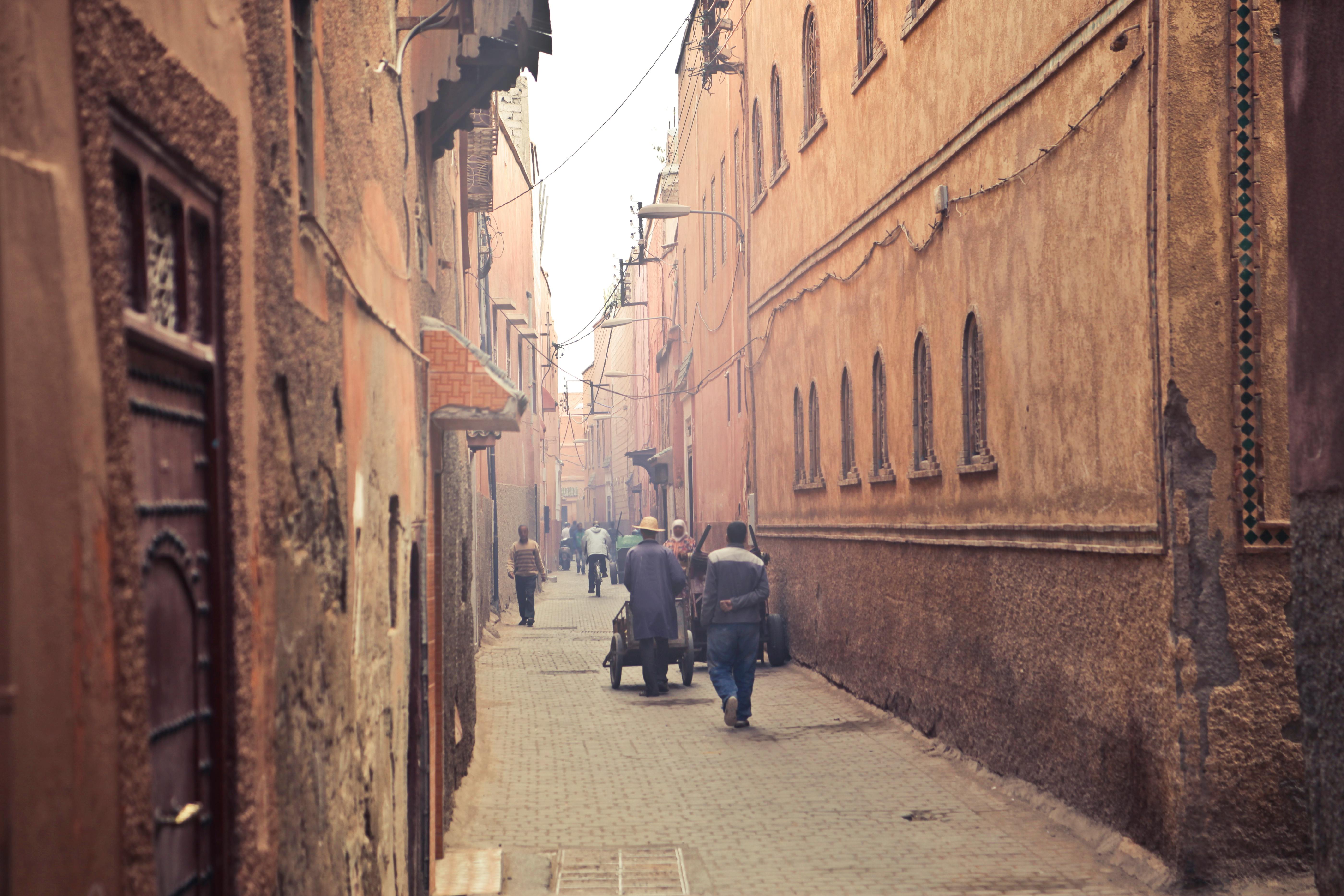
Marrakech is the start of a Morocco trip, not the whole of it. The best day trips and overnights from the city are Essaouira and the Gnaoua Festival, the High Atlas villages of Imlil, the ksar of Ait Benhaddou, the Merzouga dunes, the Fes medina, Chefchaouen, and the Dakhla lagoon. This guide gives how to reach each from Marrakech, how long to allow, and the best time to go, with facts you can check.
Quick picks
Use this table to plan the pieces of the trip. Read the full section for detail before you book anything.
| Place | What it is | Time from Marrakech | Best time |
|---|---|---|---|
| Essaouira | Atlantic port city, UNESCO medina, Gnaoua Festival in June | About 3 hours by bus | March to June, September to November |
| Imlil and Jebel Toubkal | High Atlas trailhead village and North Africa's highest peak, 4,167 m | About 1.5 to 2 hours by road | May to October for trekking |
| Ait Benhaddou | UNESCO earthen ksar over the Tizi n'Tichka pass, 2,260 m | 3 to 4 hours each way | March to May, September to November |
| Merzouga and Erg Chebbi | Sahara dune field, dunes up to 150 m, night in a desert camp | 9 to 10 hours driving; split over 3 days | October to April |
| Fes el Bali | Old medina of Fes, UNESCO site, tanneries and craft quarters | About 6.5 to 7 hours by train | March to May, September to November |
| Chefchaouen | Blue-washed town in the Rif Mountains | Via Fes, about 4 hours from there | March to June, September to October |
| Dakhla | Atlantic peninsula lagoon, year-round wind, kitesurfing | Fly, about 2 hours from Casablanca | Year-round; wind strongest March to September |
1. Essaouira and the Gnaoua Festival
Essaouira is the coast trip most people from Marrakech actually do. It is an Atlantic port city about 3 hours by bus from Marrakech, with an 18th-century walled medina that is a UNESCO World Heritage Site. The sea wind keeps it cooler than inland cities, and the fishing port, ramparts and lanes of wood workshops make a calm contrast to Marrakech. One day works, but an overnight lets you see the sunset from the ramparts and eat grilled fish at the port.
The Gnaoua World Music Festival
The reason to time an Essaouira trip for June is the Gnaoua World Music Festival. The 2026 edition, the 27th, ran from 25 to 27 June. The festival celebrates Gnaoua music, a tradition with Sub-Saharan roots built around the guembri bass lute and qraqeb metal castanets, which UNESCO added to its Intangible Cultural Heritage list in 2019. Headline concerts at Place Moulay Hassan mix Gnaoua masters with jazz and world music acts, and most outdoor concerts are free. Book beds well ahead if you go for the festival; the city fills up, and a day trip means missing the night concerts, which are the point of the event (Gnaoua Festival visitor information).
Getting there
Buses run several times a day between Marrakech and Essaouira on the main coach companies; the ride takes about 3 hours. This is an easy overnight: go in the morning, walk the ramparts in the afternoon, eat at the port in the evening, and return the next day.
2. High Atlas: Imlil and Jebel Toubkal
The High Atlas rises directly south of Marrakech, and Imlil is the trailhead village for it. The drive from Marrakech takes about 1.5 to 2 hours by grand taxi. Imlil sits at about 1,740 m in a walnut-tree valley, and it is the base for Jebel Toubkal, which at 4,167 m is the highest peak in Morocco, North Africa and the Arab world. Even if you do not climb, the village is a good walking base for a day or two: apple orchards, terraced fields and mule paths through Berber villages.
Climbing Toubkal
The standard Toubkal ascent takes 2 days: walk from Imlil to the mountain refuges at 3,207 m on day one, then start before dawn for the summit on day two. A licensed local guide is required on the summit trail. The route is non-technical in summer but demanding, with about 1,000 m of ascent on summit day in thin air. The best season is late May to October; in winter the mountain needs crampons, an ice axe and real mountaineering experience. For the full trekking playbook, see our Morocco Atlas Mountains guide.
Ourika Valley, the easier option
If a 4,167 m peak is more than you want, the Ourika Valley south of Marrakech is the lighter Atlas day trip. It runs about an hour from the city to Setti Fatma, the end of the paved road, where a short walk reaches a series of small waterfalls. It is busy on weekends and cooler in winter, so go on a weekday in spring if you can.
A note on the earthquake zone
The September 2023 earthquake hit villages in the High Atlas around Imlil and the road south. Trekking has resumed, but some villages are still rebuilding. Check current local conditions with a guesthouse or guide in Imlil before you go, and expect some routes and roads to still be under repair.
3. Ait Benhaddou and Ouarzazate
Ait Benhaddou is the earthen ksar, a fortified village, on the road from Marrakech toward the desert. It is a UNESCO World Heritage Site, listed in 1987, built of rammed earth and straw on a hill beside the Ounila river. Films and series including Lawrence of Arabia, Gladiator, The Mummy and Game of Thrones shot scenes here, and a climb through the lanes to the old granary at the top takes about 20 minutes. A few families still live inside the walls; most residents have moved to the modern village across the river.
Getting there over the pass
The road crosses the Tizi n'Tichka pass at 2,260 m, the highest paved mountain road in Morocco. Allow 3 to 4 hours each way from Marrakech, about 190 km, so the trip is a full day. In winter, January and February, the pass can close briefly after heavy snow; check conditions before setting out in those months. Ouarzazate is about 30 km past the ksar, with the Taourirt Kasbah and the Atlas Film Studios, and works as the lunch and rest stop before the drive back.
4. Merzouga and the Erg Chebbi dunes
The Merzouga dunes are the Sahara experience people picture when they book Morocco. Erg Chebbi is a dune field beside the village of Merzouga, about 550 to 560 km from Marrakech, with dunes rising up to 150 m. The sand shifts color through the day, from pale cream at noon to deep orange at sunset. The standard visit is a night in a desert camp: ride or walk into the dunes in the afternoon, watch the sunset from a high dune, eat at the camp in the evening, sleep in a tent, and wake for sunrise before heading back to the village.
How the 3-day trip works
Nobody does the 9 to 10 hours of driving in one day. The normal circuit takes 3 days: Marrakech over the Tizi n'Tichka pass to the Dades or Todra area on day one, through the Draa Valley and palm groves to Merzouga on day two, then back to Marrakech on day three with long driving hours. The valleys and kasbahs on the way are part of the trip, not dead time: the Todra Gorge, the Dades Valley road of a thousand kasbahs, and the old trading town of Rissani all sit on the route. If you only have 2 days, the trip is mostly driving; either take the 3 days or skip it.
Best season and what to expect
The best months for the desert are October to April. Summer days are very hot and winter nights are cold, so bring layers even if you travel in a warm month. Camps range from basic to comfortable; confirm before you book what is included, whether the transfer into the dunes is by camel or 4x4, and what the sleeping arrangements are. One night in the dunes is enough for sunset, stars and sunrise; two nights let you add a 4x4 loop of the surrounding desert at a slower pace.
5. Fes el Bali
Fes is Morocco's old cultural capital, and its old medina, Fes el Bali, is a UNESCO World Heritage Site. It is one of the largest car-free urban areas in the world: a maze of lanes with tanneries, dye pits, brass workshops, mosques and markets. The Chouara Tannery, with its stone vats of colored dye, is the best-known sight, viewed from the terraces of the leather shops around it. A local guide is worth it for a first visit; the medina is genuinely easy to get lost in, and a guide keeps the first hours efficient.
Getting there
The train from Marrakech to Fes takes about 6.5 to 7 hours on ONCF, the national railway, with first-class air-conditioned carriages and reserved seats. By road it is roughly 530 km, about 7 to 8 hours of driving. Fes is an overnight trip at minimum, and pairs naturally with Chefchaouen on a northern loop rather than with a return to Marrakech the same day.
6. Chefchaouen
Chefchaouen is the blue town of the Rif Mountains in the north. Its medina lanes are washed in shades of blue, and the small Plaza Uta el-Hammam with the kasbah is the center of town life. There is no great single sight here; the town itself is the attraction, plus short walks to the Spanish Mosque on the hill for the view back over the blue roofs. A night or two is the right pace; most people wish they had stayed longer rather than rushing it as a day trip.
Getting there
Chefchaouen has no railway station. From Fes it is about 200 to 220 km, roughly 4 hours by car or 4.5 hours by CTM bus, with only 3 to 4 direct buses a day. From Marrakech it is too far for a direct visit; combine it with Fes or Tangier on a northern loop of at least 3 to 4 days.
7. Dakhla lagoon
Dakhla is the far-south option. The town sits on a narrow peninsula on the Atlantic coast, and the long shallow lagoon between the peninsula and the desert is one of the world's best-known kitesurfing spots, with wind through the year, strongest from March to September. The lagoon is flat and shallow in places, which suits beginners as well as experienced riders, and the setting, water on both sides and dunes beyond, is unlike anywhere else in Morocco.
Getting there
This is not a road trip from Marrakech. By road it is about 1,400 km, 24 hours or more by bus. Fly instead: Royal Air Maroc flies from Casablanca, about 2 hours, and from Agadir; Air Arabia has offered low-cost flights from Marrakech. Some seasonal European flights exist. Routes change, so check current schedules when you plan, and allow at least 3 to 4 days to make the trip worthwhile.
Planning the trip
The distances above are the real constraint in Morocco: the country is bigger than it looks on a map. Build trips around one direction at a time instead of trying to cover everything.
How much time each needs
- Essaouira: 1 to 2 days. One day works; stay the night during the Gnaoua Festival.
- Imlil and Ourika: 1 to 2 days. Day trip for Ourika; 2 days for the Toubkal summit.
- Ait Benhaddou: 1 long day from Marrakech, or fold it into a desert circuit.
- Merzouga: 3 days minimum from Marrakech, 4 if you want the Todra Gorge properly.
- Fes: 2 days in the city, plus travel days on both ends.
- Chefchaouen: 1 to 2 days, combined with Fes or Tangier, not with Marrakech alone.
- Dakhla: 3 to 4 days, flying.
Best season
Spring (March to May) and autumn (September to November) are the most comfortable for most of this list: mild days in the cities and the Atlas, and the desert before the summer heat or after it. Summer is hot everywhere inland; winter brings cold nights to the desert and snow to the passes. Essaouira is windy all year, which is the point of it. The Gnaoua Festival fixes one June weekend in your calendar if you want music with your coast.
Ramadan and Eid
Ramadan moves about 11 days earlier each year because it follows the lunar calendar, and Morocco sets its dates by moon sighting, announced by the Ministry of Habous and Islamic Affairs the evening before. Ramadan 2026 ran from about 18 February to about 19 March, with Eid al-Fitr around 20 March. Ramadan 2027 is expected from about 8 February to about 9 March, with Eid al-Fitr around 9 to 10 March; treat these as expected dates that can shift by a day (Morocco public holidays and Ramadan dates). During Ramadan, daytime restaurant hours shrink in local areas, but hotels and tourist restaurants stay open; evenings come alive after iftar. Eid days bring domestic travel and full hotels, so book early if your dates overlap.
Costs to check before you go
This guide gives no prices because transport, entry and tour prices change often. Before you book, check the current fare on the coach company or ONCF site, the entry fee at the Ait Benhaddou kasbah, what a desert camp includes for the night, and the flight schedules to Dakhla. Ask in writing what is included in any multi-day tour: transport, guide, meals, camp night and entry fees, so the price means something.
Sources
- Essaouira City: Gnaoua Festival dates and venues
- Moratra: Morocco festivals 2026 calendar
- Morocco Guide: public holidays and Ramadan dates 2026-2027
- Wikipedia: Toubkal
- Marrakech Taxi: Ait Benhaddou and Ouarzazate day trip details
- Gateway2Morocco: Fes to Marrakech routes
- Hungarian Dreamers: how to get from Fes to Chefchaouen
- Milehacker: how to get to Dakhla, flights and transport