
A hot air balloon safari is a dawn flight over open country, usually about one hour in the air, followed by breakfast at the landing site. No body called ICA endorses balloon operators, and this guide lists no endorsed operators. Use the checklist below to check a real operator's licence, insurance, and cancellation terms before you book.
Quick picks
Use this table to match a place to what you want to see. Read the full section for season and booking detail before you book anything.
| Place | What you see | Flight | Best time |
|---|---|---|---|
| Serengeti, Tanzania | Plains, kopjes, herds, Mara and Grumeti rivers by season | Dawn, about one hour | Dry season June to October; herds move by season |
| Maasai Mara, Kenya | Savannah, Mara River, elephant, lion, giraffe, herds | Dawn, about one hour | Year-round; July to October for the Great Migration |
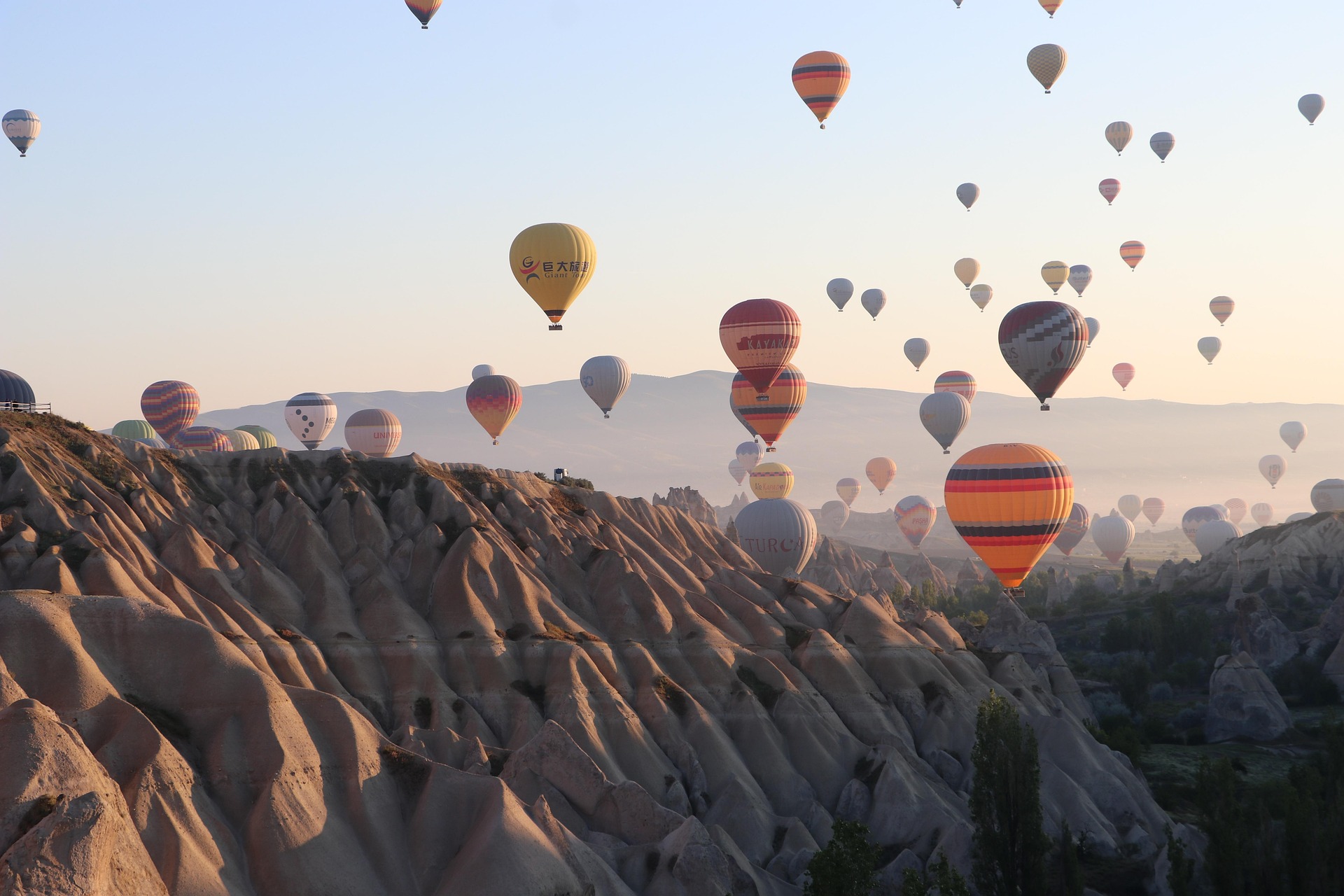
| Cappadocia, Turkey | Fairy-chimney valleys, rock formations, Göreme | Sunrise, about 45 to 65 minutes | Spring and autumn for mild mornings |
| Albuquerque, USA | Hundreds of balloons over the Rio Grande Valley | Festival watching, not a safari flight | Each October, Balloon Fiesta |
| Dubai desert, UAE | Dunes, desert reserve, Hajar Mountains in clear air | Sunrise, about 45 to 60 minutes | Cooler months, about October to May |
What a balloon safari flight is like
A balloon safari is a calm, quiet flight at dawn. You meet the crew in the dark, watch the balloon inflate, lift off as the light comes up, float for about an hour, land in open country, and eat breakfast where you land. The rest of the morning is the drive back to camp or hotel.
How a balloon flies
A balloon has three parts: the envelope, the burner, and the basket. The envelope is the fabric bag that holds hot air, usually ripstop nylon. The burner burns liquid propane and sends the flame into the envelope. The basket carries the pilot and passengers, usually woven wicker. Hot air inside the envelope is lighter than the air outside, so the balloon rises. The pilot climbs by adding burner heat and descends by letting hot air out through a vent at the top of the envelope. The balloon moves with the wind. The pilot cannot steer it left or right, but can pick altitude to catch winds at different layers. More on how a hot air balloon works.
The morning, step by step
- Pickup from your camp or hotel well before dawn, then a drive to the launch site.
- Watch the crew lay out the envelope, cold-inflate it with a fan, then heat the air with the burners until the balloon stands up.
- Pilot briefing: landing position, basket entry, and what to do on landing.
- Lift-off at or just after sunrise, when the air is calmest.
- About one hour in the air, with quiet stretches between burner blasts.
- Landing in open country, followed by a toast and breakfast at the landing site.
- Drive back to camp or hotel, often with game viewing on the way in safari country.
What the flight feels like
The flight feels still, because the balloon travels at wind speed. Between burner blasts there is little noise, only the sounds below. The basket is open, so dress for wind and cold at dawn. Landings can be bumpy. The pilot will tell you the landing position before takeoff and again before landing. Follow it exactly, and stay in the basket until the pilot says to get out.
Photography from the basket
The basket is open, so you can shoot over the side without glass in the way. The light is best in the first half of the flight, when the sun is low and the shadows are long. Shoot early, then put the camera down and watch for a while. The balloon drifts slowly, so you have time to frame a shot. Keep the camera strap around your wrist or neck at all times. Do not lean out over the side, and do not stand on the basket edge. In safari country, the pilot may fly low over herds for a closer look. Stay quiet during those passes, since noise carries and can startle animals.
How to choose a safe operator
There is no global list of approved balloon operators, and no single body that endorses them. The check that matters is the operator's own licence, insurance, and safety record under the aviation rules of the country where you will fly. Ask for documents before you pay, and walk away from any operator that will not show them.
What to ask before you book
- Show me the pilot's licence and the aircraft's current inspection record.
- Show me the operator's insurance certificate, and tell me what it covers and what it does not.
- What is the weather cancellation policy, in writing? When do you cancel, and do I get a refund or a new date?
- How many passengers ride in one basket, and who is my pilot?
- What are the age, weight, and health limits for this flight?
- What is included in the fare, and what costs extra?
- How do I reach you on the morning of the flight if the pickup time changes?
Red flags: cash-only payment with no receipt, no written cancellation policy, no licence or insurance shown, a price far below other operators with no clear reason, and pressure to pay before you have seen any documents.
How to compare two operators
Compare operators on the same points, not on marketing. Ask each one the same questions from the checklist above, and write down the answers side by side. The points that matter most are the pilot's licence, the insurance certificate, the basket size, what the fare includes, and the weather cancellation terms. A smaller basket costs more per person in most places, but gives you more room and a clearer view. A larger basket costs less per person, but you share the space with more people. Neither is better on its own. Pick the one that fits your budget and your comfort with crowds. Ask whether the fare includes transfers, breakfast, and park or launch fees, since these vary. If one fare looks much lower than the others, ask what is missing from it before you book. A low fare that leaves out transfers or breakfast can end up costing the same as a higher fare that includes them. Keep the written answers, and book the operator whose answers are the clearest, not the one whose website looks the best.
Licences by country
In the United States, balloon pilots fly under FAA general operating rules, Part 91, and hold pilot certificates under Part 61. A private pilot may not fly for hire. A commercial pilot needs at least 35 hours of total flight time, including 20 hours in balloons, plus a second-class medical certificate. Part 141 covers flight schools, not balloon operating certificates. In the United Kingdom, balloon pilots hold a Part-BFCL Balloon Pilot Licence, and commercial passenger flying needs a commercial passenger operation rating plus an operator declaration to the Civil Aviation Authority. In other countries, the same principle applies: the pilot holds a national licence, and the operator works under the national aviation authority. Ask which authority licenses your operator, and check that the operator names it. More on UK guidance for balloon operators.
Voluntary safety programs
In the United States, the Balloon Federation of America runs a voluntary Envelope of Safety program for ride operators. It is a trade-group program, not a regulation. Under it, company pilots hold a commercial certificate for at least 18 months, hold a second-class medical certificate, pass a drug and alcohol background check, attend a safety seminar each year, and join the FAA WINGS program. Operators can reach Silver, Gold, or Platinum tiers with stricter requirements at each tier. A voluntary program is a useful signal, not a substitute for the operator's own licence and insurance. The program followed the July 2016 Lockhart, Texas crash that killed the pilot and 15 passengers, which showed why pilot fitness and oversight matter.
Where to fly
Pick a place by what you want to see from the air. Wildlife country gives you herds and rivers. Rock country gives you valleys and strange shapes. A festival gives you hundreds of balloons at once. All five places below fly at dawn or sunrise, when the air is calmest.
Serengeti, Tanzania
Serengeti flights launch at dawn, about 06:00, and last about one hour. A bush breakfast follows at the landing site, with a champagne toast. Launch sites follow the season: Central Serengeti at Seronera year-round, Northern Serengeti July to October, Western Corridor June to October, and Southern Serengeti around Ndutu December to March. Baskets carry up to about 16 passengers. Children under 7 are not allowed on most Serengeti balloons. Book through your camp or lodge, and ask which launch site your flight will use, since the site follows the herds. More on Serengeti balloon safaris.
Maasai Mara, Kenya
Mara flights launch before dawn and last about one hour, followed by a champagne toast and a full bush breakfast. The whole morning runs about four hours, including pickup, briefing, flight, breakfast, and the drive back. Flights run year-round. July to October is the best window for the Great Migration. Baskets carry about 8 to 16 passengers. Age limits vary by operator, so check before you book. Book through your camp or lodge, and ask about the pickup time, since it shifts with the season and the launch site.
Cappadocia, Turkey
Cappadocia flights run at sunrise over Göreme National Park and the fairy-chimney valleys, under Turkish Civil Aviation Authority rules. The flight lasts about 45 to 65 minutes, most often about 60 minutes. A typical morning runs: hotel pickup 60 to 80 minutes before sunrise, a short transfer, light refreshments, a pilot briefing, the sunrise flight, a landing toast, a flight certificate, and a return to the hotel. Children under 6 are not allowed on the flights in the sources checked. Spring and autumn give mild mornings. Check the operator's site for current rules, since Turkish aviation rules set the details.
Albuquerque, USA
The Albuquerque International Balloon Fiesta runs each October at Balloon Fiesta Park, nine days, with Dawn Patrol around 06:00 and Mass Ascension around 07:00. It is a watching event first: hundreds of balloons fill the sky over the Rio Grande Valley, with evening glows on some nights. Go to watch, walk the launch field, and see special-shape balloons. If you want to ride, check the official Fiesta site for ride options rather than assuming any seller speaks for the Fiesta. Book lodging early, since the Fiesta fills the city.
Dubai desert, UAE
Dubai flights run at sunrise over the Margham Desert and the Dubai Desert Conservation Reserve, lasting about 45 to 60 minutes. The season in the sources checked is the cooler months, about October to May. A typical morning includes hotel transfers, a pre-flight briefing, the sunrise flight, and breakfast after landing. Some operators add a falcon display, a camel ride, or a Bedouin camp breakfast. These extras vary by operator and are not standard. Check the operator's site for what is included, and for current rules on age, weight, and health limits.
Seasons and booking
Balloon flights run at dawn because the air is calmest then. Mornings are cold even in warm countries, and flights cancel when the wind is too strong or the weather is unsafe. The wind threshold varies by operator and regulator, so ask your operator how it decides to cancel.
When to book
Book early in peak season. Safari balloons have small baskets and few seats, and the Serengeti and Mara sell out in migration months. Cappadocia sells out in spring and autumn. Albuquerque lodging sells out for Fiesta week. Ask for the cancellation terms in writing before you pay: when the operator cancels for weather, do you get a refund or a new date, and how soon?
If your flight cancels
Weather cancellations are normal. A good operator will offer a new date or a refund under its own written terms. Read those terms before you book, not on the morning of the flight. If you have only one morning in a place, ask whether the operator can try again the next day, and keep that day free if you can.
Safety and what to ask
A balloon safari with a licensed pilot under national aviation rules is a normal adventure activity, but it is not risk-free. The checks that matter are the ones in the operator section above: licence, insurance, cancellation terms, and a pilot who briefs you before takeoff. Do not rely on a badge, a star rating, or a claim of endorsement from any body.
Who should not fly
Age, weight, and health limits vary by operator, so check before you book. Some operators set a minimum age for children, a maximum weight per passenger, and limits for people with back or heart problems or who are pregnant. Tell the operator about any condition that could affect a bumpy landing, and ask whether you can fly. Do not rely on a general age or health rule from a guide, since the operator sets its own limits.
What to wear and bring
- Layers for a cold dawn, including a windproof top layer. Mornings are cold even in warm countries.
- Closed shoes with grip. You climb into the basket and stand for the whole flight.
- A hat and sunglasses for the sun after sunrise.
- A camera with a strap. Keep loose items secured, since the basket is open.
- Cash or card as the operator asks, for tips and extras. Ask what is included before you go.
- Leave large bags behind unless the operator says to bring them. Basket space is tight.
Sources
- UK CAA: Guidance for Balloon Operators
- UK CAA: Balloon Pilot Licence (BPL)
- AOPA: Balloon Association Develops Safety Standards
- Flying Magazine: NTSB Calls for Regulatory Changes to Commercial Balloon Operations
- Ballooning UK: How a Hot Air Balloon Works
- Serengetinationalpark.travel: Hot Air Balloon Safaris
- KET Safaris: Hot Air Balloon Safari Kenya
- Power Traveller: Cappadocia Göreme Sunrise Balloon Flight