The best time to visit the Maldives depends on your goal. January to April brings the driest weather and calmest seas, August to October brings manta rays and whale sharks with lower rates, and the classic dry season runs December to April. Seven months earn a place in this guide, with real rainfall numbers for each month so you can choose with facts, not guesses.
Quick picks: the 7 months that matter
These seven months cover every good reason to go. Read the full table below for detail.
| Month | Go for | Key fact |
|---|---|---|
| January | Sun and calm seas | About 100 mm rain, driest stretch begins |
| February | Driest month | About 41 mm rain, the driest month of the year |
| March | Sun and diving | About 66 mm rain, most sunshine hours of the year |
| April | Last calm month | About 127 mm rain, monsoon transition begins |
| August | Marine life, lower rates | Whale shark peak starts, manta season in full swing |
| September | Marine life, lower rates | Peak manta aggregations at Hanifaru Bay |
| October | Marine life turning calm | Monsoon ends, seas calm, shoulder-season rates |
Month by month: real weather for Malé
This table uses the World Meteorological Organization climate normals for 1981-2010 at Velana International Airport, Malé. Southern atolls get more rain than Malé, northern atolls a little less. Temperatures sit between 25 and 32°C all year, and the sea stays 27 to 30°C (WMO climate normals for Malé).
| Month | Avg rainfall (mm) | Rainy days | Sunshine (hrs) | What to expect |
|---|---|---|---|---|
| January | 100 | 11 | 247 | Dry season, calm seas, holiday crowds |
| February | 41 | 6 | 262 | Driest month, best odds of clear skies |
| March | 66 | 9 | 283 | Sunniest month, warm and settled |
| April | 127 | 12 | 253 | Hottest month, transition starts |
| May | 203 | 13 | 224 | Southwest monsoon arrives, showers |
| June | 173 | 10 | 202 | Windy, surf swells build, fewer visitors |
| July | 175 | 12 | 220 | Monsoon, short heavy showers |
| August | 189 | 12 | 223 | Wet but marine life peaks begin |
| September | 222 | 13 | 204 | Wettest stretch, manta peak |
| October | 213 | 16 | 238 | Monsoon ends, transition, calm returns |
| November | 239 | 14 | 213 | Wettest month on average, transition to dry |
| December | 226 | 15 | 214 | Dry season arrives, holiday peak crowds |
The two monsoons, explained
The Maldives runs on two monsoon seasons, not four. The wet southwest monsoon (Hulhangu) lasts from the end of April to the end of October, with strong winds and the heaviest rain. The dry northeast monsoon (Iruvai) reaches the Maldives in early December and lasts to the end of March. October to November and April to May are transition periods when the weather can swing either way, and a week of rain can arrive even in the dry season.
What the monsoon means for your plans
Rain in the Maldives usually falls in short, heavy bursts, not all-day drizzle. Even in the wettest months you get hours of sunshine between showers, which is why the sunshine column in the table stays above 200 hours in most wet months. The real difference between seasons is wind and sea state: the southwest monsoon brings chop and swell that can cancel boat trips, while the northeast monsoon brings the glassy water the Maldives is famous for.
What the rain actually feels like
Humidity sits between 70 and 85 percent all year and runs higher in the southwest monsoon, so wet months feel heavy even between showers. The wind is the bigger factor for boats: rough days can cancel speedboat runs, snorkel trips and seaplane schedules, while calm dry-season weeks rarely disrupt anything. Squalls move across the atolls in bands, so the same week can be dry on one island and wet on another. If your trip is short and built around being on the water every day, the dry season is the safer bet. If you have a week or more and can swap plans around the weather, the wet months are workable and cost less.
Regional differences
The north of the country averages about 2,540 mm of rain a year; the south averages about 3,810 mm, so southern atolls are noticeably wetter. North-Malé Atoll stays calmer a little longer into the monsoon transition, which suits first-time visitors. Southern atolls catch the southwest swell best, which is why surfers head south from June to August.
Pick your month by trip type
The right month depends less on the calendar than on what you are travelling for.
Sun seekers and honeymoons
December to April is the classic window: the driest air, the calmest lagoons and the most settled weather for sunset cruises and beach days. February and March are the safest picks for a once-in-a-lifetime trip you cannot reschedule. The trade-off is peak pricing and full resorts, so book well ahead and expect the Christmas and New Year weeks to be the busiest of the year.
Divers and snorkelers
Divers who want clear water should aim for the dry season, while divers who want animals should aim for the monsoon. The plankton that clouds the water from May to October is exactly what draws the mantas and whale sharks, so the big-animal months are the murkier ones near the surface. Liveaboards follow the seasons and can move between atolls, which makes them a strong choice for a dive-focused trip in either season.
Families
School holidays decide family travel more than weather does, and resorts know it: expect busier kids' clubs and higher rates during the Christmas to New Year period and the July to August school break. The shoulder months of April and October pair workable weather with calmer resorts. In the wet months, plan water time for the mornings and keep afternoons flexible for indoor time, since showers usually arrive in bursts rather than lasting all day.
Marine life calendar
The Maldives' big animals follow the plankton, and the plankton follows the monsoon. This is what actually changes through the year.
Whale sharks: year-round in South Ari Atoll
South Ari Atoll is one of the few places in the world where whale sharks show up all year, mostly juvenile males. The best odds run from August to November, when plankton blooms peak on the eastern side of the atoll around Maamigili and Dhigurah. The Maldives Whale Shark Research Programme is based on Dhigurah, and current Maldivian guidance asks swimmers to stay at least 3 metres from the head or body and 4 metres from the tail, and never to touch or ride them (South Ari whale shark guide).
Manta rays: May to November at Hanifaru Bay
Hanifaru Bay in Baa Atoll, a UNESCO Biosphere Reserve, hosts one of the largest seasonal manta gatherings on Earth from May to November, with the biggest aggregations from June to September when up to 200 mantas have been recorded in a single session. Strict rules protect it: snorkeling only, no scuba diving, a maximum of 45 visitors at a time, 45-minute guided sessions, and an entry fee of about USD 20 to 30 that funds conservation. Book your session slot in advance in peak months. From December to April the mantas shift to the western sides of the atolls, where cleaning-station dives at places like Dharavandhoo Corner still deliver encounters (Hanifaru Bay manta season guide).
Reef life: good all year
Turtles, reef sharks, eagle rays and dolphins do not follow a season. Visibility for diving and snorkeling is generally 20 to 30 metres, clearest in the dry northeast monsoon and more variable in the wet southwest monsoon. No sightings are ever guaranteed with wild animals; any operator promising otherwise should be treated with caution.
Diving, snorkeling and surfing by season
Divers get the clearest water from December to April, especially on the northern atolls, when currents are gentle and the sea is calm. Snorkelers can go any month; the house reefs around resort islands are sheltered, though choppier surface conditions in the monsoon months make some days less pleasant. Surf season runs with the southwest swells, roughly March to October on the Malé atolls' eastern reefs and June to August in the southern atolls. Check with local surf camps for live conditions before committing to a surf trip.
Savings and crowds, honestly
December to March is the peak: the highest rates, the fullest resorts, and the need to book months ahead. The Christmas and New Year weeks are the most expensive and crowded of the year. May to November is the low season, when resorts discount and run offers to fill rooms; August can fill up with family travelers, and October is a sweet spot of easing monsoon plus shoulder rates. This guide gives no exact discount figures because they change by resort and booking channel; check the resort directly and compare like-for-like room types. If the Maldives is out of budget, the best island destinations in Southeast Asia guide compares cheaper island options in the region.
Resort islands, local islands and getting around
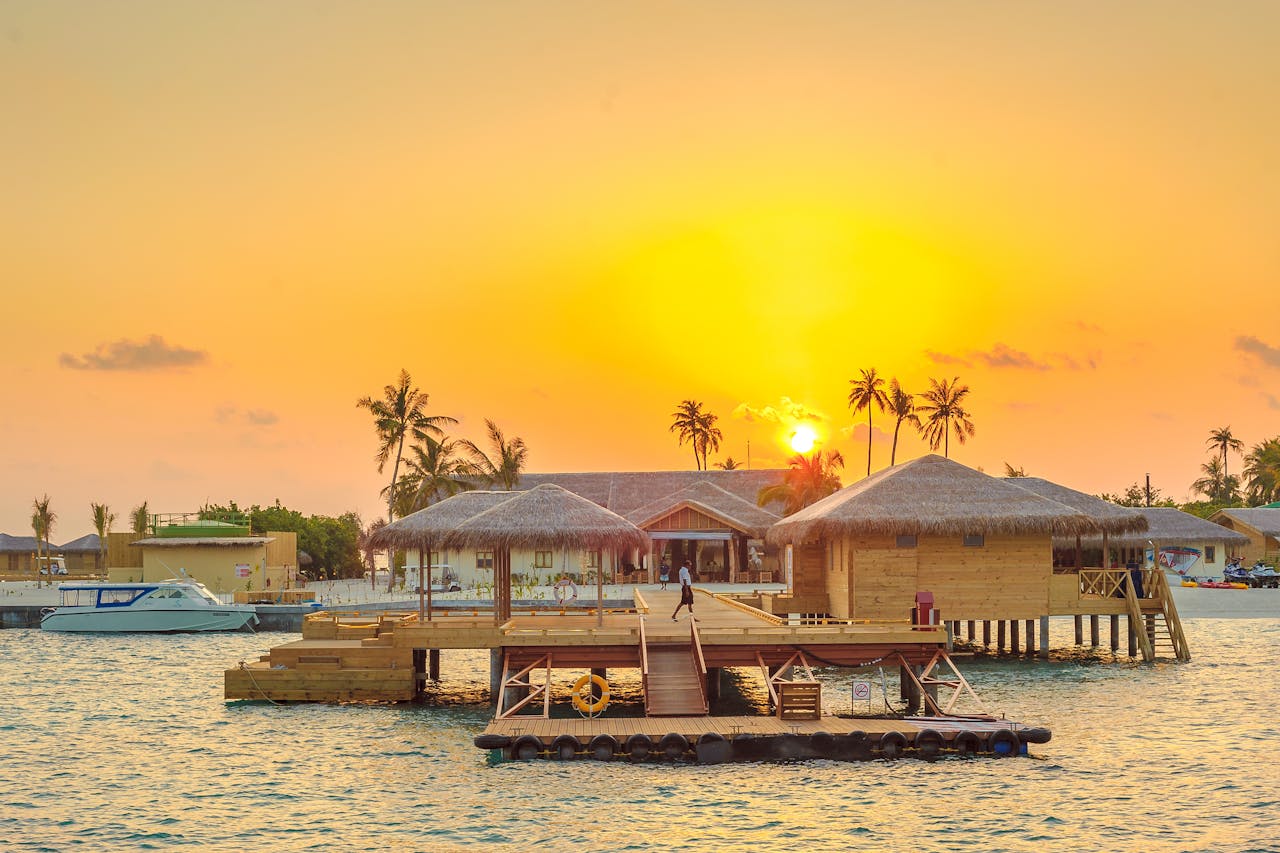
Most visitors stay on private resort islands, where alcohol is served and swimwear is fine anywhere. On inhabited local islands there is no alcohol and public beaches require modest dress except at designated bikini beaches. Local islands offer cheaper guesthouses and a look at everyday Maldivian life, but know the rules before you book.
Transfers
Your resort arranges the transfer: seaplane, speedboat, or a domestic flight plus boat to farther atolls. Seaplanes fly in daylight hours only and enforce strict soft-bag weight limits, so late arrivals usually mean a night in Malé or Hulhumalé. Speedboats serve the nearby North and South Malé atoll resorts in under an hour. Farther atolls need more planning: South Ari is about 25 to 30 minutes by seaplane or a domestic flight to Maamigili, and Baa Atoll is served by the domestic airport at Dharavandhoo, a short boat ride from Hanifaru Bay. For local islands near Malé, scheduled public ferries and shared speedboats run from the capital; timetables change, so confirm the current schedule before you rely on one.
Culture and etiquette
The Maldives is a Muslim nation. On local islands, dress modestly away from the beach, ask before photographing people, and know that restaurant hours can shift during Ramadan, which moves each year. Resorts are unaffected by Ramadan and serve alcohol as normal.
Planning checklist
- Entry: most nationalities get a 30-day tourist visa on arrival; complete the IMUGA traveller declaration online before you fly, and check the official Maldives Immigration site for current rules.
- Flights: land in Malé (MLE); book a morning arrival if you need a same-day seaplane, since they do not fly after dark.
- Packing: light breathable clothing, reef-safe sunscreen, a hat, quick-dry layers for the monsoon months, and a waterproof bag for boat days.
- Insurance: cover water sports and trip interruption, since rough seas can delay or cancel transfers.
- Money: resorts are cashless and bill in USD; local islands use the Maldivian rufiyaa and accept cards less widely, so carry some local currency.
Sources
- Wikipedia: Climate of the Maldives (WMO 1981-2010 normals for Malé)
- Arriva Maldives: Swimming with Whale Sharks in the Maldives
- Maldives Magazine: Maldives Shark Species Diving Guide
- The Nautilus Maldives: Manta Season Magic at Hanifaru Bay
- Maldives Times: Baa Atoll Guide, Hanifaru Bay rules and fees
- Cozy Hotels Maldives: Whale Sharks in South Ari Atoll
- String Travel: The Season of Giants, manta and whale shark months
- Curious Expeditions: What is the climate in the Maldives