
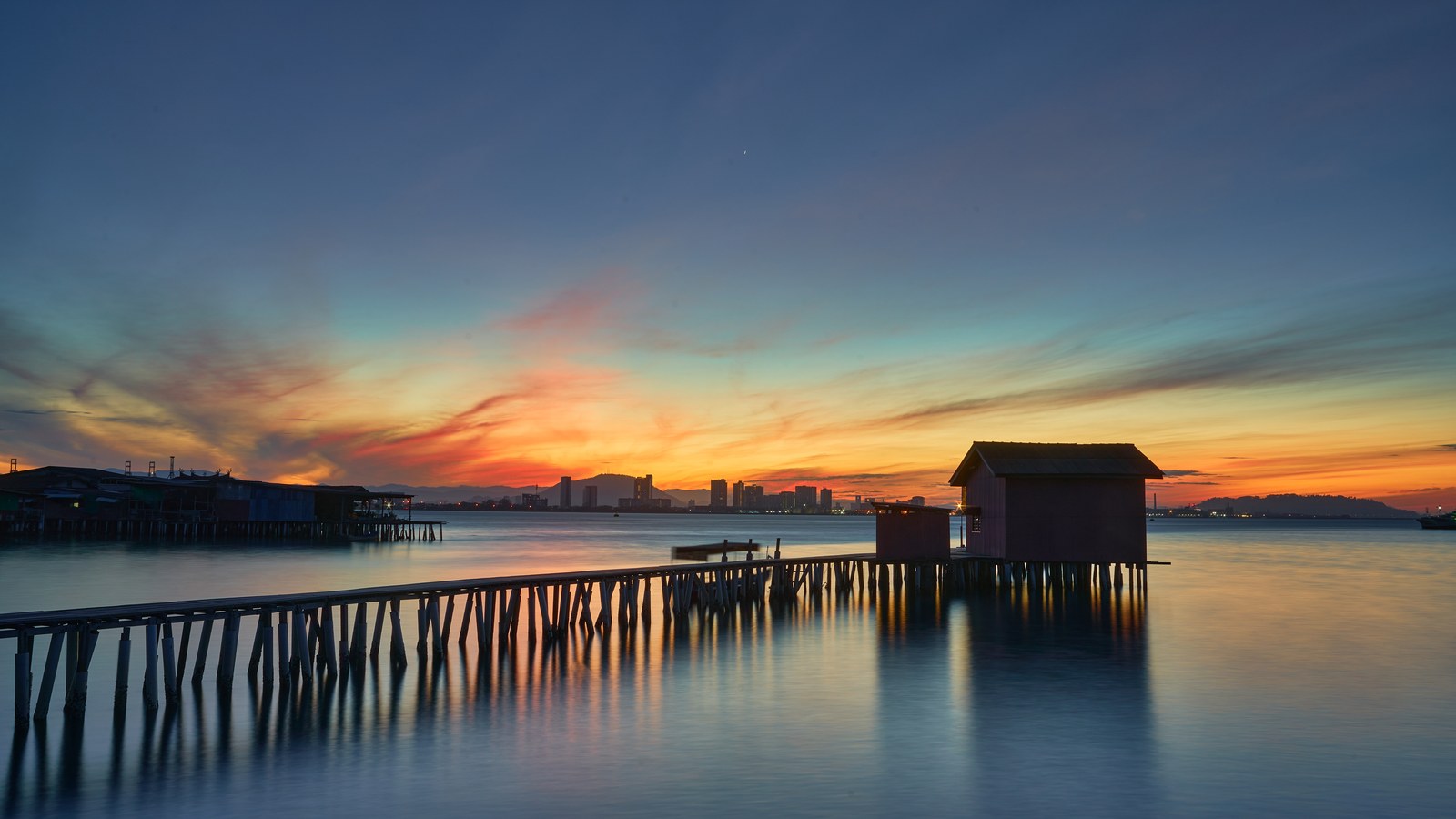
The best places to go in Penang split into three clusters: George Town's UNESCO old town (street art, clan jetties, mansions and Malaysia's most famous hawker food), the green west (Penang Hill, Kek Lok Si and the National Park), and the north-coast resorts of Batu Ferringhi, which are for sunset and night markets rather than swimming. Base yourself in George Town for 3 to 4 days, ride the free CAT bus loop, and plan around the weather: February is the driest month, October the wettest.
Quick picks
| Place | Go for | Need to know |
|---|---|---|
| George Town old town | Heritage streets and street art | UNESCO core zone since 2008, free to wander |
| Clan Jetties | Stilt villages on the waterfront | Free entry; they are homes, visit in daylight |
| Penang Hill | Funicular ride and the island view | Foreigner return RM40, express lane RM80 |
| Kek Lok Si | Malaysia's great Buddhist temple complex | Grounds free; inclined lift about RM16 return |
| Penang National Park | Jungle trails to quiet beaches | Register at HQ, card payment; canopy walkway closed |
| Batu Ferringhi | Resorts, sunset, night market | Swimming not advised (jellyfish, murky water) |
1. George Town's UNESCO old town
George Town's historic core was inscribed by UNESCO in 2008 (with Melaka, as the Historic Cities of the Straits of Malacca): a 109-hectare core zone of shophouses, clan temples, mosques and churches layered by Malay, Chinese, Indian and colonial British communities. It is a living city, not a museum, and wandering it costs nothing. Anchor your walk on Lebuh Armenian, Love Lane, the Kapitan Keling Mosque, Sri Mahamariamman Temple and the Khoo Kongsi clan house (open roughly 09:00-17:00; guides disagree on the small entry fee, so check at the gate). The mansions deserve their own stop below.
2. The street art trail
Penang's murals are free and painted on public walls across the old town. The famous set comes from Ernest Zacharevic's 2012 Mirrors George Town project: Little Children on a Bicycle on Lebuh Armenian, Boy on a Bike on Lebuh Ah Quee, and Reaching Up on Lebuh Cannon. Pick up a street art map from your hotel or the tourist office, go early before the heat and the photo queues, and accept that some pieces have faded - they are a decade old and outdoors. Wire sculptures on many corners tell the street's history in a sentence each and make an easy second layer to the walk.
3. The Clan Jetties
At the Weld Quay waterfront, six Chinese clan jetties survive: wooden stilt villages built over the water by families surnamed Lim, Chew, Tan, Lee, Yeoh and one mixed jetty. Chew Jetty is the most visitor-ready, with small stalls along its boardwalk; Tan Jetty is quieter and ends at a photogenic stilt house over the sea. Entry is free, but these are people's homes - stay on the main boardwalks, keep voices down, and come in daylight or early evening.
4. The mansions: Pinang Peranakan and the Blue Mansion
Two houses show how rich old Penang lived. The Pinang Peranakan Mansion (open daily 09:30-17:30, RM30 adults, RM18 children) recreates a Straits Chinese tycoon's home, packed with furniture, jewellery and tableware. The Blue Mansion, Cheong Fatt Tze's indigo-walled house, can only be seen on its guided tours (RM25 adults, RM12.50 children), which is the better format anyway - the feng shui details make no sense without the stories. Book the Blue Mansion tour ahead in peak months.
5. Penang Hill
The funicular from Air Itam climbs 833 metres to Penang Hill, where the air is a few degrees cooler and the whole island spreads out below. Official fares for foreigners are RM40 return on the normal lane and RM80 for the express lane (children RM20); trains run 06:30-23:00 with the last ride up at 22:00, and queues on weekends and holidays are the main cost in time. At the top, The Habitat's canopy walk and treetop loop add a paid nature layer (around RM60 per adult on current guides). Go on a clear weekday morning for the view you came for.
6. Kek Lok Si Temple
Below the hill in Air Itam stands Kek Lok Si, one of Southeast Asia's largest Buddhist temple complexes: a seven-storey pagoda fusing Chinese, Thai and Burmese styles, a huge Kuan Yin statue, and halls still in daily use. The grounds are free (open roughly 08:30-17:30); the pagoda asks a small RM2 fee and the inclined lift to the statue costs about RM16 return, cash only. Pair it with Penang Hill on the same morning, then eat at Air Itam - the assam laksa by the market is one of the island's famous bowls (see the food section).
7. Penang National Park and Monkey Beach
At Teluk Bahang, the island's northwest tip, Penang National Park packs jungle trails, a turtle sanctuary beach at Pantai Kerachut (green turtles nest roughly April to August) and the boat-linked Monkey Beach into one of the world's smallest national parks. Register and pay at the park headquarters before you walk - current guides report a foreigner fee of around RM50, card payment only, but published figures conflict, so confirm at the counter. The canopy walkway is closed indefinitely; do not plan around it. Monkey Beach is reached by trail (about 1.5 hours) or by boat from the park entrance (around RM100 return per boat on current guides). Do not swim at Pantai Kerachut - the turtle beach is for turtles.
8. Batu Ferringhi, honestly
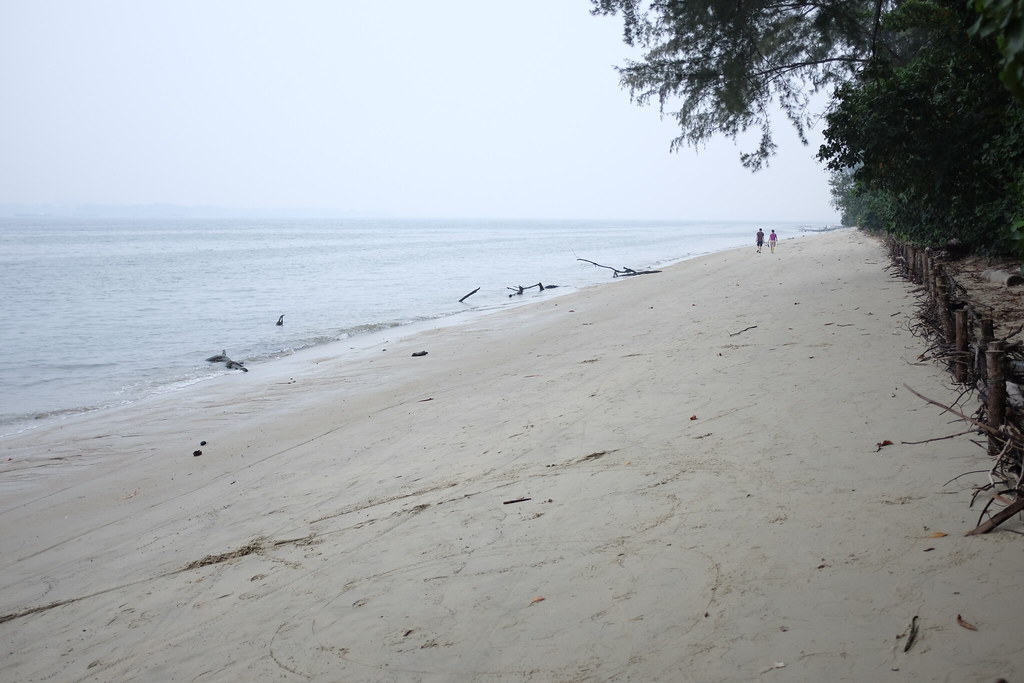
Batu Ferringhi is Penang's resort strip: big beachfront hotels, water sports and a nightly market (roughly 19:00-22:00, smaller than before Covid per recent visitors). What it is not is a swimming beach - the water is murky and jellyfish are common, so treat the sand as a sunset venue, best along the PARKROYAL to Hard Rock stretch. Come for an evening: market, dinner, nightcap. Stay in George Town or Gurney Drive unless a resort pool is the point of your trip.
9. ESCAPE and Entopia for families
Two purpose-built parks sit near Teluk Bahang. ESCAPE is an outdoor adventure park whose 1,111-metre tube water slide is a Guinness record holder; it opens daily 10:00-18:00 and sells tickets online, with prices that move by day (resellers list roughly RM159-204 - treat any fixed figure as indicative and check the official site). Entopia, the former butterfly farm, is now a glasshouse-and-garden invertebrate park (09:00-18:00, last entry 17:00; RM75 adults, RM55 children on current guides). Either one fills a full family day; you do not need both unless the kids insist.
10. Botanic Gardens and the Tropical Spice Garden
The Penang Botanic Gardens are free and local in feel: monkeys, a waterfall stream and big rain trees, best early in the morning; note that roadworks for the Penang Hill cable car project (not yet open) currently close part of the access road. Across the island at Teluk Bahang, the Tropical Spice Garden is open again (Mon-Thu 09:00-16:30, Fri-Sun 09:00-18:00) for shaded spice trails and cooking classes; its current ticket price is not published reliably, so check before you go.
A simple 3-day Penang plan
Three days is the sweet spot for a first trip; a fourth day lets you add the National Park or a family park without rushing. Group sights by area so you are not crossing the island twice.
| Day | Plan |
|---|---|
| 1 | George Town on foot: street art and the old town in the morning, Clan Jetties before lunch, one mansion in the afternoon, dinner at the Gurney Drive Hawker Centre |
| 2 | Air Itam morning: Kek Lok Si first, assam laksa by the market, then the Penang Hill funicular; evening at the Batu Ferringhi night market |
| 3 | The green west: Penang National Park and Monkey Beach, or ESCAPE / Entopia with children; Tropical Spice Garden on the way back if time allows |
What to eat in Penang (and where)
Penang's food reputation is earned at specific stalls, and a typical hawker dish costs RM5-15 - bring cash, because hawkers are cash-first and foreign visitors cannot use Malaysia's DuitNow QR. The names to plan around: Penang Road Famous Teochew Chendul on Lebuh Keng Kwee (queuing since 1936, about RM5.50, cash only) for the shaved-ice dessert; Air Itam Assam Laksa near the market for sour-spicy fish laksa (about RM6.50); Siam Road Char Koay Teow, charcoal-fired and Michelin Bib Gourmand listed, for noodles with real wok hei (RM8-11, expect a queue); and Nasi Kandar Line Clear on Penang Road for a loaded plate of curries (around RM14). For a sit-down evening, the Gurney Drive Hawker Centre runs 100-plus stalls by the sea, and New World Park on Swatow Lane is the comfortable, curated food court version. More of Malaysia's food cities are in our beautiful places in Malaysia guide.
Penang after dark
Evenings sort into three easy options: the Gurney Drive Hawker Centre for dinner by the sea, the Batu Ferringhi night market for a stroll and souvenirs, and George Town's bars and cafes around Love Lane and Lebuh Campbell for a slower night. Nothing here runs late by Bangkok standards - plan dinner as the main event.
Getting to Penang and getting around
From Singapore, direct flights land at Penang International in about 1 hour 25 minutes - Singapore is this guide's biggest reader market for a reason. From Kuala Lumpur, the ETS train runs KL Sentral to Butterworth in roughly 4 hours (3h35 on the fastest Express services), then the passenger ferry crosses to George Town in about 10 minutes for RM2, from Pangkalan Sultan Abdul Halim beside Penang Sentral to Pangkalan Raja Tun Uda on Weld Quay; flights take about 1 hour, driving about 4 to 5 hours. From the airport, a Grab or taxi reaches George Town in 25-45 minutes (roughly RM25-60); bus 401E does it in 45-60 minutes for under RM3.50, exact cash only. Inside the city, the free CAT bus loops the heritage zone, and Grab covers everything else. One correction that matters: there is no Penang to Langkawi ferry - it was suspended during Covid and never restored, and the old crossing took about 3 hours, not 30 minutes. Fly (about 35-40 minutes) or take the mainland ferry from Kuala Kedah. Our best island destinations in Southeast Asia guide covers Langkawi alongside the region's other islands.
When to go
February is Penang's driest and most comfortable month. The wet season peaks from September to November - October is the wettest month at roughly 340 mm of rain in long-term records - while December to March is only relatively dry, so a shower can land in any month. Penang is hot and humid year-round; plan outdoor sights for mornings and let the afternoons belong to food and museums. If you are choosing between Penang and Langkawi: Penang wins on food, culture and value; Langkawi wins on beaches and duty-free. Many travellers do both, by plane.
Entry basics
Most visitors enter visa-free: UK, US, EU and Australian passport holders get up to 90 days, and India's visa exemption (30 days) currently runs to 31 December 2026. There is no general tourist visa on arrival. Almost all foreign visitors must submit the Malaysia Digital Arrival Card (MDAC) online, free, within the 3 days before arrival - Singapore citizens and a few pass categories are exempt. Use the official portal only; sites charging for the MDAC are resellers.
Sources
- UNESCO: George Town, Historic Cities of the Straits of Malacca
- Penang Hill Corporation: funicular tickets and fares
- Visit Penang: Butterworth to George Town ferry times and fares
- OnPenang: Penang to Langkawi routes (no direct ferry)
- Weather and Climate: Penang monthly rainfall records
- Wego: Malaysia Digital Arrival Card (MDAC) rules
- Cheong Fatt Tze Mansion: daily guided tours
- ESCAPE Penang: official park page and tickets