
Osaka is Japan's kitchen and Kansai's transport hub, and it rewards planning like a local: Osaka Castle in the morning (JPY 1,200, a 1931 reconstruction with the real Tokugawa walls), street food in Dotonbori and Shinsekai by night, one big-ticket day (Universal Studios Japan, whose pass runs JPY 8,400 to 11,900 by date, or the Kaiyukan aquarium, around JPY 2,700) and day trips that genuinely take under an hour. Base yourself in Namba or Umeda, carry an ICOCA, stand on the RIGHT on escalators, and note: Expo 2025 closed in October 2025. Outdated guides still send people to Yumeshima; there is nothing to visit there in 2026.
Osaka works best as two trips in one: a great food city in its own right, and the cheapest bed from which to raid the rest of Kansai. Kyoto, Nara, Kobe and Himeji are all day trips from it, and the shinkansen from Shin-Osaka reaches Tokyo in about 2 hours 21 minutes, which makes the classic open-jaw trip (into Tokyo, out of Kansai, or the reverse) easy. This guide sticks to what a first visit actually needs: the sights at 2026 prices, the food rules, the transport cards that are and are not worth it, and the honest status of the Expo site.
The sights, priced
Osaka Castle. The keep you photograph is a 1931 reconstruction, a museum from the day it opened; the authentic fabric is the enormous Tokugawa-era stone walls, moats and gates around it, and the surrounding park is free. The museum inside is genuinely good on the Toyotomi story. Admission is JPY 1,200 (it rose from the long-standing JPY 600), open 9:00 to 18:00 with last entry at 17:30, closed 28 December to 1 January. Go at opening; by late morning the top-floor queue crawls.
Kaiyukan Aquarium. One of the world's great aquariums, built as a spiral walk down around a Pacific Ocean tank 9 metres deep holding whale sharks; about 30,000 creatures across 620 species. It now runs variable pricing: JPY 2,700 for adults on standard days, dropping to roughly JPY 2,400 on quiet weekdays, sold as date-and-time e-tickets. Hours are typically 10:00 to 20:00. Nearest station is Osakako on the Chuo Line, five minutes away at Tempozan harbour.
Universal Studios Japan. Buy the 1-Day Pass online (there have been no gate booths since May 2025) and expect dynamic pricing across six tiers, roughly JPY 8,400 to 11,900 for adults in late 2026. Two mechanics decide your day. First, Super Nintendo World entry is never guaranteed by the pass alone: since January 2026 the only routes are an Area Timed Entry Ticket claimed in the official app the moment you enter the park, or an Express Pass that includes area entry. Second, Express Passes are add-ons (from around JPY 10,800, dynamic) that admit nobody on their own but cut the big queues. Park hours change daily; the app is the schedule. And to kill a rumour from older guides: USJ has no outdoor concert arena, and no concert is a reason to time a visit.
The viewpoints. Osaka's highest is Harukas 300, the observatory on floors 58 to 60 of the 300-metre Abeno Harukas (admission about JPY 2,200; it is no longer Japan's tallest building, Tokyo's 330-metre Mori JP Tower passed it, but nothing in Osaka comes close). The Umeda Sky Building's Kuchu Teien floating garden (9:30 to 22:30) is the romantic classic; admission has been JPY 1,500 with a 2026 revision toward JPY 2,000 rolling out, so check the site before you go. For retro Osaka, Tsutenkaku in Shinsekai costs JPY 1,200, with the 60-metre Tower Slider at JPY 1,000 extra, and Billiken on the deck, whose feet you rub for luck.
Eating: the nation's kitchen, with rules
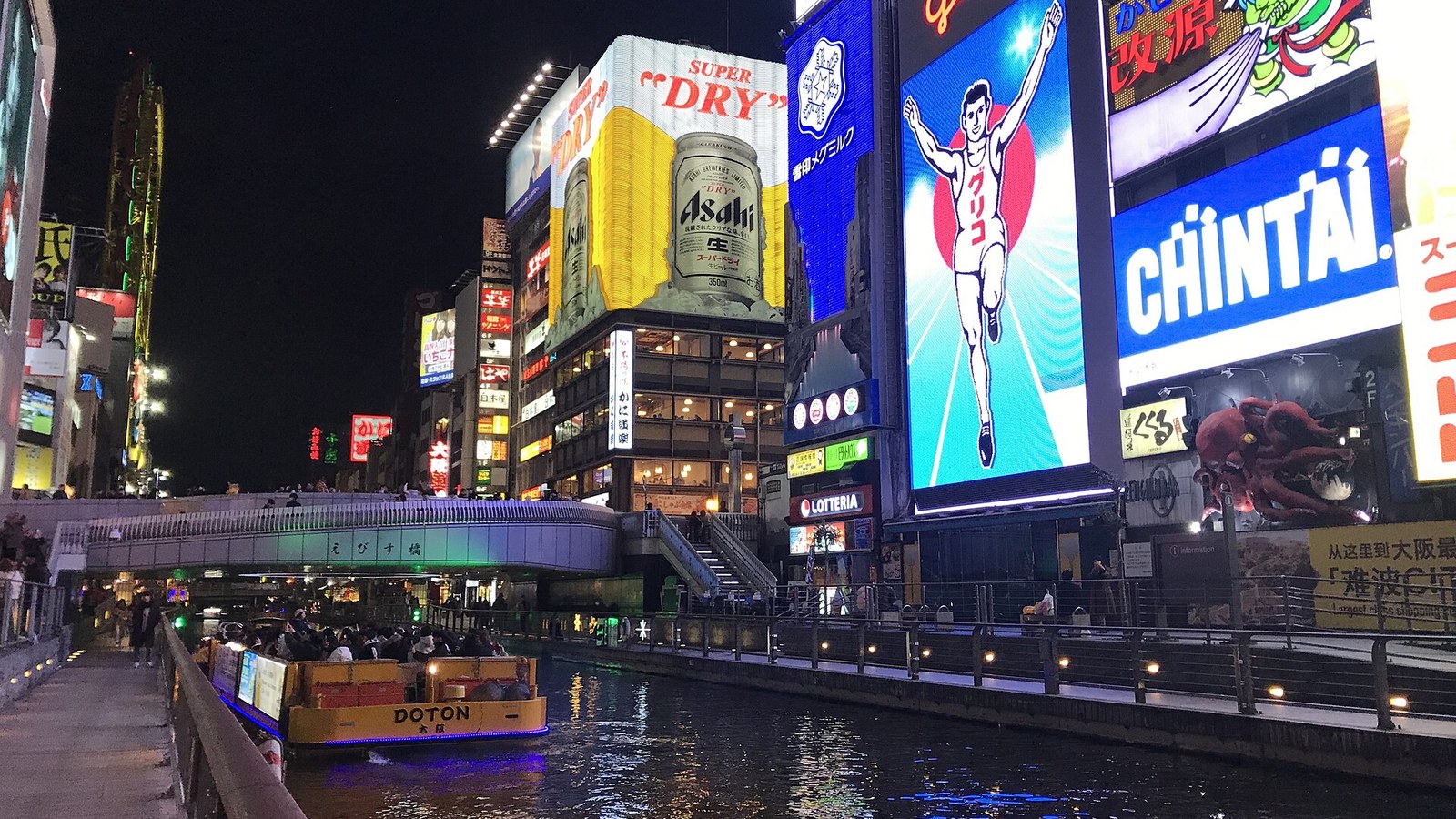
Osaka's nickname is earned at street level, and three dishes carry it. Takoyaki was invented here in 1935 by Endo Tomekichi at Aizuya, adapted from Akashi's egg-and-octopus dumplings; the original shop still serves them un-sauced, which tells you the batter is the point. Okonomiyaki, the cabbage-and-batter pancake grilled with pork, squid or both, is the sit-down ritual (Dotonbori and the backstreets of Namba are dense with grills). Kushikatsu, skewers breaded and fried to order, comes with the city's most famous food law at Daruma in Shinsekai (founded 1929, originator of the format): no double-dipping in the shared sauce pot; the free cabbage is your legal second scoop. Graze Kuromon Ichiba Market (about 600 metres, around 150 shops) in the morning before the tour groups thicken, photograph the Glico running man in Dotonbori (the current sign is the sixth generation, from 2014) at dusk when the canal lights come on, and you have understood kuidaore, Osaka's cheerful doctrine of eating until you drop.
Getting in and getting around
From Kansai Airport (KIX) to Namba, the Nankai Rapi:t takes 34 to 39 minutes, all reserved, JPY 1,490 in total; the regular Airport Express on the same line costs JPY 970 and takes about 45 minutes, which is the smarter default unless you land at rush hour with luggage. JR's Haruka serves the other side of the city: about 35 minutes to Tennoji (JPY 1,710) and 50 to Shin-Osaka (JPY 2,380), with a visitor QR ticket at JPY 1,800 worth checking. From Itami airport, limousine buses run about 30 minutes to Umeda and 35 to Namba.
In the city, load an ICOCA and tap everything: subway, JR, private railways, buses. Be clear about what it is: a convenience, not a discount card; ICOCA saves no money on fares anywhere in Kansai. The one pass worth arithmetic is Osaka Metro's Enjoy Eco Card: JPY 820 on weekdays, JPY 620 on weekends and holidays, for a day of Metro and City Bus; it pays off at roughly four to five rides, and it does not cover the Chuo Line extension to Yumeshima. One piece of body language matters daily: in Osaka you stand on the right on escalators, the mirror image of Tokyo, and the whole city will flow around you accordingly.
Day trips that are actually day trips
Nara (about 40 to 50 minutes) is the gentle first choice: Todai-ji's Great Buddha Hall costs JPY 800, and the park's deer, wild animals protected as Special Natural Monuments, work the cracker economy at JPY 200 a pack; bow and they may bow back, and keep bags closed, because they have learned zips. Kobe is about 30 minutes by JR Special Rapid to Sannomiya, an easy half-day of harbour, Chinatown street snacks and sake breweries in Nada. Himeji (about 55 to 60 minutes) is the castle trip: Japan's finest original keep, UNESCO-listed, and newly priced at JPY 2,500 for non-resident adults since March 2026 (residents JPY 1,000, under-18s free; JPY 2,600 with the Koko-en gardens), sold as timed digital tickets, so book the slot before the train. Kyoto needs two lines only: the JR Special Rapid from Osaka Station takes about 30 minutes and is the default; the 15-minute shinkansen from Shin-Osaka exists but rarely wins door to door. For how these cities fit a wider route, see our guide to the best places to visit in Japan, and if you are heading further west, Fukuoka is the shinkansen's next great food stop.