
Okinawa saves money for travellers who get three things right: the transport cards (Suica works on the monorail but not on buses), the passes (a real bus pass for tourists exists, and it is not the one older blogs describe), and the seasons (the clear Kerama water is free, but the ferries and jellyfish run on a calendar). This guide replaces the fake hacks with the real mechanics: OKICA, the Yui Rail passes, official ferry fares to Zamami and Tokashiki, and what the big sights actually charge in 2026.
Quick picks
| Decision | The budget answer | Anchor price (2026) |
|---|---|---|
| Monorail in Naha | 1-day Free Pass, or tap a bank card | Pass ¥1,000; card rides capped at ¥800 a day |
| Buses anywhere | OKICA card or cash, never Suica | OKICA deposit ¥500 |
| Main-island touring | OTOPa route bus pass for tourists | Bus + monorail 3 days ¥6,400 |
| Kerama day trip | High-speed boat, booked ahead | Zamami ¥3,950 one way; Tokashiki ¥3,300 |
| Big-ticket sight | Churaumi Aquarium, park itself free | ¥2,180 adult; ¥2,000 voucher at Kyoda |
The card truth: Suica on rails, OKICA on buses
This is the correction that matters most, because mainland advice breaks here. Okinawa's Yui Rail monorail in Naha has accepted Suica and the other national IC cards since March 2020, and it also takes contactless bank cards with a daily cap of ¥800. Okinawa's buses accept none of them. Route buses across the main island take the local OKICA card (¥500 deposit, sold at monorail stations and bus offices) or cash, and an OKICA cannot be used outside the prefecture. Travellers who land with only a Suica end up feeding coins to buses all week. Buy the OKICA on day one if buses feature in your plans at all.
Passes that actually exist
Forget the "Ryukyu Bus Pass" of older blogs; it does not exist. The real options are these. Yui Rail's own passes cost ¥1,000 for 1 day and ¥1,800 for 2 days (children half), and they run for 24 or 48 hours from issue, not by calendar day: with single fares at ¥230 to ¥370, the day pass pays off at about 3 to 4 rides. The Bus Mono Pass (¥1,500) bundles Naha city buses with the monorail for one calendar day. For the main island, the tourist-only Okinawa Route Bus Pass (OTOPa) covers the four big bus companies: bus-only ¥2,900 for 1 day or ¥5,800 for 3 days, or ¥3,500 / ¥6,400 with the monorail included. It excludes highway and limousine buses, so airport-to-resort journeys are not covered. And from the airport, the monorail itself is the cheapest ride in: ¥270 to Kencho-mae by Kokusai-dori in about 13 minutes, against roughly ¥1,200 to ¥1,800 for a taxi.
The sights, in their real places
Two locations in older guides are simply wrong, so here they are correctly. The Blue Cave is at Cape Maeda in Onna Village on the main island's west coast, reached by snorkel or dive tours from the park stairs or by boat; it is not in Zamami. Sunset Beach is in Chatan on the main island, beside the Mihama American Village shopping district; it is not in Miyako-jima. The north's anchor is the Okinawa Churaumi Aquarium in Motobu (adult ¥2,180): the Ocean Expo Park around it, including the dolphin show and the turtle and manatee houses, is free, and the roadside station at Kyoda on the drive north sells aquarium vouchers for ¥2,000 cash. The old after-4pm discount ticket no longer exists, so do not plan around it. In Naha, Shurijo Castle's rebuilt main hall reopens on 23 November 2026, with paid-area admission rising from ¥400 to ¥1,000 that day and timed reservations for the hall itself.
Kerama islands: ferries, fares and the blue
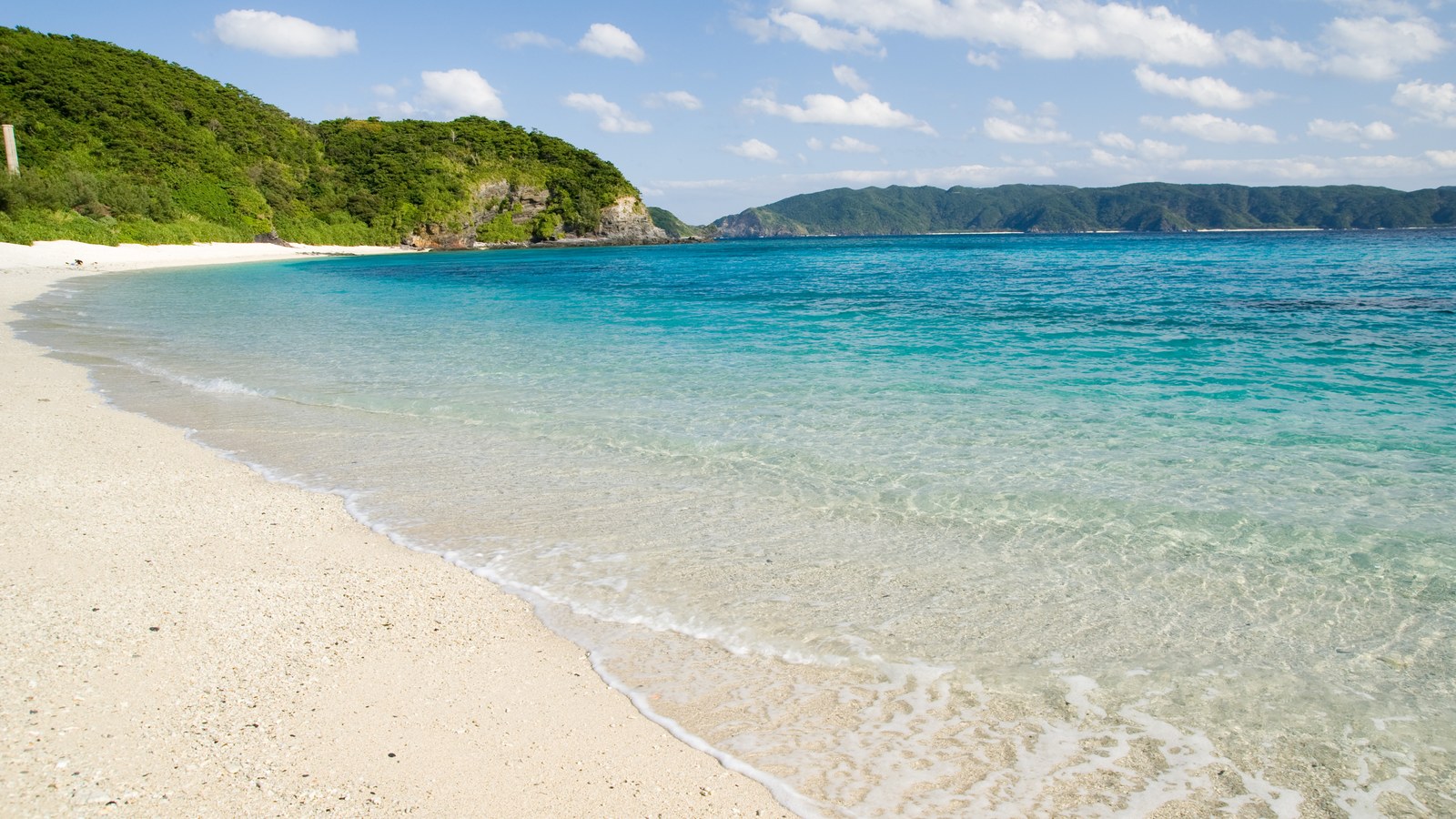
The Kerama Islands, a national park since 2014 protecting more than 240 coral species, are the budget traveller's Maldives: the water is the attraction and it costs a ferry fare. From Naha's Tomari Port, the high-speed Queen Zamami reaches Zamami in about an hour for ¥3,950 one way (car ferry ¥2,900, about 2 hours), and the Marine Liner Tokashiki reaches Tokashiki in 40 minutes for ¥3,300 (ferry ¥2,200, 70 minutes, plus a ¥100 environmental tax). Zamami's village requires reservations for both boats, and Tokashiki strongly recommends them in season, because boats cancel when waves pass 3 metres and the next sailing may be full. On Zamami, Furuzamami Beach is a 15 to 20 minute walk from the port and Ama Beach is where turtles graze at high tide. Practical warning from Tokashiki village itself: there is no ATM near Aharen Beach, so carry cash. Ishigaki and Miyako are flights, not ferries: about an hour by air from Naha, and no passenger ferry has run to Ishigaki since 2008.
Seasons: when the savings are real
Okinawa's rainy season averages about 10 May to 21 June, a month earlier than the mainland, and typhoons approach most often from July to September (an average of 7.7 approaches a year), cancelling ferries and flights, so build flex days around any Kerama plan. Managed beaches open from late March or April and swim inside jellyfish nets until October; the prefecture's box jellyfish warning runs 1 June to 30 September, with stings most frequent from mid-August. Winter is the honest trade: January averages about 17 degrees, the sea needs a wetsuit, but late December to early April is humpback whale season off Zamami (association tours about 2 hours, ¥6,000). Spring and autumn remain the comfortable windows. Japan entry rules are the same as everywhere in the country, and if you are pairing Okinawa with the southern mainland, our Kyushu travel guide covers the rail passes and the November 2026 tax-free change.
Eating and sleeping without the resort bill
The real budget pattern is unglamorous: convenience stores for breakfast and train-station-style snacks, and local shokudo diners for Okinawa soba, champuru stir-fries and set meals at lunch, rather than resort restaurants for every meal. No official source publishes diner prices, so any guide quoting you an exact yen figure for lunch is guessing; the mechanic, eating where the neighbourhood eats, is the saving. On the outer islands, family-run minshuku guesthouses are the default stay, often with meals, and they fill early in summer and holidays, so book the room when you book the ferry. A rental car only earns its cost (roughly ¥8,000 to ¥10,000 a day for a compact in platform quotes, more in peak season, plus expressway tolls like the ¥1,040 Naha to Kyoda run) when your plan is the north and the coast road; for Naha and Kerama, passes and boats are cheaper.
Sources
- Yui Rail official: fares, passes and IC cards
- OTOPa: Okinawa Route Bus Pass official site
- Ocean Expo Park official: Churaumi Aquarium fees and hours
- Zamami Village official: ferry fares and reservations
- Tokashiki Village official: ferry fares and guidance
- JNTO: Kerama Islands National Park and whale watching
- Japan Guide: getting around Okinawa
- Visit Okinawa: Okinawa Convention and Visitors Bureau