
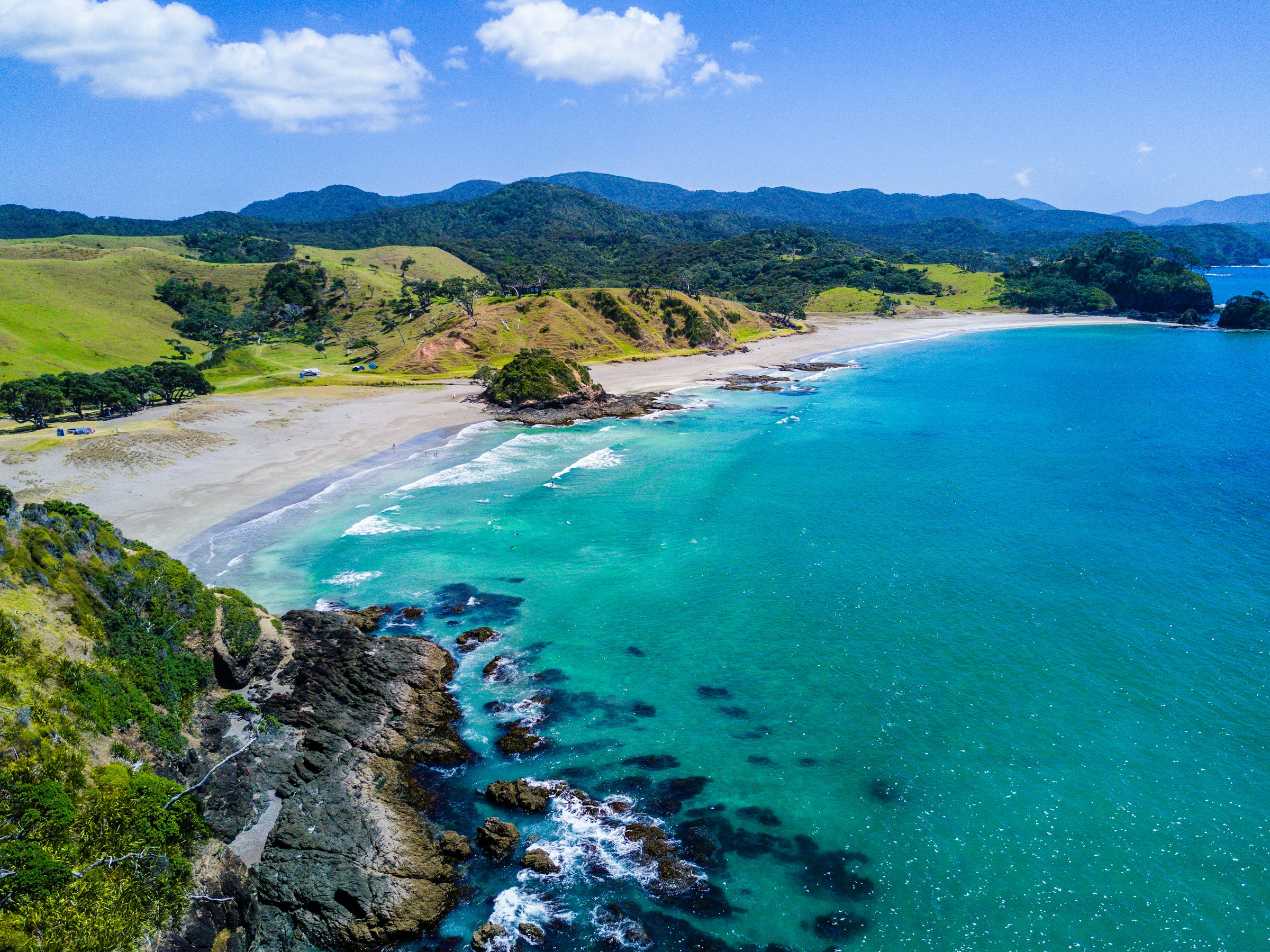
A workable 10-day New Zealand itinerary spends 3 days on the North Island and 7 on the South, and flies the long leg instead of driving it: Auckland (1), Rotorua (2), fly to Christchurch (1), Aoraki/Mount Cook (2), Queenstown and Milford Sound (4). Before any of it, a US passport holder needs an NZeTA before travel, NZD $17 on the app or $23 online, plus the NZD $100 International Visitor Conservation and Tourism Levy paid with it, and gets up to 3 months per visit on the visa waiver, not the 9 months the previous version of this itinerary promised.
Three corrections frame this rebuild. The old article told US travellers they had "visa-free entry for stays up to nine months"; nine months is the maximum on a Visitor Visa applied for in advance, and the waiver that Americans actually travel on gives less than 3 months per visit. It described the Hooker Valley Track's closure as seasonal and its reopening as "autumn 2026 onward"; the closure was a bridge replacement that began in April 2025, and the new bridge opened in July 2026, so the full track is open now. And its day allocations added up to well over ten, with stops counted on the wrong island. The route below counts to ten exactly.
Entry, corrected: the waiver, the NZeTA and the levy
| Requirement | What Immigration New Zealand publishes |
|---|---|
| Visa waiver (US passport) | No visitor visa needed for a stay of less than 3 months per visit (6 months if travelling on a UK passport); up to 6 months in any 12-month period |
| NZeTA | Required before travel; valid 2 years, multiple entry; NZD $17 via the mobile app, NZD $23 via the website; apply well ahead, processing can take up to 72 hours and you may be denied boarding without one |
| IVL | NZD $100 per person, the International Visitor Conservation and Tourism Levy, paid together with the NZeTA |
| Passport | Valid for at least 3 months after the date you intend to leave New Zealand |
| On arrival | You are given a visitor visa; be able to show onward travel (departure within 3 months of arrival) and funds, at least NZD $1,000 per month or $400 if accommodation is prepaid, if asked |
| NZ Traveller Declaration | Free, and everyone travelling into New Zealand must complete one, including NZ passport holders; by air, submit from 24 hours before your trip starts and by the time you reach passport control |
Two implications for this itinerary. First, the 10 days sit comfortably inside the waiver, so no visa application is needed, but the NZeTA and the levy are not optional extras: budget NZD $117 to $123 per person before you fly. Second, if you are planning a much longer trip on the strength of the old article's nine months, that figure belongs to the Visitor Visa, whose holders "can stay up to a maximum of 9 months in an 18-month period" (Immigration New Zealand). Apply for the visa in advance if that is the trip you want.
The 10 days at a glance
| Day | Sleep | The day |
|---|---|---|
| 1 | Auckland | Arrive, recover, harbour city on foot |
| 2 | Rotorua | Drive south; Waitomo Glowworm Caves or Hobbiton Movie Set on the corridor |
| 3 | Rotorua | Geothermal valleys, Maori culture, the free thermal reserve |
| 4 | Christchurch | Fly south; garden city afternoon |
| 5 | Aoraki/Mount Cook village | Drive into the national park; Tasman Glacier side trip |
| 6 | Aoraki/Mount Cook village | Hooker Valley Track; dark sky after dark |
| 7 | Queenstown | Drive to Queenstown via the Lindis Pass country |
| 8 | Queenstown | Milford Sound day: the long road in, the fiord, the long road back |
| 9 | Queenstown | The town itself: the lake, the gondola, the adventure menu |
| 10 | Depart | Fly out of Queenstown, or connect via Auckland |
The days in detail
Days 1 to 3: Auckland and Rotorua
Day 1 is an arrival day, deliberately light: clear passport control (your Traveller Declaration already submitted), get to the city, and walk the harbour and the central city while your body clock resets. Day 2 is the drive south to Rotorua, with the corridor's two famous commercial stops on the way, both listed by Tourism New Zealand: the Waitomo Glowworm Caves in the Waikato, and the Hobbiton Movie Set at Matamata, where, in Tourism New Zealand's words, "Peter Jackson brought the Shire to life". Pick one; doing both turns a transfer day into a marathon. Day 3 belongs to Rotorua itself. Tourism New Zealand calls it "the geothermal city of Rotorua... a magnet for travellers, who come to discover volcanic phenomena and learn about New Zealand's Maori culture": the paid geothermal valleys (Te Puia's Pohutu Geyser, which Tourism New Zealand describes erupting to 30 metres up to 20 times a day, and the New Zealand Maori Arts and Crafts Institute) on one side, and on the other the city's free public counterweight, Kuirau Park, the council-run reserve Tourism New Zealand calls "the free thermal reserve", with bubbling mud pools, hot lakes and free thermal foot pools in the centre of town.
Days 4 to 6: Christchurch and Aoraki/Mount Cook
Day 4 is the flight south to Christchurch, the move that makes ten days enough: driving the length of both islands would eat three of them. Spend the afternoon gently, because Day 5 is the drive into Aoraki/Mount Cook National Park, the country's great alpine park. The Department of Conservation's framing sets expectations honestly: "The park is a harsh land of ice and rock. Glaciers cover 40% of it. There are 19 peaks over 3,000 m including New Zealand's highest mountain, Aoraki/Mount Cook", which DOC puts at 3,724 metres. Use the arrival afternoon for the park's shorter walks and the Tasman Glacier viewpoint: the Tasman is, per DOC, New Zealand's largest and longest glacier at 23 km (older guides printing 27 km are out of date). Day 6 is the Hooker Valley Track, given its own section below, and the evening is the park's second show: Aoraki/Mount Cook sits inside the Aoraki Mackenzie International Dark Sky Reserve, designated by DarkSky International in 2012, 4,367 square kilometres at Gold tier status, which DarkSky's designation release called "one of the best stargazing sites on Earth".
Days 7 to 10: Queenstown and Milford Sound
Day 7 is the drive from Mount Cook village to Queenstown, through the Lindis Pass tussock country and the lakes. Day 8 is the Milford Sound day, and it needs honest framing: Milford is a day trip of the road, not a place you stay. There is no town at the fiord; the only accommodation at Milford open to independent travellers is Milford Sound Lodge, the alternative is an overnight cruise boat, and most visitors base in Te Anau or ride the day return from Queenstown, which is what this itinerary does. What justifies the day is the fiord itself, at the northern end of Fiordland National Park, which DOC describes as covering "over 1.2 million hectares" of World Heritage country with 14 fiords. Expect the weather to be part of the spectacle: DOC puts Fiordland's rainfall at an average of 7 to 8 metres a year, "one of the wettest places in the world", and the waterfalls multiply when it rains. Day 9 is Queenstown unhurried: Lake Wakatipu, the gondola above the town, and as much or as little of the adventure menu as you want, in the town Tourism New Zealand calls the "birthplace of commercial jet boating and bungy jumping". Day 10, fly home from Queenstown, connecting through Auckland if your long-haul flight needs it.
Hooker Valley Track: what actually changed
Because older versions of this itinerary (and much of the internet) still describe the Hooker Valley Track through the lens of its closure, here is the current position from the Department of Conservation, whose track page today carries no closure alert. The track's original second swing bridge was permanently closed in April 2025 after heavy Easter rain accelerated riverbank erosion. DOC replaced it, and in DOC's words: "A new second swing bridge over the Hooker River opened in July 2026. At 189 metres, it's the longest suspension bridge in New Zealand." The full track is open: DOC's segment times add up to about 5 kilometres and 90 minutes each way (10 km, roughly 3 hours return), crossing three swing bridges to Hooker Lake, where, again in DOC's words, "you'll enjoy majestic views of Aoraki/Mount Cook". Two practicalities from DOC: parking at the White Horse Hill trailhead costs $2.50 per half hour or $25 a day, card only; and DOC is installing a pause gate on the 47-year-old first bridge to enforce its 20-person limit after engineers found cable wear. The bridge, per the park's principal ranger, "is safe to cross but the people limit needs to be followed", so at peak summer times expect a short wait, and rangers rostered at the bridge. A capacity pause, not a closure.
Driving, and the ferry you are not taking
New Zealand drives on the left, and the NZ Transport Agency's current rule for visitors is more generous than most guides print: you can drive on an overseas car licence for up to 18 months from your last date of entry (12 months applies to motorcycle and truck licences), provided the licence is current, and if it is not in English you must also carry an official translation or an international driving permit. This itinerary deliberately skips the Cook Strait ferry by flying Rotorua to Christchurch, but if you extend the trip and drive the whole country instead, both ferry operators publish the same crossing time, 3.5 hours between Wellington and Picton (Interislander states it directly; Bluebridge's timetable schedules 3 hours 30 minutes), the ferries carry cars and campervans, and there is one catch worth knowing in advance: the big rental brands, Avis, Hertz, Budget, Europcar and Thrifty among them, do not allow their cars to cross between the islands, so you drop the car at one terminal and collect another at the far side.
Seasons for this route
Tourism New Zealand's four seasons are summer December to February, autumn March to May, winter June to August and spring September to November, and summer is its most popular visiting season. The contrast this route crosses is the country's defining one: Tourism New Zealand's published seasonal ranges put Auckland at 17 to 24 degrees in summer and Queenstown at 9 to 23, with spring at 11 to 18 for Auckland and 5 to 15 for Queenstown, in a climate it summarises as ranging "from subtropical in the far north, to snowy in the deep south". Pack for both ends of that range in any month. Two season swaps worth knowing: in winter the Queenstown days become ski days, since Tourism New Zealand puts the ski season at June to October with the highest snowfall usually in July and August; and Milford Sound has no dry season to aim for, with 7 to 8 metres of rain a year, so take the fiord in whatever weather it offers and dress for the wettest version.
The 11th day: Tongariro Alpine Crossing
If you can stretch the trip by a day, insert it between Rotorua and the flight south for the Tongariro Alpine Crossing, the North Island's great one-way walk. Use DOC's current figures, not the ones in older guides: DOC now publishes the crossing as 20.2 km one way from Mangatepopo to Ketetahi, over an active volcanic landscape ("Although unlikely, eruptions can occur at any time"). DOC introduced a free booking system in October 2023: bookings are recommended for everyone using any part of the track, there is no cost, no cap and no penalty for turning up without one, but a booking is needed to use a shuttle or guided service, which a one-way walk practically requires. Note also DOC's current-status flag: after fires in the park in late 2025 the crossing reopened, with a restorative rahui in place over the fire-affected area, so stay on the track.
Sources
- Immigration New Zealand: visa waiver countries (US waiver, less than 3 months; UK 6 months); NZeTA page and application guide (valid 2 years, multiple entry, NZD $17 app / $23 website, IVL NZD $100, passport 3 months, funds NZD $1,000 / $400, processing up to 72 hours); Visitor Visa page ("up to a maximum of 9 months in an 18-month period"): immigration.govt.nz
- NZ Traveller Declaration: free, everyone must complete one, submit from 24 hours before the trip and by passport control: travellerdeclaration.govt.nz
- Department of Conservation, Hooker Valley Track page (no closure alert; the new 189 m second swing bridge opened July 2026; segment times; Hooker Lake) and DOC media release, 22 September 2026 (pause gate, 20-person limit on the first bridge; White Horse Hill parking $2.50 per half hour / $25 per day): doc.govt.nz
- Department of Conservation: Aoraki/Mount Cook National Park (3,724 m; 19 peaks over 3,000 m; glaciers cover 40 percent); Tasman Glacier 23 km; Fiordland National Park (over 1.2 million hectares, World Heritage 1986, 14 fiords; rainfall 7 to 8 metres a year); Tongariro Alpine Crossing (20.2 km; free booking recommended, needed for shuttles; volcanic wording; post-fire rahui): doc.govt.nz
- Tourism New Zealand: Rotorua (geothermal city; Pohutu Geyser 30 m, up to 20 times a day; Kuirau Park the free thermal reserve); Hobbiton Movie Set and Waitomo Glowworm Caves listings; seasons and climate pages (season months; Auckland and Queenstown ranges; subtropical to snowy); ski factsheet (season June to October, highest snowfall July and August): newzealand.com
- DarkSky International: Aoraki Mackenzie International Dark Sky Reserve (designated 2012; 4,367 sq km; Gold tier at designation): darksky.org
- NZ Transport Agency, "Driving on New Zealand roads" (overseas car licence up to 18 months; motorcycle and truck 12 months; translation or IDP; drive on the left): nzta.govt.nz
- Interislander (sailing time 3.5 hours; vehicles carried; rental depots at terminals): interislander.co.nz; Bluebridge (timetable 3 hours 30 minutes; rental brands do not allow their cars to cross): bluebridge.co.nz
- Department of Conservation, International visitor access charges consultation 2026: the proposed access levy at Piopiotahi/Milford Sound and three other sites requires the Conservation Amendment Bill to become law; no amount or start date set: doc.govt.nz