
A June Kruger trip works because of the dry winter, not because of any animal "season": the bush thins, surface water shrinks to the rivers and dams, and game concentrates where you can predict it. Lions mate all year round, whatever older versions of this guide claimed. What follows is a workable 10-day self-drive plan built on SANParks' own numbers: June gate times of 06:00 to 17:30, official distances between real camps, the published conservation fees, and the park rules as SANParks actually prints them.
Quick picks
| Fact | Official position (SANParks) |
|---|---|
| June gate times | In from 06:00, back inside a camp or out by 17:30 |
| Daily fee, international adult | R692 per day (1 Nov 2026 to 31 Oct 2027 tariff) |
| Wild Card | Annual pass, 365 days from purchase; there is no short pass |
| Speed limits | 50 km/h on tar, 40 km/h on gravel |
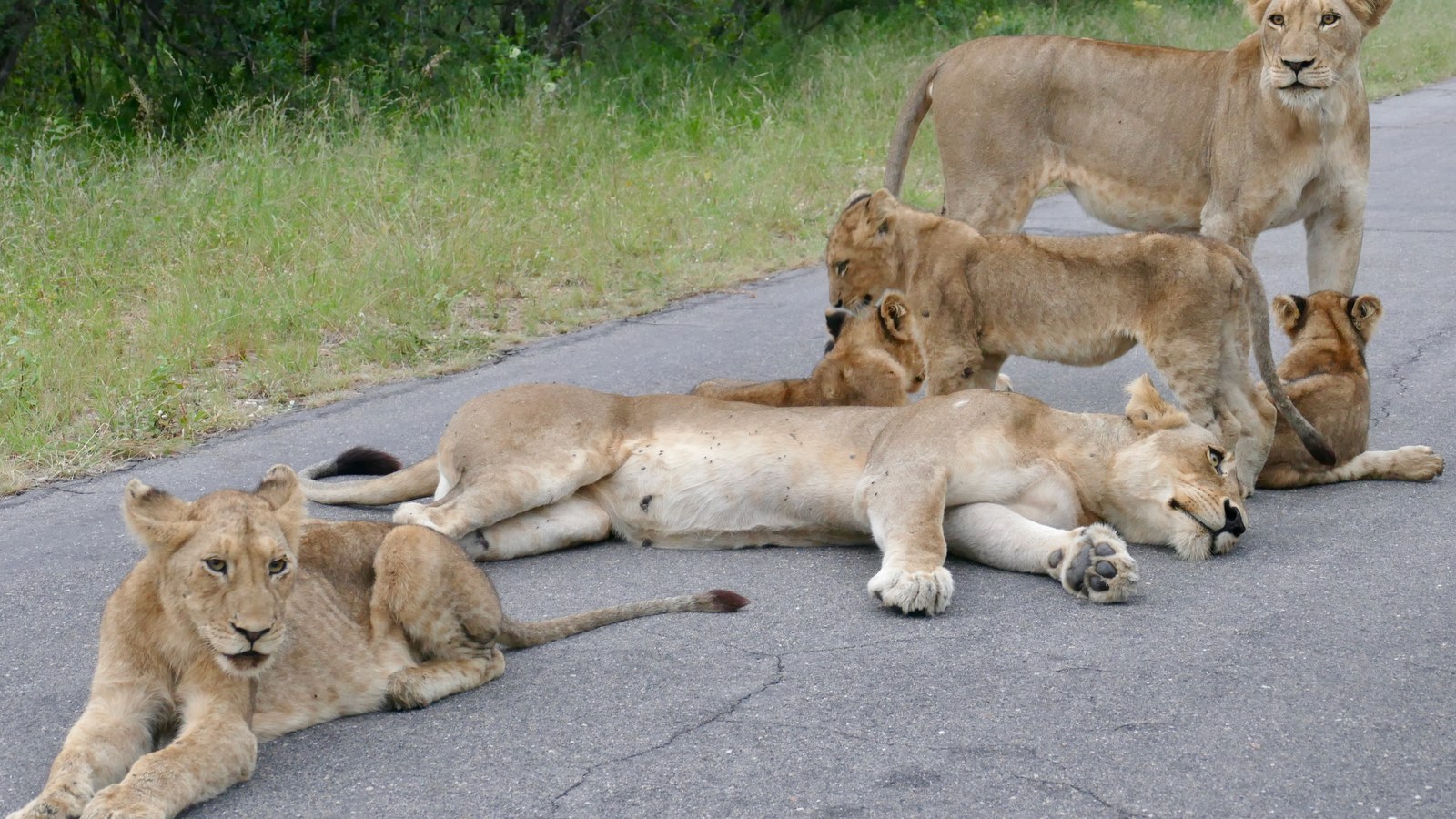
| Best lion country | Central grasslands around Satara |
Fees and the Wild Card, with real maths
SANParks publishes Kruger's daily conservation fees per person. For the tariff period 1 November 2026 to 31 October 2027, which is the period a June 2027 trip falls in, the rates are: South African citizens and residents R140 per adult per day (child R70), SADC nationals R296 (R147), and all other international visitors R692 (R345). Children are 2 to 11; under 2s are free. Every passenger needs ID or a passport at the gate, and the South African rate must be claimed there with documents in hand. The alternative is the Wild Card, SANParks' annual membership, valid 365 days from purchase and covering Kruger in its SANParks and All Parks clusters. International visitors buy the International All Parks card (published 2025/26 prices: R4,680 individual, R7,310 couple, R8,745 family; the 2026/27 card price was not yet published when this guide was checked). The maths for this plan: 10 days at R692 is R6,920 per international adult in daily fees, so the card already wins on this trip alone at its current price, and it wins quickly for couples and families. Anyone selling you a "14-day Kruger pass" is selling something that does not exist.
The rules as SANParks prints them
Speed limits are 50 km/h on tar roads and 40 km/h on gravel. You stay in your vehicle except at camps, picnic sites and marked get-out points, with no part of your body out of a window or sunroof. Feeding or disturbing animals is a serious offence. You may travel only between gate times; latecomers can be fined, and emergency late arrival exists only by prior arrangement with the gate, at extra cost, for accommodation within 10 km, and is not available at all at Pafuri, Phalaborwa, Giriyondo and Phabeni. Day visitors may not bring alcohol into the park at all; overnight guests keep theirs inside their accommodation. Drones are prohibited anywhere in the park, and SANParks states offenders will be arrested and equipment confiscated. Firearms must be declared at the gate. Quiet hours run 21:30 to 06:00. And Kruger is a malaria area: SANParks' own advice is to follow your doctor's instructions, with the highest risk in the rainy months of December to April. June's dry winter lowers the risk; it does not remove it.
Why June works (and what it does not do)
June sits in the dry winter, roughly May to October. With rain gone, the grass is low, the trees are thin, and animals gather at the permanent rivers, dams and waterholes, which is exactly where the roads run. Predators work those concentrations. That is the whole mechanism, and it is enough. Now the corrections. There is no lion mating season: lionesses come into oestrus throughout the year, and Kruger's lion birth peak around February to April (following the summer prey flush) gives a June visitor no special viewing claim. Buffalo calving is a wet-season event, roughly December to April, so by June the calves are months old. Impala lambs, born in a tight window around November and December, are half-grown by June. And the birding trade-off is real: the summer migrants (woodland kingfishers, European bee-eaters) are here from about November to April, so June offers resident species only. Plan June for mammals and visibility, not for birds or babies.
The 10-day plan, south to north
The route uses SANParks' published distances and obeys the June rule every day: out at 06:00, inside the next camp by 17:30. The longest hop is 93 km, about 2 hours at the speed limit with no stops, which leaves most of every day for actual viewing.
| Days | Leg | Distance |
|---|---|---|
| 1 | Enter Malelane Gate, night at Berg-en-Dal | 12 km (about 20 min minimum) |
| 2-3 | Berg-en-Dal to Skukuza, Sabie River roads | 72 km |
| 4 | Skukuza to Lower Sabie | 43 km |
| 5-6 | Lower Sabie north to Satara (full morning's drive) | Via the Tshokwane tar road |
| 7-8 | Satara to Letaba, with Olifants as a stop or swap | 69 km (Olifants: 54 from Satara, 32 from Letaba) |
| 9 | Letaba to Shingwedzi via Mopani | 47 km + 63 km |
| 10 | Shingwedzi to Punda Maria, exit at Punda Maria Gate | 71 km |
The south (Skukuza, Lower Sabie) has the park's greatest game concentration and its biggest crowds, around the Sabie and Crocodile rivers. The centre (Satara) is open grassland holding huge grazer numbers and, because of them, the park's highest lion population. North of Letaba the mopane takes over: fewer animals, far fewer people, elephants along the Letaba and Olifants rivers, and in the far north around Punda Maria and Pafuri, baobab and fever-tree forest that birders love. If ten moving days sounds like work, the hub version uses the same distances as loops: 4 nights in the Skukuza and Lower Sabie area, 3 at Satara, 3 shared between Letaba and Olifants. Either way, book early: SANParks takes online bookings up to 10 months ahead (the 11th month by phone), June is peak dry season and runs into South African school holidays, and the riverfront units go first. Fly in to Kruger Mpumalanga International at Mbombela for the southern gates, or to Skukuza's own airport inside the park.
Costs beyond the gate, honestly
SANParks does not publish a fixed tariff table for accommodation or game drives: both are priced by quote in the booking system, varying by camp, unit and date, so any guide printing an exact bungalow price is inventing it. What is official: guided morning drives run 3 to 3.5 hours and leave half an hour before gate opening, sunset drives run about 3 hours with a spotlit return, night drives leave at 19:30 or 20:00 for about 2 hours, and children under 6 are not permitted on game drives. Fuel is sold only at the 12 main rest camps, not at gates, so fill up when you pass one. Most camps have shops and restaurants; ATMs exist only at Skukuza and Letaba, and the park's only bank is at Skukuza. The Kruger emergency numbers published by SANParks are 013 735 4064, 013 735 0197 and 076 801 9679. Cell coverage away from camps is patchy, so download your maps before you enter.
Sources
- SANParks: Kruger National Park (gates, maps, visitor information)
- SANParks: conservation fees, Wild Card and online bookings
- SANParks news: day visitor access, quotas and gate time slots
- SANParks visitor information brochure: camp distances and gate times
- SANParks news: drone reminder and visitor rules
- SouthAfrica.co.za: Kruger regions and game density
- Kruger Park: seasonal wildlife viewing guidance