
Switzerland's most beautiful villages are real, reachable by public transport, and mostly car-free or car-light: Lauterbrunnen under its 297-metre Staubbach Falls, car-free Zermatt facing the Matterhorn, Murren and Wengen on their rail-only ledges, Appenzell's painted lanes, Ticino's Morcote on Lake Lugano, and Guarda, the sgraffito village of the Schellen-Ursli story. This list verifies all 15 places, gives the correct access for each (including the ones with no station at all), and prices the extras in Swiss francs: the Gornergrat railway at CHF 96 to 132 by season, Therme Vals at CHF 70 to 85 with booking mandatory, and the Swiss Travel Pass from CHF 254 for 3 days.
An earlier version of this list included a village that does not exist, invented hotels and reports, priced Switzerland in euros, and sent readers to a railway station that was never built. This version starts again from the official record: Switzerland Tourism, SBB, and the villages and railways themselves. Every place below exists. Every access line has been checked against the real network, including the corrections (Interlaken Ost, not West; Vals has no station; the Bond film at the Schilthorn was the 1969 one). Prices are in francs, the currency Switzerland actually uses.
The 15 villages at a glance
| Village | Region | Reach it by | Best for |
|---|---|---|---|
| Lauterbrunnen | Bernese Oberland | Train from Interlaken Ost, about 20 min | Waterfalls: Staubbach and the Trummelbach inside the mountain |
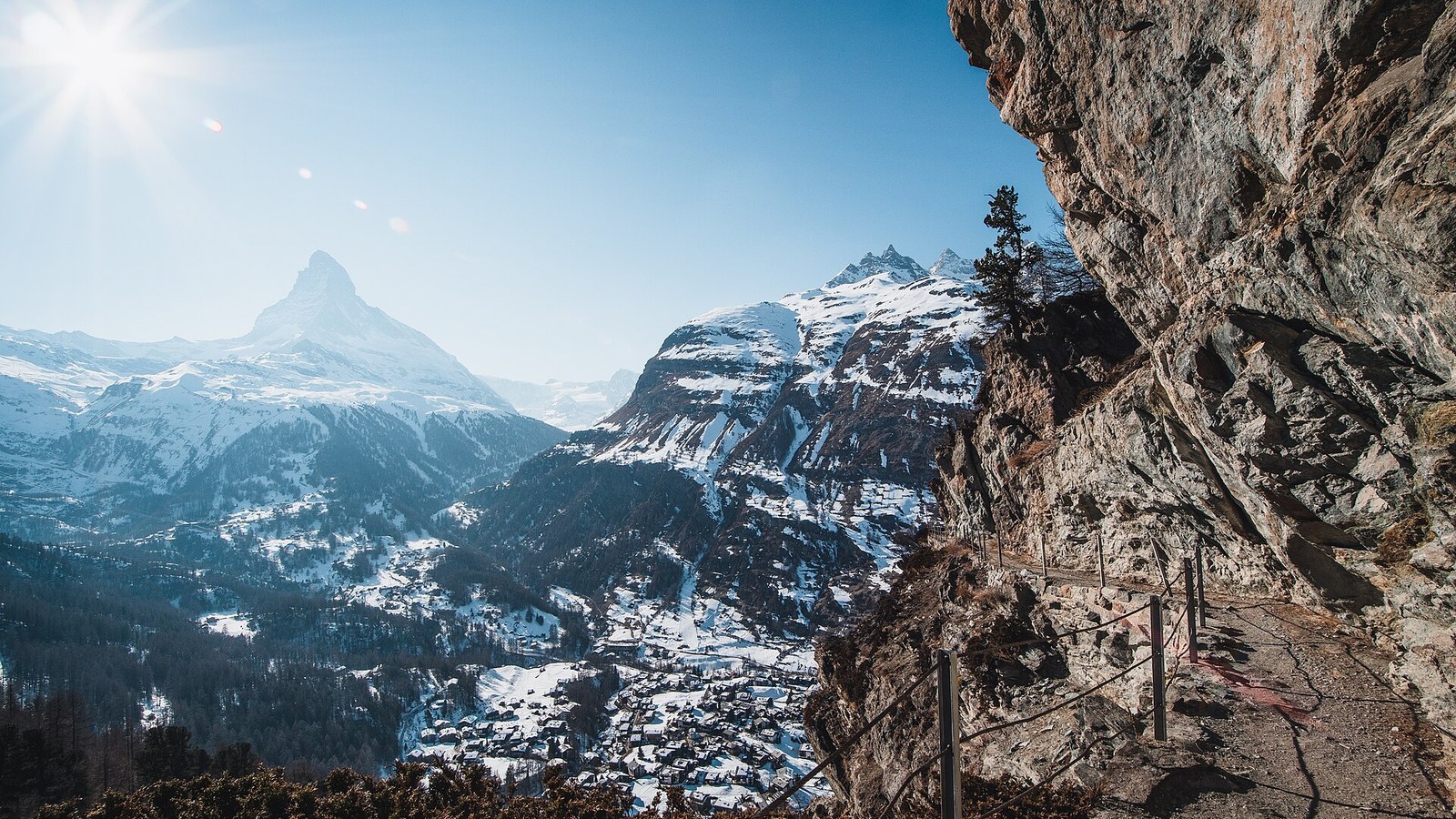
| Zermatt | Valais | Train only (cars stop at Tasch); car-free | The Matterhorn and the Gornergrat railway |
| Grindelwald | Bernese Oberland | Train from Interlaken Ost, about 35 min | First gondola, Cliff Walk and the Bachalpsee |
| Murren | Bernese Oberland | Cable car + mountain train via Grutschalp; car-free | The Schilthorn (Piz Gloria) and the quiet ledge |
| Wengen | Bernese Oberland | Wengernalp Railway from Lauterbrunnen; car-free | The Jungfraujoch excursion and family summers |
| Gimmelwald | Bernese Oberland | Schilthornbahn cable car from Stechelberg | A working farming hamlet above the valley |
| Appenzell | Appenzell Innerrhoden | Appenzeller Bahnen from St. Gallen, about 40 min | Painted houses and the Landsgemeinde square |
| Soglio | Bregaglia, Graubunden | PostBus via Promontogno (from Chiavenna or St. Moritz) | Palazzo Salis and Segantini's "gateway to paradise" |
| Morcote | Ticino, Lake Lugano | Bus from Lugano, about 25-30 min, or boat | Santa Maria del Sasso and lakeside gardens |
| Stein am Rhein | Schaffhausen | Direct trains via Winterthur | The frescoed Rathausplatz and the Rhine |
| Vals | Graubunden | Train to Ilanz, then PostBus (no station in Vals) | Zumthor's Therme Vals |
| Brienz | Bernese Oberland | Train from Interlaken Ost, about 20 min | The steam Rothorn railway and Ballenberg museum |
| Arosa | Graubunden | RhB line from Chur, about 1 hour | The Barenland bear sanctuary and the Obersee |
| Guarda | Lower Engadine | RhB to Guarda station, then PostBus up | Sgraffito houses and the Schellen-Ursli village |
| Gruyeres | Fribourg | Train to Gruyeres (Pringy), then 20-min walk or bus up | The castle, the cheese dairy and the Giger museum |
The Bernese Oberland five
1. Lauterbrunnen. A valley floor strung with 72 waterfalls. The Staubbach drops 297 metres beside the village, free to walk to; the Trummelbach Falls are the serious ticket, ten glacier waterfalls inside the mountain, reached by a tunnel lift and draining the Eiger, Monch and Jungfrau walls at up to 20,000 litres a second (adult admission about CHF 18). Note for trip planning: there is no lake in Lauterbrunnen; the water here falls, it does not sit. Lakes Thun and Brienz are a train ride away.
2. Grindelwald. The Eiger's front garden, reached from Interlaken Ost in about 35 minutes. The First gondola (25 minutes) tops out at 2,166 m, where the First Cliff Walk is free (you pay for the gondola only), and the walk to the Bachalpsee is about 3 km each way, under an hour, for the Eiger reflected in still water on calm mornings.
3. Murren. Car-free, on a ledge at the valley's end. Come the local way: cable car from Lauterbrunnen to Grutschalp, then the little BLM train along the cliff edge; or ride the Schilthornbahn up from Stechelberg. The mountain above it is the point: the Schilthorn (2,970 m) and its Piz Gloria revolving restaurant, the star of On Her Majesty's Secret Service in 1969 (not GoldenEye, whatever older lists say). Murren to the summit and back costs CHF 91.40 full fare.
4. Wengen. Car-free, across the valley from Murren, 14 minutes up the Wengernalp Railway from Lauterbrunnen, and the classic family base of the five. Its big excursion is the Jungfraujoch, Europe's highest station at 3,454 m: budget for a full fare in the CHF 200 to 240 range from Wengen in peak season (the railway sells through its live calculator), and know that a CHF 10 seat reservation is mandatory from May to October.
5. Gimmelwald. The smallest and quietest of the five, a farming hamlet at about 1,365 m reached by the Schilthornbahn cable car from Stechelberg. There is no through traffic, no hotel strip, and an unstaffed Honesty Shop at the pension where you take what you need and leave the money. Come for the working village the others used to be.
Zermatt and the Valais
6. Zermatt. Car-free since long before it was fashionable: private cars stop at Tasch, five kilometres short, and the shuttle train (every 20 minutes, CHF 17.20 return) does the rest. The village exists for one silhouette, and the way to meet it properly is the Gornergrat railway to 3,089 m. Fares are seasonal and fixed: CHF 96 return from November to April, CHF 132 from May to October, half price with a Swiss Travel Pass or Half Fare Card. In summer, walk a section of the 5-Seenweg, the five-lakes trail, and collect the Matterhorn reflected in the Stellisee at dawn.
The east: Appenzell, Arosa, Guarda, Vals, Soglio
7. Appenzell. A cantonal capital that behaves like a village: painted facades along the Hauptgasse, and the Landsgemeindeplatz where citizens still vote by show of hands on the last Sunday of April. The Appenzeller Bahnen ride from St. Gallen takes about 40 minutes. Do the cheese properly at the Schaukaserei in Stein AR, a short hop away, where the cellar holds up to 12,500 wheels, rather than expecting a show dairy in the town itself.
8. Arosa. The RhB line from Chur (about an hour, over the Langwieser Viaduct) is half the reason to come. The other half is Barenland, the bear sanctuary opened with FOUR PAWS in August 2018, where rescued bears live out their lives on the mountainside below the Weisshorn (2,653 m, by cable car). Arosa has lakes, forests and bears; what it does not have, despite older lists, is a glacier.
9. Guarda. The Lower Engadine's postcard: houses washed and carved with sgraffito, a Wakker Prize village (1975), and the real-life model for Schellen-Ursli, the 1945 children's classic. The RhB station sits in the valley below the village, with a PostBus up the hill. Guarda is also a gentle base for the region of the Swiss National Park, whose gateway at Zernez is nearby; our guide to Europe's best national parks for avoiding crowds covers the park itself.
10. Vals. Come for one building: Therme Vals, Peter Zumthor's bathhouse of 60,000 Valser quartzite slabs, opened in 1996 and sunk into the hillside like a quarry that learned manners. The practical truths: Vals has no railway station (train to Ilanz, then PostBus up the valley, about 40 minutes), and day guests at the thermal baths pay CHF 70 on Mondays and Tuesdays, CHF 85 Wednesday to Sunday, bathrobe included, with advance online reservation mandatory and numbers limited. Hotel guests of the 7132 get the midnight bathing; day guests get the architecture, which is enough.
11. Soglio. A stone village on a terrace at 1,090 m above the Bregaglia valley, reached by PostBus via Promontogno from either Chiavenna in Italy or St. Moritz over the Maloja. Segantini, who painted these mountains, called Soglio the gateway to paradise, and the Palazzo Salis (built 1630, a hotel since 1876) is its drawing room, garden and view combined. This is the quietest address on the list; bring a book.
Ticino and the Rhine
12. Morcote. Voted Switzerland's most beautiful village in 2016, and the rare winner that deserves it: a Ticino shore village under the pilgrimage church of Santa Maria del Sasso (climb the roughly 400 steps of the Way of the Cross), with Parco Scherrer's garden follies above the lake. Come by bus from Lugano in about 25 to 30 minutes, or slowly, by boat, the way the village presents itself best.
13. Stein am Rhein. Where the Rhine leaves Lake Constance, a small old town whose Rathausplatz is a gallery of frescoed facades, with the Kloster St. Georgen monastery museum (open Tuesday to Sunday in season) and Hohenklingen Castle on the hill above. Direct trains run via Winterthur; allow about 1 hour 10 to 1 hour 20 from Zurich.
Lake Brienz and the west
14. Brienz. A woodcarving village on its turquoise lake, about 20 minutes from Interlaken Ost. Two of Switzerland's best rides start here: the Brienz Rothorn Bahn, a steam cog railway running since 1892 up to Rothorn Kulm station at 2,244 m (season roughly June to October; the 2,350 m summit is a walk above the station), and the little Giessbachbahn funicular of 1879, the oldest funicular in Europe built purely for tourism, up to the Giessbach Falls. Between the village and Hofstetten stands Ballenberg, the open-air museum of over 100 rescued historic buildings, CHF 32 for adults.
15. Gruyeres. A single cobbled street climbing to a castle, closed to traffic, in cheese country. The Chateau de Gruyeres (first mentioned in 1244, seat of the counts for almost five centuries) charges CHF 13 for adults. Below the hill at Pringy, by the station, La Maison du Gruyere shows the cheese being made each morning; in the old town, the HR Giger Museum (opened 1998) is the surreal counterweight. The official walk from the station to the castle is 20 minutes uphill, or take the bus and save your legs for the ramparts.
Paying for the railways: the Swiss Travel Pass, honestly
The pass is genuinely good value for a village-hopping trip, but its coverage is specific. 2026 prices, 2nd class adult, consecutive days: 3 days CHF 254, 4 days CHF 309, 6 days CHF 399, 8 days CHF 439, 15 days CHF 499. It covers trains, PostBus, boats and town transport in full, which handles every access line in the table above. Mountain railways split three ways: a few are fully included (Rigi, Stanserhorn, Stoos, and the Stechelberg to Murren cable car, because Murren is an inhabited village); most are 50% off, including the Gornergrat and the Murren to Schilthorn section; and the Jungfraujoch is 25% off above Wengen or Grindelwald. What the pass is not is "unlimited cable cars": price the big three summits into your budget before you leave, and the pass plus three half-fares usually beats point-to-point tickets on any itinerary that strings four or more of these villages together.