
The nine most beautiful places in Malaysia, each verifiable: George Town and Melaka, UNESCO-listed together in 2008; Taman Negara, a national park created in 1938-39 whose rainforest is often described as over 130 million years old; Gunung Mulu, where the Sarawak Chamber is the largest known cave chamber on Earth; the Kinabatangan River's proboscis monkeys and pygmy elephants; Sipadan, dived only on permits (around 250 a day, issued to operators, never to individuals); the Perhentian Islands, closed by the monsoon from about November to February; the Cameron Highlands tea country at 1,500 metres; and Langkawi, a UNESCO Global Geopark since 2007. Before you fly: most visitors get 90 days visa-free, and almost everyone must submit the free Malaysia Digital Arrival Card (MDAC) within 3 days before arrival.
An earlier version of this guide promised nine secret spots and then never listed them, filling the space with invented photo awards, a Sipadan limit that was wrong, and statistics with no source. This version names the nine places, gives each one its real access and its real rules, and corrects the record where the old text invented it.
First, the entry frame
Malaysia's one formality catches people out: the Malaysia Digital Arrival Card (MDAC) is free, is submitted online within the 3 days before you arrive, and applies to almost all foreign visitors (the main exemptions are Singapore citizens, Malaysian permanent residents and long-term pass holders, and a few regional pass holders). Citizens of the UK, the US and most EU countries enter visa-free for 90 days. One quirk worth knowing: Sabah and Sarawak run their own immigration checks, so flying from Kuala Lumpur to Borneo means showing your passport again on arrival.
The cities: two UNESCO listings
1. George Town, Penang. Inscribed with Melaka on 7 July 2008 as the Historic Cities of the Straits of Malacca, George Town is the straits' great trading-port old town: shophouses, clan temples, and the six surviving Clan Jetties on Weld Quay, stilt villages over the water that are still lived in. The street art that made it famous dates to the 2012 Mirrors George Town project; Ernest Zacharevic's best-known mural is "Little Children on a Bicycle" on Armenian Street (the motorcycle piece two streets away, "Boy on a Bike", is a different work). Our full Penang guide covers where to go on the island in depth.
2. Melaka. The other half of the 2008 listing, and the older city. The Dutch built the Stadthuys from 1650, believed to be the oldest Dutch building in the East, and Christ Church in 1753, still in use as a church; the Portuguese layer survives as the Porta de Santiago, the lone surviving gatehouse of the A Famosa fortress of 1511. Walk Jonker Street for the Peranakan shophouses by day and its night market at weekends.
The wild interior: Taman Negara and Mulu
3. Taman Negara. Malaysia's first national park, created in 1938-39 as the King George V National Park, protects 4,343 km2 of lowland rainforest across three states. The forest is often described as over 130 million years old - an estimate, not a measurement, but the canopy makes it believable: the famous canopy walkway runs about 530 metres between platforms up to roughly 40 metres above the ground. Entry is almost absurdly cheap (park permit RM1, camera licence RM5, paid at the Wildlife Department office in Kuala Tahan, the gateway village reached by road or by the long boat up the Tembeling river).
4. Gunung Mulu National Park, Sarawak. UNESCO-listed in 2000 for its caves, and the caves justify the flight (there is no road in; fly from Miri in about 30 minutes, or from Kota Kinabalu or Kuching). Inside Gua Nasib Bagus lies the Sarawak Chamber, the largest known cave chamber in the world by surface area, roughly 600 by 415 metres; the Clearwater system runs over 200 km of surveyed passage, the longest in Southeast Asia. Every clear evening, millions of bats pour out of Deer Cave in ribbons at dusk. Foreign adults pay RM30 for a 5-day park pass; there is no single-day pass, so give Mulu the days it deserves.
Borneo's river and reef
5. The Kinabatangan River, Sabah. Sabah's great wildlife river, protected as a wildlife sanctuary (gazetted 2005) and within Malaysia's largest Ramsar wetland (2008). Dawn and dusk boat cruises from Sukau and Bilit drift past proboscis monkeys, found only on Borneo, with wild orangutans, hornbills and, if you are lucky, pygmy elephants crossing the banks. Lucky is the honest word: this is a wild river, sightings are never guaranteed, and any operator who promises you a number is inventing it. Fly to Sandakan, then it is about 2 to 2.5 hours by road.
6. Sipadan Island, Sabah. Malaysia's only oceanic island and its most protected dive site, run on a permit system since 2006 that the old version of this guide described wrongly. The real rules: nobody stays on Sipadan (the resorts left in 2004; you sleep in Semporna or on Mabul or Kapalai and boat in for the day). Permits are capped at around 250 visitors a day and are allocated to licensed operators; you cannot apply yourself, which is why Sipadan days are booked through your dive resort and sell out. Divers must hold at least Advanced Open Water (a rule since October 2022), each permit day includes two boat dives, and the island closes entirely every November to rest the reef. Sabah Parks fees for an international diver come to RM450 a day (RM100 conservation fee plus RM350 diving fee), on top of the operator's price. What you get for it: a wall of turtles, schooling jacks and barracuda tornadoes on one of the world's great dive sites.
The islands: Perhentians and Langkawi
7. The Perhentian Islands, Terengganu. Two islands, Besar (bigger, quieter) and Kecil (smaller, livelier), with no cars, no roads and no ATMs: just jetties, beach paths and house reefs you can snorkel from the sand. Speedboats run from Kuala Besut in 30 to 45 minutes (about RM35 to 40 each way); pay the marine park charge at the jetty, RM30 for foreign adults. The season runs roughly March to October: in the north-east monsoon, about November to February, the boats stop and the islands effectively close, so a Perhentian trip is a date you check before you book anything else.
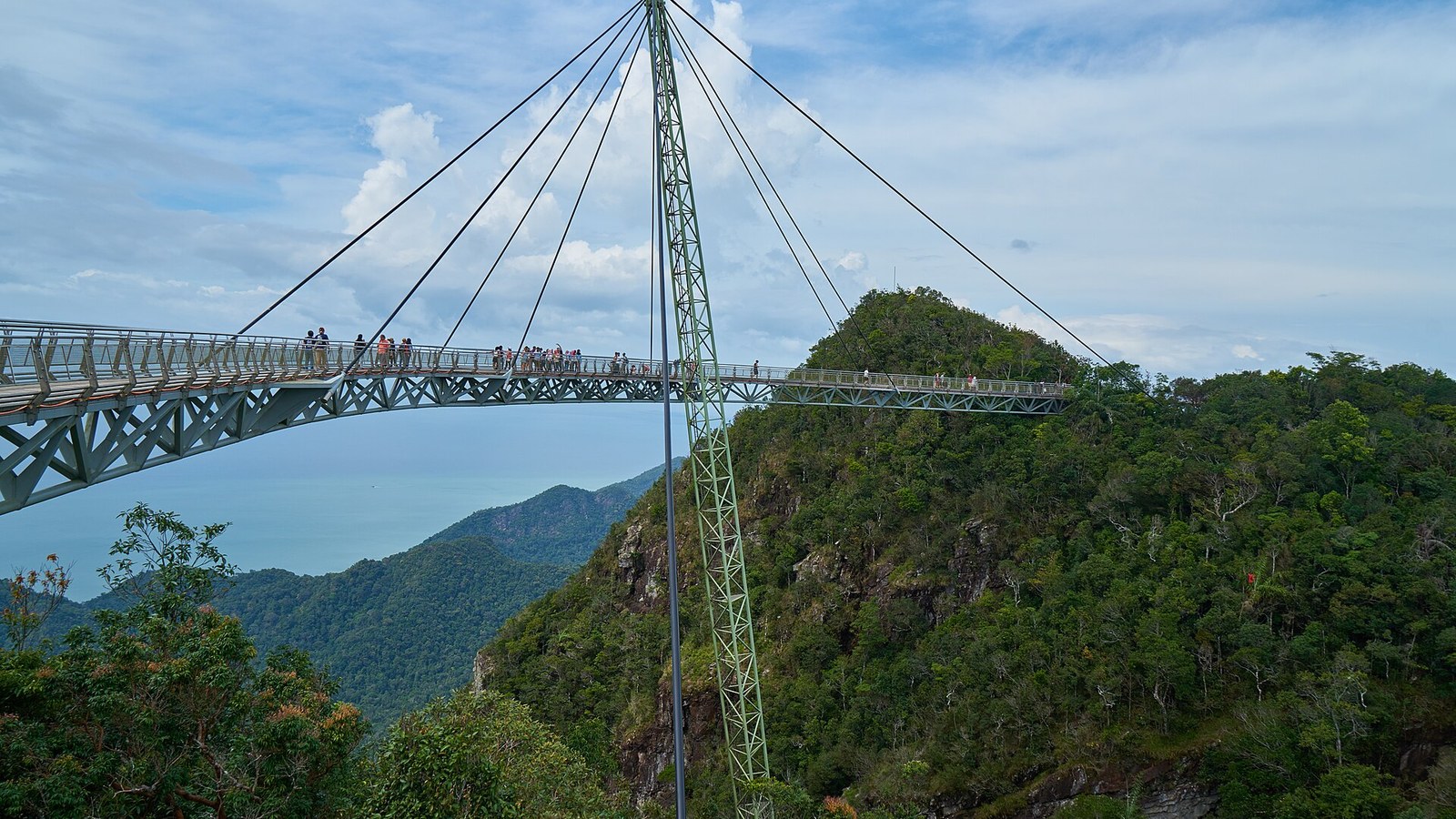
8. Langkawi, Kedah. The duty-free archipelago (duty-free since 1987) became a UNESCO Global Geopark on 1 June 2007, the first in Southeast Asia, covering all 99 islands and some of the oldest rock in the region. Its signature experience is mechanical: the SkyCab cable car climbs Gunung Mat Cincang to the Sky Bridge, a 125-metre curved pedestrian bridge whose deck hangs 660 metres above sea level. Go early on a clear morning; the bridge closes in high winds, and the view is the whole point.
The cool highlands: Cameron Highlands
9. Cameron Highlands, Pahang. At about 1,500 metres, Malaysia's tea country is the place Malaysians go to wear a jacket. BOH, the country's defining tea company, was founded in 1929 by J.A. Russell, whose first garden at Habu near Ringlet started an estate now covering around 1,200 hectares; the Sungai Palas tea centre (free entry, closed Mondays) pours the product above the fields it came from. Above Brinchang, the Mossy Forest boardwalk (foreign adults RM30) walks through cloud forest on Gunung Brinchang at 2,032 metres, gnarled and dripping even at noon. Come up by the Tapah or Simpang Pulai roads, and come midweek: the single highland road fills at weekends.