
With a UK passport, most of Asia is visa-free or visa-on-arrival: Nepal issues visas at the airport for USD 30 to 125, Vietnam gives you 45 days free, and Sri Lanka's ETA is now free for Britons. The two things that genuinely need planning are Bhutan, which charges a USD 100 nightly fee on top of a USD 40 visa, and trekking permits, which are separate from visas. Get the season right (never Nepal in the summer monsoon) and the paperwork is the easy part.
Asia's entry rules changed repeatedly through 2025 and 2026, which is why so much of what is published about them is wrong. Thailand cut its visa-free stay in September 2026, Sri Lanka made its ETA free for UK travellers in May 2026, and China unexpectedly opened 30-day visa-free entry to British passports for the rest of 2026. Every rule and fee in this guide was checked in October 2026 against official sources (GOV.UK travel advice, national immigration departments and park authorities), and the dates things expire are stated where they matter. Three entries below end on 31 December 2026, so re-check them for 2027 trips.
Asia adventure at a glance, for UK travellers
| Question | Answer |
|---|---|
| Easiest entries | Visa-free: Malaysia and Japan 90 days, Philippines 30 days, Georgia a full year |
| Needs planning | Bhutan: visa approved in advance, USD 100 per night Sustainable Development Fee plus USD 40 visa fee, licensed guide mandatory |
| Biggest myth | There is no Vietnam "trekking endorsement". Vietnam entry is a 45-day exemption or a 90-day e-Visa, nothing else |
| Best trekking window | Nepal: October to November and March to April. Never July to August: that is peak monsoon, not clear skies |
| Everest permit total | NPR 6,000 (Sagarmatha National Park entry 3,000 + Khumbu Trek Card 3,000) |
| 2026-only bonus | China is visa-free for UK passports (30 days) from 17 February to 31 December 2026 |
Visa rules for UK passport holders
Visas and trekking permits are two different systems: the visa gets you into the country, and the permit gets you onto the trail. This table is the visa layer, for a British citizen passport, checked October 2026.
| Country | UK entry | Stay | Fee |
|---|---|---|---|
| Nepal | Visa on arrival (online form is a pre-fill; you pay and collect at the airport) | 15 / 30 / 90 days | USD 30 / 50 / 125, multiple entry included |
| Bhutan | Visa approved in advance via the official portal, a licensed operator or an approved hotel; guide mandatory throughout | Per itinerary | USD 100 per night SDF + USD 40 visa fee (under 6s free, ages 6 to 11 USD 50 per night) |
| Vietnam | Visa exemption, or e-Visa for longer stays | 45 days free; e-Visa up to 90 days | Free / USD 25 single, USD 50 multiple |
| Thailand | Visa exemption + TDAC digital arrival card (file within 3 days before arrival) | 30 days since 15 September 2026 | Free |
| Indonesia | Visa on arrival or e-VOA | 30 days + one 30-day extension | IDR 500,000; Bali adds a separate IDR 150,000 tourist levy |
| Malaysia | Visa-free + MDAC digital arrival card | 90 days | Free |
| Philippines | Visa-free | 30 days | Free |
| Cambodia | Visa on arrival or e-Visa + e-Arrival card within 7 days before arrival | 30 days | USD 30 |
| Laos | Visa on arrival or eVisa | 30 days | Pay on arrival in USD cash (official fee lists conflict; carry small notes) |
| Sri Lanka | ETA online before travel | 30 days | Free for UK since 25 May 2026 |
| India | e-Visa (UK eligible) or paper visa via VFS | 30-day / 1-year / 5-year e-Tourist | 30-day USD 10 (Apr-Jun) or USD 25 (Jul-Mar); 1-year USD 40 |
| Japan | Visa-free | 90 days | Free |
| South Korea | Visa-free; K-ETA waived for UK until 31 December 2026 | 90 days | Free |
| Mongolia | Visa-free under an exemption running to 31 December 2026 | 30 days | Free |
| Kyrgyzstan | Visa-free | 30 days within any 60-day period (rule from 1 January 2026) | Free |
| Georgia | Visa-free | 1 year | Free |
| China | Visa-free during the 2026 waiver; visa in advance outside it | 30 days | Free under the waiver (17 Feb to 31 Dec 2026) |
Three traps catch people out. First, Nepal's online form does not issue a visa: it pre-fills your application, and you still pay at the airport bank counter (US dollars are the reliable backup if the card machine fails). Second, Thailand's 30 days is new: anyone who planned around the old 60-day exemption needs to re-plan, and land-border entries are capped at two per year. Third, Bhutan's USD 100 nightly fee is itself a discount: it is half the standard USD 200 rate and is announced to run until 31 August 2027, after which the rate is unannounced. A 7-night Bhutan trip therefore carries USD 700 of SDF plus the USD 40 visa fee before hotels, guide or transport.
The adventures worth the flight
Nepal: Everest and Annapurna
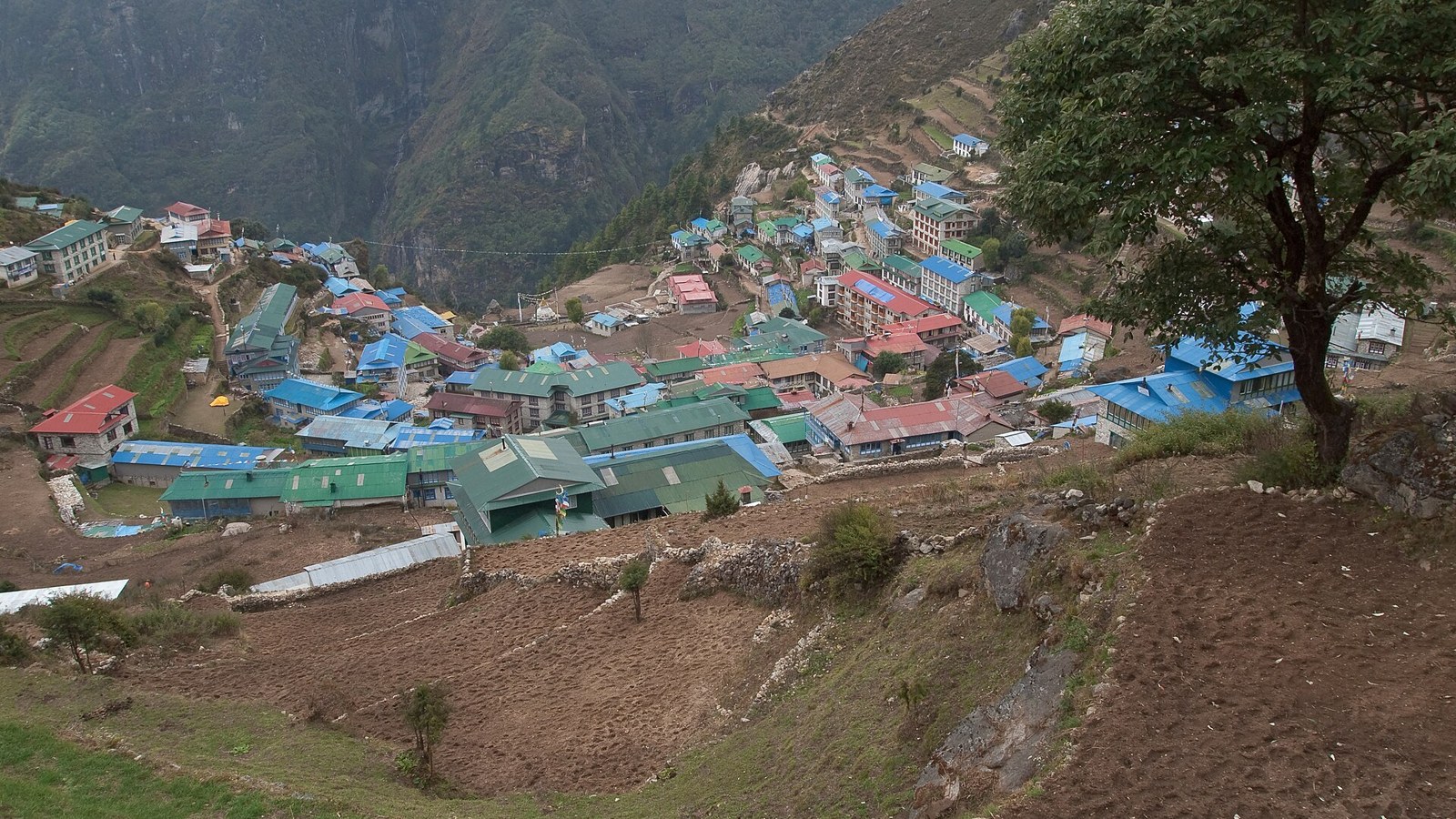
The Himalaya is the headline act, and its paperwork is refreshingly simple: two permits for Everest Base Camp, NPR 6,000 in total (Sagarmatha National Park entry NPR 3,000 plus the Khumbu Pasang Lhamu Trek Card NPR 3,000, bought at the Lukla or Monjo checkpoints). One honest complication: since April 2023 Nepal's official rule for TIMS areas (most national park and conservation area trekking routes, including Annapurna, where the ACAP permit is NPR 3,000 and the agency-issued TIMS card NPR 2,000) is that foreign trekkers hire a licensed guide through a registered agency. The Khumbu runs its own system instead of TIMS and independent trekkers are still walking to Base Camp, so treat Everest and Annapurna differently and confirm the current position with your agency before you fly. Our Everest Base Camp trek guide covers the route, the altitude plan and the permit checkpoints in full. Seasons: October to November for the clearest skies, March to April for warmer trails and rhododendrons. June to September is monsoon: Lukla flights cancel for days and leeches own the lower trails.
Bhutan: Tiger's Nest and the festival calendar
Every Bhutan trip is built the same way because the rules require it: visa approved in advance, SDF paid, licensed guide with you throughout, and all treks run by an accredited operator. The signature hike is Paro Taktsang, the Tiger's Nest Monastery, 2 to 3 hours up from the roadhead (4 to 6 hours round trip with the monastery visit), with ponies available only as far as the halfway cafeteria. Multi-day options include the Druk Path between Paro and Thimphu and the harder Jomolhari trek under Bhutan's third-highest peak. Bhutan's great festivals, the Paro Tshechu in spring and the Thimphu Tshechu in autumn, are the dates the country's limited rooms sell out around, so a festival trip is the one Bhutan booking to make early.
Vietnam: Ha Giang, Fansipan and the world's biggest cave
Vietnam's adventure north starts with the Ha Giang Loop, and it comes with a legal condition many riders miss: GOV.UK states you need the 1968 version of the International Driving Permit plus your UK licence, with the motorcycle category actually on it. The UK issues the 1968 permit, but a car-only licence does not make riding legal, checkpoints around Ha Giang, Dong Van and Meo Vac do check, and riding pillion with a local easy-rider driver is the legal fallback. Fansipan (3,143 m, the highest peak in Indochina) offers both a guided trek and a 15-minute cable car to near the summit, plus about 600 to 700 steps. And in Phong Nha, Hang Son Doong, the largest known cave passage in the world, is visitable only on Oxalis expeditions: about USD 3,000 per person, a 6-day programme, roughly 1,000 visitors a year, booked far ahead. Paradise Cave, in the same park, is the walk-in alternative.
Indonesia: volcanoes and Komodo
Mount Rinjani on Lombok is the classic Indonesian summit trek: booked through the official eRinjani system under a daily quota, a foreign ticket of IDR 250,000 per day, and a hard seasonal closure from 1 January to 31 March for the rains and ecosystem recovery. Komodo National Park charges foreign visitors IDR 250,000 per day (the headline-grabbing plan to raise it to IDR 3.75 million was revoked in 2022). On Java, Ijen's blue-fire crater now requires a health certificate before you climb, and Bromo runs under its own quota system in peak season. The dry season, April to October, is the window for all of it; our guide to Southeast Asia's best island destinations covers where to recover afterwards.
Borneo: Mount Kinabalu
Malaysia's big climb is a model of transparent pricing: the Sabah Parks permit is RM400 per person, a mountain guide is mandatory at RM350 per group of up to five adults, and insurance is RM10, on the standard 2-day, 1-night Timpohon route to the 4,095 m summit. Slots are limited and the mountain lodge beds are the bottleneck, so Kinabalu is a book-months-ahead climb, not a walk-up. Sabah's other adventure draw, Danum Valley's primary rainforest, and Sarawak's Gunung Mulu National Park (UNESCO-listed, with some of the largest cave chambers on earth) reward anyone adding a second week.
Sri Lanka and India: Adam's Peak and Ladakh
Adam's Peak (Sri Pada) is a pilgrimage as much as a climb: about 5,500 steps, climbed at night to reach the summit footprint at dawn, in a season that runs December to May (Sri Lanka Tourism); outside it the path is unlit and the summit sits in cloud. The Knuckles Range and Sinharaja rainforest (guide mandatory) fill out a hill-country week. In India, the Markha Valley in Ladakh is the summer Himalaya answer: it sits in rain shadow, so June to September works while Nepal is in monsoon. Foreigners need a Protected Area Permit for Ladakh's border circuits (Nubra, Pangong Tso, Tso Moriri), arranged through a registered agent in Leh; the Markha route itself runs on Hemis National Park fees, but confirm the current position in Leh if your trip adds the lakes or valleys.
Mongolia, Central Asia and Japan
Mongolia's adventure season is short and glorious: horse trekking and Gobi trips run June to September, and the Naadam festival of wrestling, horse racing and archery falls on 11 to 13 July. Remember the UK visa exemption currently runs only to 31 December 2026. Next door in spirit, Kyrgyzstan pairs the Tien Shan with yurt stays under its 30-days-in-any-60 visa-free rule; our Kyrgyzstan adventure travel guide plans that trip. Japan closes the list with two classics: the Kumano Kodo pilgrim trails (whose Dual Pilgrim programme pairs it with Spain's Camino) and Mount Fuji, whose official climbing season runs early July to early September, now with a unified JPY 4,000 entry fee on all four trails and, on the busy Yoshida route, a gate that closes from 14:00 to 03:00 and a 4,000-climber daily cap.
When to go: seasons, not slogans
| Region | Best window | Avoid | Why |
|---|---|---|---|
| Nepal and the Indian Himalaya (except Ladakh) | Oct-Nov, Mar-Apr | Jun-Sep | Southwest monsoon: cloud, landslides, cancelled mountain flights |
| Ladakh | Jun-Sep | Winter | Rain shadow keeps summer dry; winter roads and passes close |
| Vietnam north (Ha Giang, Sapa) | Sep-Nov, Mar-May | Jun-Aug heat and rain; Dec-Feb cold fog | The north has a real winter, unlike the south |
| Thailand and mainland SE Asia | Nov-Feb | Jun-Oct rains | The cool dry season is the comfortable one |
| Indonesia and Borneo | Apr-Oct | Nov-Mar | Dry season; Rinjani is closed outright Jan-Mar |
| Philippines diving | Dec-May (Tubbataha liveaboards roughly Mar-Jun) | Jun-Nov | Typhoon season |
| Sri Lanka hill country | Dec-May | May-Oct for Adam's Peak | The pilgrimage season is the dry season |
| Mongolia and Kyrgyzstan | Jun-Sep | Winter | Steppe and Tien Shan summers are short |
Mapped onto UK holidays, the pattern is kind: October half-term and the autumn break land exactly on Nepal's best weeks; Easter suits northern Vietnam and Sri Lanka's tail season; and the long summer holiday, useless for Nepal, is prime time for Ladakh, Mongolia, Fuji and Borneo.
Before you book: protection, insurance and paperwork
- ATOL, accurately: ATOL is the UK Civil Aviation Authority's insolvency scheme. It protects you if a UK company selling a flight-inclusive package goes bust (refund or repatriation). It is not a licence every operator must hold, it does not cover packages bought from overseas companies, and it is not travel insurance. Look for the ATOL certificate on UK package bookings; buy insurance separately either way.
- The altitude trap in insurance: standard travel policies commonly cap trekking at 2,000 to 3,000 m, and Everest Base Camp tops out at 5,364 m. For Nepal, check three things in the policy wording: trekking covered to your maximum altitude, helicopter evacuation included, and the activity definitions actually naming unguided or guided trekking as you plan to do it. This check matters more than the brand.
- FCDO advice: GOV.UK publishes country-by-country travel advice, including entry requirements and safety sections, and it is the reference this guide's visa table is built on. The FCDO does not use numbered alert levels (that is the US system), so ignore any guide that quotes you a "Level 2" for a country.
- Documents: six months' passport validity is the working rule across Asia; carry printed copies of visas, ETA and arrival-card confirmations as well as phone copies; and file Thailand's TDAC and Malaysia's MDAC in their windows (within 3 days and before arrival respectively), because both are checked at immigration.
Sources
- GOV.UK: Nepal entry requirements
- Nepal Department of Immigration: visa on arrival fees
- Bhutan.travel: SDF and visa FAQs
- GOV.UK: Vietnam entry requirements
- GOV.UK: Thailand entry requirements
- GOV.UK: Indonesia entry requirements
- GOV.UK: Sri Lanka entry requirements
- GOV.UK: Bhutan entry requirements
- Mount Fuji official climbing site
- Oxalis Adventure: Hang Son Doong expeditions