
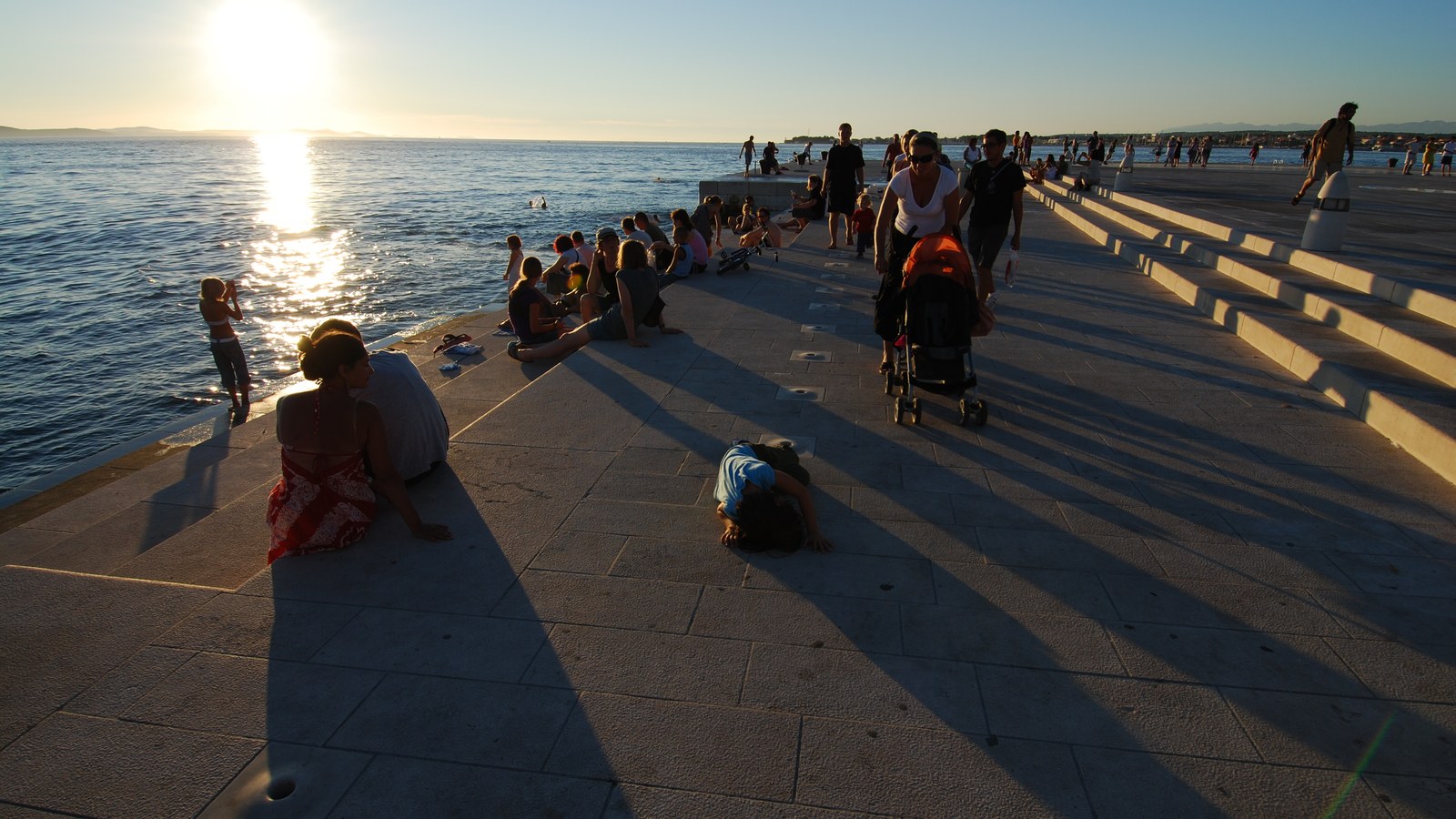
Zadar is Croatia's easy Dalmatian city: a Roman and Venetian old town on a peninsula, two famous waterfront artworks by the same architect, and an archipelago of ferry islands starting 25 minutes away. This guide gives the real 2026 mechanics: euros only (the kuna died in 2023), the EUR 5 airport bus, Jadrolinija ferry fares, which beaches are pebble platforms and where the sand actually is, and the shoulder-season windows that dodge the cruise-ship crowds.
Quick picks
| Move | Why | Anchor (2026) |
|---|---|---|
| Airport bus | Liburnija bus to the Old Town peninsula | EUR 5 one way, bags included, about 20 min |
| First island | Ferry to Preko on Ugljan | EUR 3.80 foot passenger, 25 min, year-round |
| City swim | Kolovare or Borik beaches | Pebble and platforms, free |
| Real sand | Queen's Beach at Nin | About 15 km, shallow for hundreds of metres |
| Big day out | Kornati and Telascica by day boat | Park ticket about EUR 15-16, paid in cash |
Money: the kuna is gone
Croatia adopted the euro on 1 January 2023 at the fixed rate of EUR 1 to HRK 7.53450, and the kuna stopped being legal tender two weeks later. Any guide still pricing Zadar in kuna, or worse in pounds, is out of date; every price in this guide is in euros as published. If you unearth old kuna banknotes from a previous trip, the Croatian National Bank still exchanges notes free of charge with no time limit. Cards are widely accepted at hotels, larger restaurants and attractions, but carry cash euros for the market, small cafes, parking, and small cash-oriented desks such as the bell tower and some boat tickets.
Getting there and the ferry port
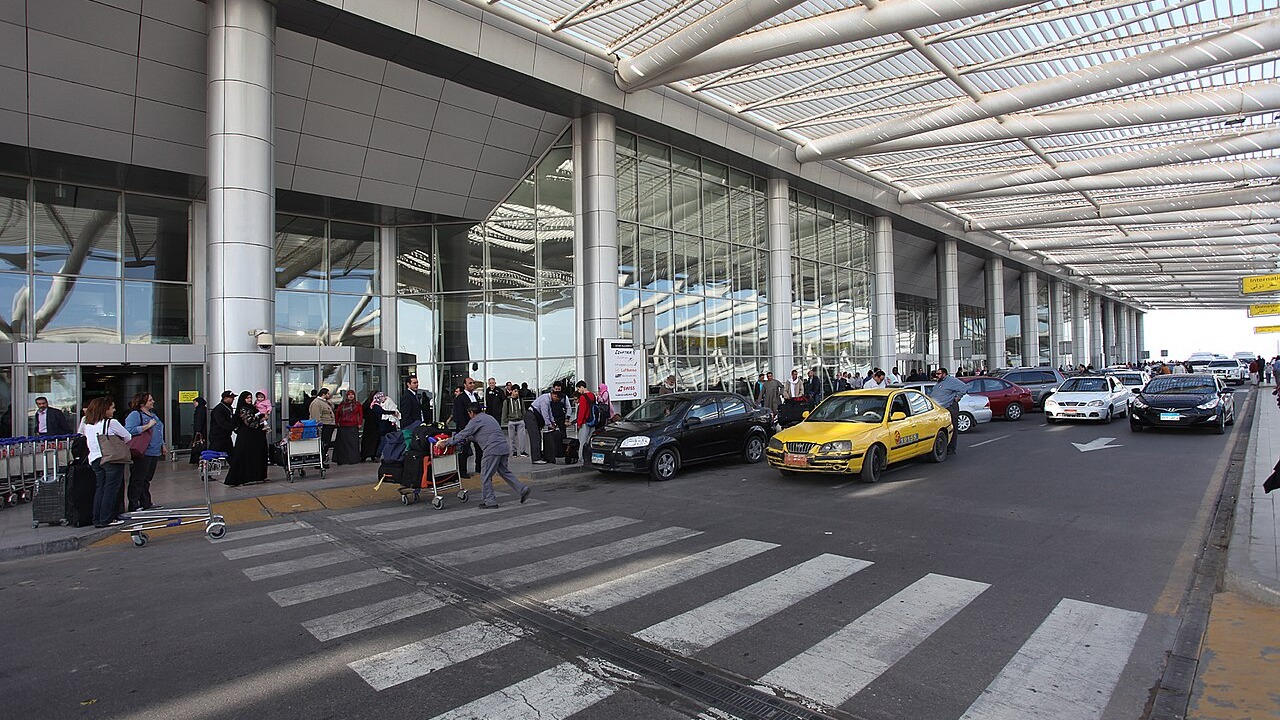
Zadar Airport sits at Zemunik Donji, about 20 minutes from the Old Town. The official Liburnija airport bus costs EUR 5 one way with baggage included and runs to the Old Town peninsula via the main bus station and the Gaženica ferry port, and the ticket stays valid 90 minutes for onward city buses. Zadar is a Ryanair base, but the route network is heavily seasonal, running roughly April to October, so winter arrivals usually connect via Zagreb. Ferries are run by Jadrolinija (there is no other name to look for): car ferries leave from Gaženica port south of town, while foot-passenger ships and catamarans also use the Old Town city port. Most island lines run year-round, including the 25-minute crossing to Preko on Ugljan (EUR 3.80 for a foot passenger, EUR 17.30 for a car in 2026). New in summer 2026, a Jadrolinija fast catamaran linked Zadar with Ancona in Italy in about 4 hours, foot passengers only, running late June to early September; treat it as a seasonal bonus, not a fixture.
The Old Town: organs, forums and a sphinx
The waterfront pair that made Zadar famous are both by architect Nikola Basic. The Sea Organ (2005) is 70 metres of steps hiding 35 pipes: wave motion pushes air through them, so the music is continuous, changes with the sea, and is never a scheduled concert. Beside it, the Greeting to the Sun (2008) is a 22-metre circle of 300 glass plates that charges by day and plays a light show after sunset. Inland, the Roman Forum, commissioned under Augustus, is open public space you cross for free, watched over by the 9th-century Church of St Donatus, the rotunda that is Zadar's symbol (small entry fee, about EUR 5 in recent seasons) and now a concert hall prized for its acoustics. The city walls that ring the peninsula are UNESCO-listed since 2017 as part of the Venetian Works of Defence, and the Museum of Ancient Glass holds more than 5,000 ancient pieces with live glassblowing demonstrations. For the oddity: in a garden by the Maestral bay stands a concrete sphinx built in 1918 by Giovanni Smirich as a memorial to his wife Attilia, fingers instead of paws, billed by the tourist board as the largest sphinx in this part of Europe. Local legend says it grants love wishes; it is free to visit either way.
Beaches, without the sand lie
Zadar's own beaches are mostly pebble and concrete sunbathing platforms with ladders into deep, clear water, which locals love and sand-seekers should know in advance. Kolovare, 15 minutes from the Old Town, is the main city beach with platforms, a diving board and cafes; Borik, about 4 km out, mixes pebble and some sand with family facilities; and Punta Bajlo at Arbanasi, at the end of the seafront promenade, is the locals' pebble coves under pines. For real sand, go to Queen's Beach (Zdrijac) at Nin, about 15 km away: roughly 3 km of shallow sand named for Queen Jelena, with the lagoon's therapeutic mud nearby. The island alternative is Sakarun on Dugi Otok, a white-sand bay reached by the fast boats to Bozava and Sali.
Day trips that work
Nin, Croatia's oldest royal town about 15 km away, packs in the Church of the Holy Cross, a 9th-century church usually billed as the smallest cathedral in the world (a famous nickname, not an official title), and the Solana Nin salt pans where sea salt, including fleur de sel, is still harvested as the Romans did it, with a Salt Museum at the works. Ugljan via Preko is the easiest island afternoon. Dugi Otok adds Telascica Nature Park (land entry about EUR 8 in high season, EUR 6 in the low season), with its salt lake and cliffs. Kornati National Park day boats from Zadar look simple, but read the small print: the park ticket (about EUR 15 to 16 per adult, one ticket covering Kornati and Telascica) is usually charged separately in cash on boarding, whatever the advert says about "included". Inland, Paklenica National Park's two canyons and famous climbing sit about 45 minutes away (around EUR 10 entry in high season), Vrana Lake, Croatia's largest natural lake and a bird reserve with more than 250 recorded species, is 40 km south, and Plitvice Lakes is a genuinely long day from here, about 2 hours each way by road or bus, so start early or stay over.
Crowds, seasons and real festivals
Zadar's peaks are July and August, plus cruise-ship days at Gaženica (a major cruise terminal that expected about 270,000 passengers across 2025) when the Old Town waterfront fills by late morning: go to the sights early or after the ships leave. Shoulder seasons, April to June and September to October, keep the ferries and most flights running with room to breathe, and the sea stays swimmable June to October, peaking around 25 to 26 degrees in August. The festivals that actually exist: Musical Evenings in St Donatus, classical concerts in the church and Forum through July and August since 1961; the Night of the Full Moon, a waterfront food and customs festival around the summer full moon; and Advent in Zadar, from late November to 1 January around Petar Zoranic Square. For how Zadar stacks up against Europe's other good-value cities, see our guide to the best budget travel destinations.
What to eat and drink
Zadar's budget institution is the marenda, the Dalmatian mid-morning workers' meal served in konobas between about 10 and noon: single hearty dishes like bean stew, tripe or pasticada, priced for working people rather than tourists. At the city market by the walls, look for Pag cheese (the hard sheep's cheese from the island across the channel), Nin salt and local olive oil. And Zadar is the birthplace of maraschino: industrial production began here in 1759 (Francesco Drioli), Luxardo founded its Zadar distillery in 1821 before the family rebuilt in Italy after the war, and Zadar's own Maraska still makes the cherry liqueur in the city today.
Sources
- Zadar Airport: official site and airport bus details
- Jadrolinija: ferry lines, timetables and fares
- Zadar Tourist Board: sights, beaches and events
- UNESCO: Venetian Works of Defence listing
- Croatian National Bank: euro changeover and kuna exchange
- Telascica Nature Park: official site (Kornati tickets cover both parks)
- Paklenica National Park: official site and prices
- Liburnija Zadar: city and airport buses