One week in Spain works when it is a line, not a scatter: Barcelona for 2 days, the 2.5-hour high-speed train to Madrid for 2 days, Madrid to Granada for the Alhambra on day 5, then Seville for the last 2 days and out. Four bases, three trains, no backtracking, and every leg on a real service (AVE, Ouigo and iryo run these corridors). Book two things before anything else: the Alhambra (official site only, passport required, timed Nasrid Palaces slot) and the Sagrada Familia (online only, timed entry). Everything else flexes around them.
Seven cities in seven days is the mistake this itinerary used to make, and it needed trains that do not exist to do it. Spain is bigger than it looks on a holiday map, and its high-speed network radiates from Madrid, so the classic first week follows the rails: Catalonia, the capital, then Andalusia's two great Moorish cities. This version is built from the operators' and monuments' own pages: current ticket prices, real journey times, and the correct closure days, because in Spain the closure table is where itineraries go to die.
The route at a glance
| Days | Base | The day is for | Getting there |
|---|---|---|---|
| 1-2 | Barcelona | Sagrada Familia, Park Guell, the Gothic Quarter and El Born | Arrive; fly into El Prat or take the train in |
| 3-4 | Madrid | The Prado, the Royal Palace, Retiro, and tapas in La Latina | AVE / Ouigo / iryo from Barcelona Sants, about 2h30 |
| 5 | Granada | The Alhambra (booked months ahead), the Albaicin at dusk | Direct AVE from Madrid, about 3h15-3h30 |
| 6-7 | Seville | The Real Alcazar, the Cathedral and Giralda, Plaza de Espana, Triana | Direct Avant from Granada, about 2h35-2h50; depart Seville or AVE back to Madrid (about 2h40) |
Days 1-2: Barcelona
Day one belongs to Gaudi's basilica and the old town. The Sagrada Familia sells timed tickets online only, EUR 26 for the standard visit, on the official site; buy the earliest slot you can and walk the Gothic Quarter and El Born afterwards, when the basilica's crowds have moved on. Vermouth and anchovies at El Xampanyet by the Picasso Museum is the traditional pause, and La Pallaresa on Carrer Petritxol is for the other Barcelona ritual: thick hot chocolate with churros at a granja that has served it since the 1940s.
Day two is Park Guell: the monumental zone costs EUR 18 (EUR 13.50 for ages 7-12) with timed entry booked on the official parkguell.barcelona site. The "free entry early in the morning" tip from older guides is finished; the early and late windows are now reserved for Barcelona residents under the Bon Dia / Bon Vespre scheme. The rest of the park is a public park and free. Spend the afternoon on Passeig de Gracia (Casa Batllo and La Pedrera from outside are already a show; go inside one if the budget allows one), and the evening in Gracia's squares. For transport, the card is the T-casual: 10 journeys for EUR 13.00 in zone 1 (the T-10 it replaced died in 2020; anyone still selling you T-10 advice is out of date). Single tickets are EUR 2.90, the airport metro is EUR 5.90, and the T-casual does not cover that airport ride.
Days 3-4: Madrid
Trains from Barcelona Sants to Madrid Atocha take about 2h30 at best, and the corridor is a three-way fight: Renfe's AVE, Ouigo (from EUR 9) and iryo (from roughly EUR 15-18), with walk-up AVE fares that can pass EUR 100. Book on the operators' own sites as early as the dates allow. (Avlo, Renfe's low-cost brand, left this corridor in September 2025.)
Day three is the art triangle. The Prado (EUR 15) opens every day; it closes only on 1 January, 1 May and 25 December, and the last two hours are free (18:00-20:00 Monday to Saturday, 17:00-19:00 Sundays and holidays), which rewards an evening visit once the tour groups leave. The Reina Sofia (EUR 12), home of Guernica, is the one with the weekday closure: Tuesdays, with free windows on Monday and Wednesday to Saturday evenings and Sunday lunchtime. Day four pairs the Royal Palace (EUR 18), open daily except during official events, with the free Retiro park and an evening tapas crawl in La Latina or Malasana. Eat at least once like a madrileno: a bocadillo de calamares near Plaza Mayor, and if you want the famous name, Botin (founded 1725, in Madrid, near Plaza Mayor) is the world's oldest restaurant by Guinness's reckoning. The palace's free slots (last two hours, Monday to Thursday) are for EU and Latin American citizens with proof, so most visitors simply pay. Madrid's 10-trip Metrobus ticket lists at EUR 12.20 and is currently charged at EUR 7.30 under the regional discount; the airport metro adds a EUR 3 supplement.
Day 5: Granada and the Alhambra
The direct AVE from Madrid reaches Granada in about 3h15 to 3h30 (three to four trains a day). The day is built around one appointment: the Alhambra General ticket, EUR 22.27 including the booking fee, bought on the official Patronato site (tickets.alhambra-patronato.es) and nowhere else. Tickets are released on a rolling basis roughly three months ahead, the Nasrid Palaces carry a strict half-hour entry slot inside your visit, and you must show the original passport or ID used for the booking at entry. A separate Night Visit costs EUR 12.73. Get this booked before flights; in high season the General ticket sells out weeks ahead, and no hack, card or tour desk changes that.
Around the visit: the Albaicin, the old Moorish quarter facing the Alhambra across the Darro gorge, is best at dusk from the Mirador de San Nicolas, and the teterias (tea houses) on Caldereria Nueva are the quarter's living tradition. Granada also keeps Spain's most generous custom: in most traditional bars, a free tapa arrives with every drink, and it grows more substantial as the round continues. Dinner can genuinely be three drinks.
Days 6-7: Seville
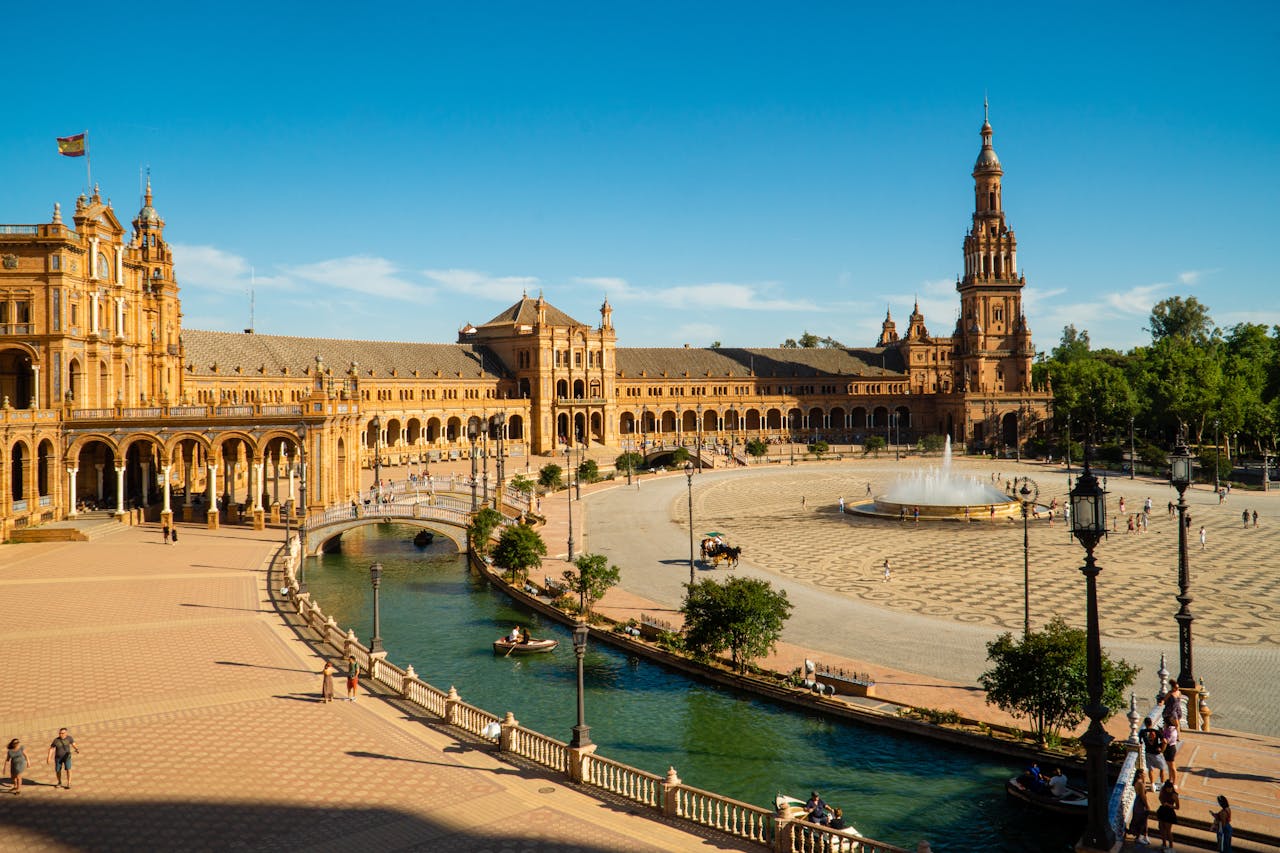
Granada to Seville runs direct by Avant trains in about 2h35 to 2h50 (via Antequera-Santa Ana and Cordoba); the Alsa bus is the fallback at about 3 hours. Day six is the monumental pair. The Real Alcazar (EUR 15.50), still a working royal palace above its Moorish heart, offers free entry in the last slot on Mondays (16:00-17:00 in winter, 18:00-19:00 in summer), reserved online and gone fast. The Cathedral and Giralda cost EUR 13 online (EUR 14 at the office), including the church of El Salvador, and there is a free public visit on Sundays from 17:00, arranged in person. Plaza de Espana is free and best early or at golden hour; the canal boats are a small paid extra. Day seven is for Triana across the river (ceramics, market, the tapas bars of Calle Betis), the Maria Luisa park, and a flamenco tablao in the evening; expect EUR 25 to 40 for a good show without dinner. Try espinacas con garbanzos, Seville's spinach and chickpea tapa, and note that salmorejo belongs to Cordoba up the line, a possible stop on the way back to Madrid. Departure is easy: Seville's own airport, or the AVE to Madrid in about 2h40 for a Barajas flight.
Money: what Spain actually costs to do well
The levers that matter are the same as in our budget travel destinations guide, applied to Spain. Book trains early on the operators' sites and the four intercity legs can cost less than one walk-up fare. Eat the menu del dia at lunch (a set two or three courses, typically EUR 12-18 in these cities) and graze tapas at night. Use the free windows honestly listed above rather than imaginary passes: there is no "Spain Tourist Card", no EUR 60 national rail pass, and no 7-day Seville Card of the kind older guides describe; the real bundle that exists is the Renfe Spain Pass for non-residents, worth pricing only if you are adding many more train days than this week. Attraction spend on this route, at the prices above, is roughly EUR 100 per person for the week if you book the big four (Sagrada Familia, Park Guell, Alhambra, Alcazar) and use one or two free windows for the rest.