What chicken katsu curry is
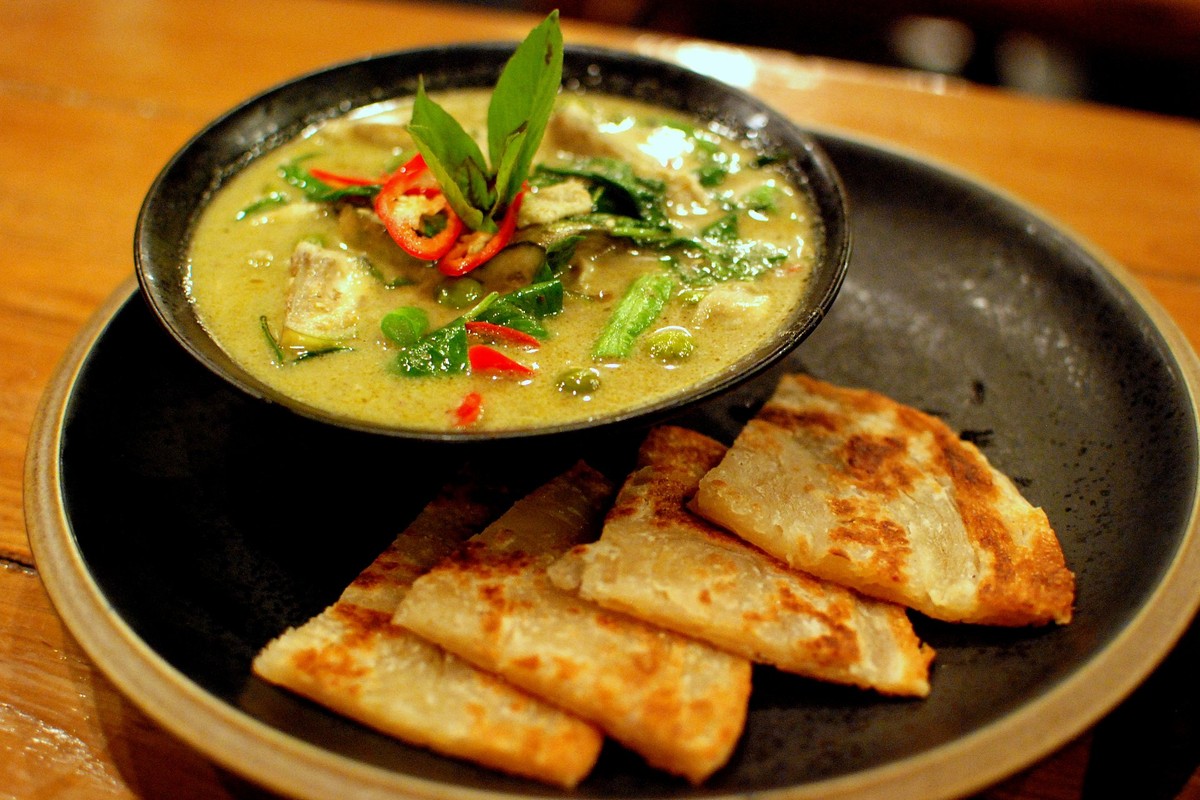
Katsu curry is a plate of Japanese curry rice topped with a breaded cutlet. The curry itself is thick, mild and brown, much less hot than an Indian curry, and its sweetness comes from caramelised onion and carrot with honey and ketchup. The word katsu means the cutlet in Japan, so a true katsu curry always has one, even though in Britain the name is now used for the sauce on its own. Nobody knows exactly where the dish began. The best known story puts it at Ginza Swiss in Tokyo in 1948, when baseball player Shigeru Chiba asked for a cutlet on his curry rice, and the restaurant still lists the dish as Chiba-san's curry. Two earlier claimants are also on record: Kawakin in Asakusa in 1918 and Oroji in Shinjuku in 1921. Treat them as competing stories rather than settled history.
The Wagamama connection
Most UK cooks first met katsu curry at Wagamama, which began serving it in 1992 and turned it into a British high street favourite. The menu describes it simply as panko chicken, sticky white rice, katsu curry sauce, dressed salad and pickles, and there are four versions: chicken, hot chicken, yasai and hot yasai. The chain shared its home recipe during lockdown in 2020, and the quantities are a useful reference point: for two people, the sauce uses 300ml of stock with 100ml of coconut milk, and the chicken uses two breasts with 50g of flour, two eggs and 100g of panko. On the menu today, the chicken version carries 988 kcal per serving, checked on the Wagamama site, and costs GBP 14.90 in most UK restaurants and GBP 15.30 in London. This recipe follows the same shape but builds its sauce from scratch without coconut milk, which is the point of the next section.
The from-scratch sauce
This recipe makes its sauce from scratch, and the choice is deliberate. The sauce starts with onion and carrot softened in oil, then garlic and ginger, then curry powder, turmeric and flour, then stock, soy sauce, honey and ketchup, simmered for 20 minutes until the carrot is very soft and blended smooth. There is no coconut milk in this sauce. That is the standard for a from-scratch katsu sauce, and the coconut milk belongs to the Wagamama variant, which uses 100ml for two servings. If you want the Wagamama flavour, add it, but the sauce below is complete without it. The sweetness comes from the onion and carrot with the honey and ketchup, so there is no need for extra sugar. If a shop-bought roux is all you have, the shortcut at the end of this recipe gives the exact block count for four servings, but it is a shortcut, not the main method, and a standard roux is not vegetarian because it contains pork hydrolyzate.
The oil temperature
The single number that decides this recipe is the oil temperature: 170 to 175C. Below 165C the crumb drinks oil and turns greasy, and above 180C it darkens before the chicken finishes cooking. Keep the oil in the settled range and the cutlet fries crisp in four to five minutes per side. If you have no thermometer, drop a panko crumb into the oil and watch it sizzle at once, or drop in a bread cube and look for a golden colour in about 40 seconds. A wooden chopstick dipped in the oil should show steady small bubbles. Fry two breasts at a time so the pan stays hot, and check that the thickest part of the chicken reaches 74C before you serve it. The time is tied to the thickness in this recipe: the breasts are batted to 1.5cm, and a thinner breast would need less time.
Katsu curry and katsudon
Katsu curry and katsudon share a panko cutlet over rice, but they are different dishes, and it is worth knowing which one you are cooking. Katsudon simmers the cutlet with onion in a sweet savoury dashi sauce and finishes it with egg. Katsu curry serves the cutlet with curry sauce and rice instead. If you want the egg-topped version, katsudon is the recipe to cook. This recipe keeps the two dishes separate and does not borrow the katsudon method.
Baked and air-fryer katsu
If you would rather not fry, the chicken bakes or air-fries well, with one extra step that matters. Toast the panko first in a dry pan over medium heat with a little oil, stirring until golden, then cool it completely before you coat the chicken, or the crumb will stay pale. Bake at 200C on a wire rack over a baking sheet for 20 to 25 minutes, flipping halfway, or air-fry at 190C for 9 to 15 minutes, flipping halfway, until the thickest part reaches 74C. The baked and air-fried crumb is less shattering than the fried one and absorbs less oil, but it is still crisp when the panko is toasted first.
Serving, storage and reheating
Serve the rice in a mound, spoon the sauce over the rice and about two-thirds of the sliced katsu, and leave part of the cutlet exposed so it stays crisp. Scatter spring onions over the top and put fukujinzuke, the red Japanese pickle, on the side if you have it. Shredded white cabbage is the other usual accompaniment. Store the sauce and the chicken separately. The sauce keeps in the fridge for three to four days and freezes for two to three months. The chicken keeps in the fridge for two days and freezes for up to one month. Reheat the sauce gently on the hob with a splash of stock or water, and re-crisp the chicken in the oven or air fryer at 180C for 10 to 12 minutes. Never microwave the chicken, because the coating goes soggy. Do not reheat anything more than once.
Roux-block shortcut
This shortcut is NOT the main method. The main method is the from-scratch sauce above. Use it only when you have no time to make the sauce from scratch.
For 4 servings: 4 S and B Golden Curry blocks from a 220g box (12 servings) with about 400ml water. Fry the chicken exactly as in the main recipe. For the sauce, cook the onion and carrot in oil, add the water and simmer until tender, then turn the heat off, break in the roux and stir until completely melted, then simmer a further 5 minutes, stirring constantly. Follow the water amount printed on your own box, because box sizes differ: a 220g box is 12 servings, a 198g box is 11 servings and a 160g box is 8 servings. Do not add the roux to a boiling pot, or it will turn grainy. A standard roux is not vegetarian, because it contains pork hydrolyzate.
Note on the coating quantities: Wagamama uses 50g of flour, 2 eggs and 100g of panko for 2 servings. This recipe uses the same amounts for 4 servings, which are the normal home-cook amounts; the restaurant quantities cover a larger breading station with more waste.