

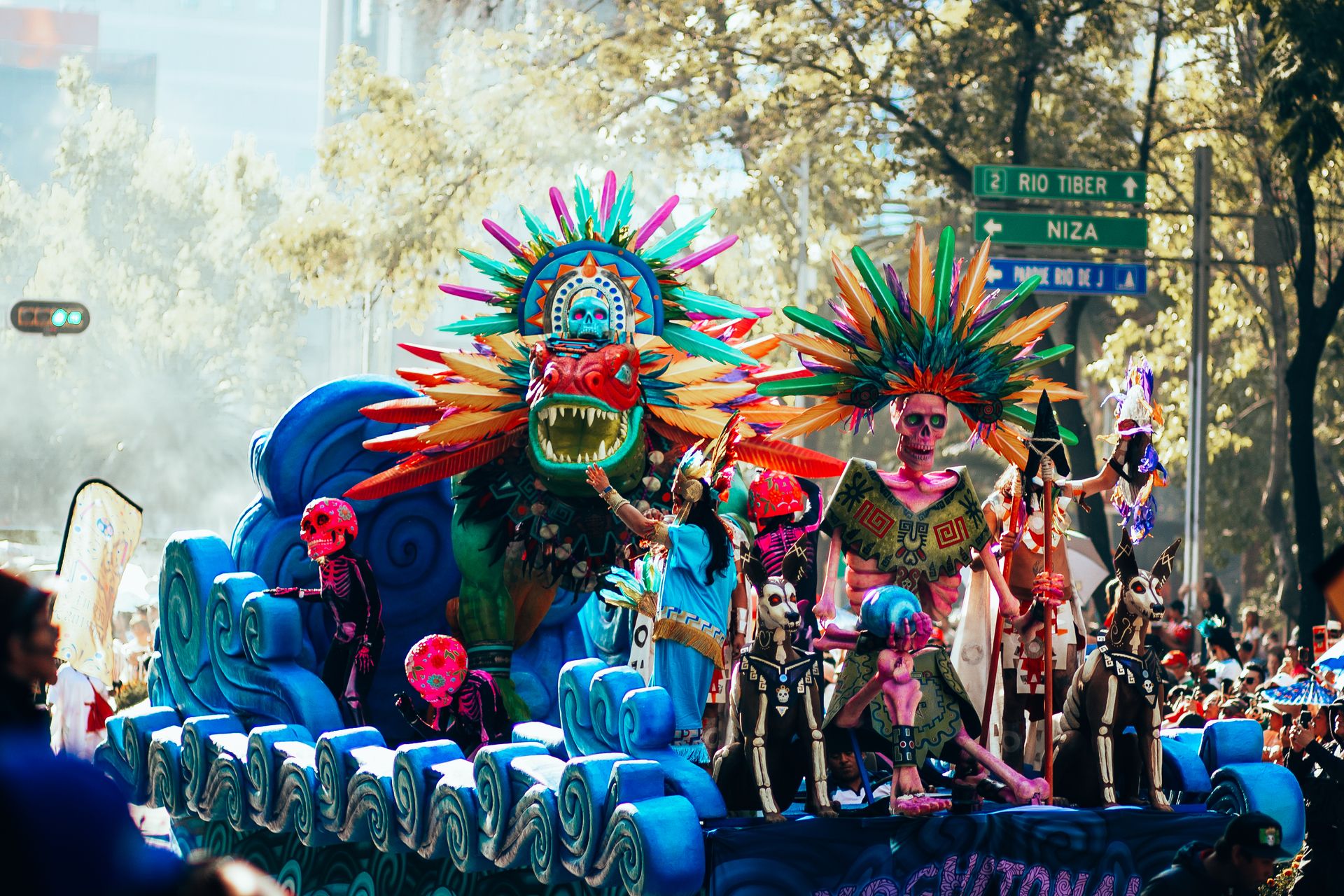

Rio Carnival 2027 runs Friday 5 to Tuesday 9 February, with Ash Wednesday on 10 February. The Special Group samba parades take place 7 to 9 February at the Sambadrome, and the Champions Parade closes the season on Saturday 13 February. Street blocos are free. Sambadrome seats are ticketed.
When is Rio Carnival 2027
Rio Carnival 2027 runs from Friday 5 February to Tuesday 9 February, with Ash Wednesday on Wednesday 10 February. The street season starts earlier, on Saturday 16 January, and the Champions Parade follows on Saturday 13 February. Carnival dates move each year because they follow Easter, so always check the current year's schedule before you book. See the Rio Carnival 2027 dates and schedule guide for the full calendar.
| Date 2027 | What happens |
|---|---|
| Saturday 16 January | Street carnival season starts; blocos begin across the city. |
| Saturday 23, Sunday 24, Saturday 30, Sunday 31 January | Free technical rehearsals at the Sambadrome. |
| Friday 5 – Saturday 6 February | Série Ouro parades at the Sambadrome. |
| Sunday 7 – Tuesday 9 February | Special Group parades at the Sambadrome, four schools a night. |
| Wednesday 10 February | Ash Wednesday. Results are read out. |
| Saturday 13 February | Champions Parade: the top six schools parade again. |
What is Rio Carnival
Rio Carnival combines two very different experiences under one name. The first is the Sambadrome parade competition, where samba schools spend all year preparing floats, costumes, and dance routines to compete for the title of Carnival champion in front of judges and tens of thousands of spectators. The second is the bloco tradition: hundreds of free street parties that fill Rio's neighbourhoods and draw millions of people, with no ticket needed. A bloco is a street party band or group that leads a crowd through the streets with music. A samba school is a neighbourhood parade group, a community association with its own colours, anthem, and yearly theme. See the full list of cultural festivals in this category.
How the Sambadrome parade works
The Sambadrome is a parade stadium built for Carnival. It opened in 1984 and was designed by Brazilian architect Oscar Niemeyer. Its grandstands sit on both sides of a 700-metre avenue, and the route ends at Apotheosis Square, where the schools gather after their parade. Each school gets a set time to complete the route, with thousands of dancers and musicians, drums, and floats. Judges score each school on its theme, samba song, costumes, and overall harmony. The results, known as the apuracao, are tallied and read aloud on Ash Wednesday. The top six schools return the following Saturday for the Champions Parade, an encore without the pressure of judging.
Tickets
Only the Sambadrome needs a ticket. Blocos are free, and the January technical rehearsals are free too. Sambadrome tickets are sold by sector and by night, not as one Carnival pass. A ticket for one night does not get you into another night, and each school parades on one set night, so check which night your school parades before you buy. Read the Rio Carnival 2027 ticket and planning guide for how the seat types compare.
| Seat type | What it is | Reported 2027 price |
|---|---|---|
| Grandstand (arquibancada) | Concrete steps, first come first served, except Sector 9 which has numbered seats. | Special grandstand seats reported at R$250 per night (R$125 half price). |
| Frisa (front box) | Open-air box at the edge of the runway, seating six. | Reported at R$1,835 to R$10,200 per night. |
| Camarote (suite) | Luxury suite with food and drink, and a set place for the night. | Priced per package; check the official seller. |
| Série Ouro | Second-division parades, 5–6 February. | Reported at R$45 full price, R$22.50 half price. |
Prices above are reported figures from October 2026 guides, not fixed prices. Check the official seller named by LIESA before you buy, since prices and availability change. Buy only from the official seller or a clearly authorised reseller. Be wary of social-media sellers, prices far below the official ones, and requests to pay by bank transfer. A fake or duplicated ticket means no entry and no refund. Keep your ticket confirmation and ID with you, and check which gate serves your sector before the night, since the Sambadrome is long.
Blocos: the street carnival
Blocos are where most visitors spend most of their Carnival. Hundreds of them fill the city from mid-January through Carnival week, from huge brass-band gatherings downtown to small neighbourhood groups. More than 400 authorized bloco parades took place in 2026. The city publishes the official bloco schedule in January, so check it close to the date rather than trusting an old list. Blocos are open to anyone who wants to join. You follow the band, sing along, and dance in the street. Some, like Cordao da Bola Preta, date back to the early 20th century.
Safety
Millions of people attend Carnival safely each year, with extra police and medical posts along bloco routes. The main risk is pickpocketing in crowds, not violent crime. Carry little: one card, enough cash for the day, and a copy of your ID. Leave your passport and valuables at your hotel. Use a crossbody bag with your phone in a secure pocket, and do not wear flashy jewellery. Move with your group and agree a meeting point in case you get separated. Stick to busy, well-lit streets, and avoid isolated areas at night. Use the metro or Uber rather than hailing cars on the street, and keep your phone away from open windows at traffic stops.
What to wear and what to bring
- Light clothes for hot, humid February days, often above 30°C, with short afternoon showers.
- Closed-toe shoes for dense crowds. Flip-flops are a bad idea in a bloco.
- Costume optional. Glitter is common, and many people dress up for blocos.
- Sun protection, water, and a small crossbody bag.
- A rain layer for afternoon showers.
Where to stay
Stay in the Zona Sul, Copacabana, Ipanema, or Leblon, for the safest base for most visitors, with metro and beach access. Lapa and Centro sit close to the Sambadrome and the historic street parties, but need extra caution at night. Book flights and hotels months ahead: Carnival week fills up fast, and prices rise close to the dates. If you plan to attend the Sambadrome, check the parade night of the school you want to see before you book travel dates.
How Rio Carnival began
Rio's Carnival traces back to 1723, when Portuguese settlers brought a pre-Lenten street festival called Entrudo to Brazil, with water, flour, and limes thrown at anyone in reach. Authorities later outlawed Entrudo for its chaos, and by the 1840s Rio's elite had adopted formal masked balls with waltz and polka. Ordinary residents kept celebrating in the streets with drums, costumes, and improvised parades. After Brazil abolished slavery in 1888, Afro-Brazilian communities in Rio's hillside neighbourhoods blended African rhythms with Portuguese and Brazilian musical traditions, giving rise to samba. In 1917, musician Donga registered Pelo Telefone, widely seen as the first recorded samba. Police treated Afro-Brazilian drum gatherings as a public order problem for years, raiding circles and seizing pandeiros, the tambourines at the heart of samba. In 1928, musicians in the Estacio neighbourhood founded Deixa Falar, widely seen as Brazil's first samba school. Rio held its first official samba school competition in 1932, and the competition has run almost every year since. The 2021 edition was cancelled due to COVID-19, and in 2022 the street parades were cancelled and the Sambadrome parades moved to April. The last full edition before this guide, in 2026, ran 13 to 21 February, with Unidos do Viradouro crowned champion with a perfect 270 points, one tenth of a point ahead of Beija-Flor and Vila Isabel on 269.9.
Another great pre-Lenten carnival is the Carnival of Venice dates and mask guide. For the full list of festivals across the world, go back to the World Festival and Holiday Calendar.
Sources
- Mobimatter: Rio Carnival 2027 dates, schedule and guide
- Going to Rio: Rio Carnival 2027 dates, tickets and planning guide
- RioCarnaval.org: Grandstand tickets and 2027 parade schedule
- Smithsonian Magazine: Carnival returns to Rio after COVID
- Rio Carnival Tickets Guide: dates, sectors, how to buy safely