

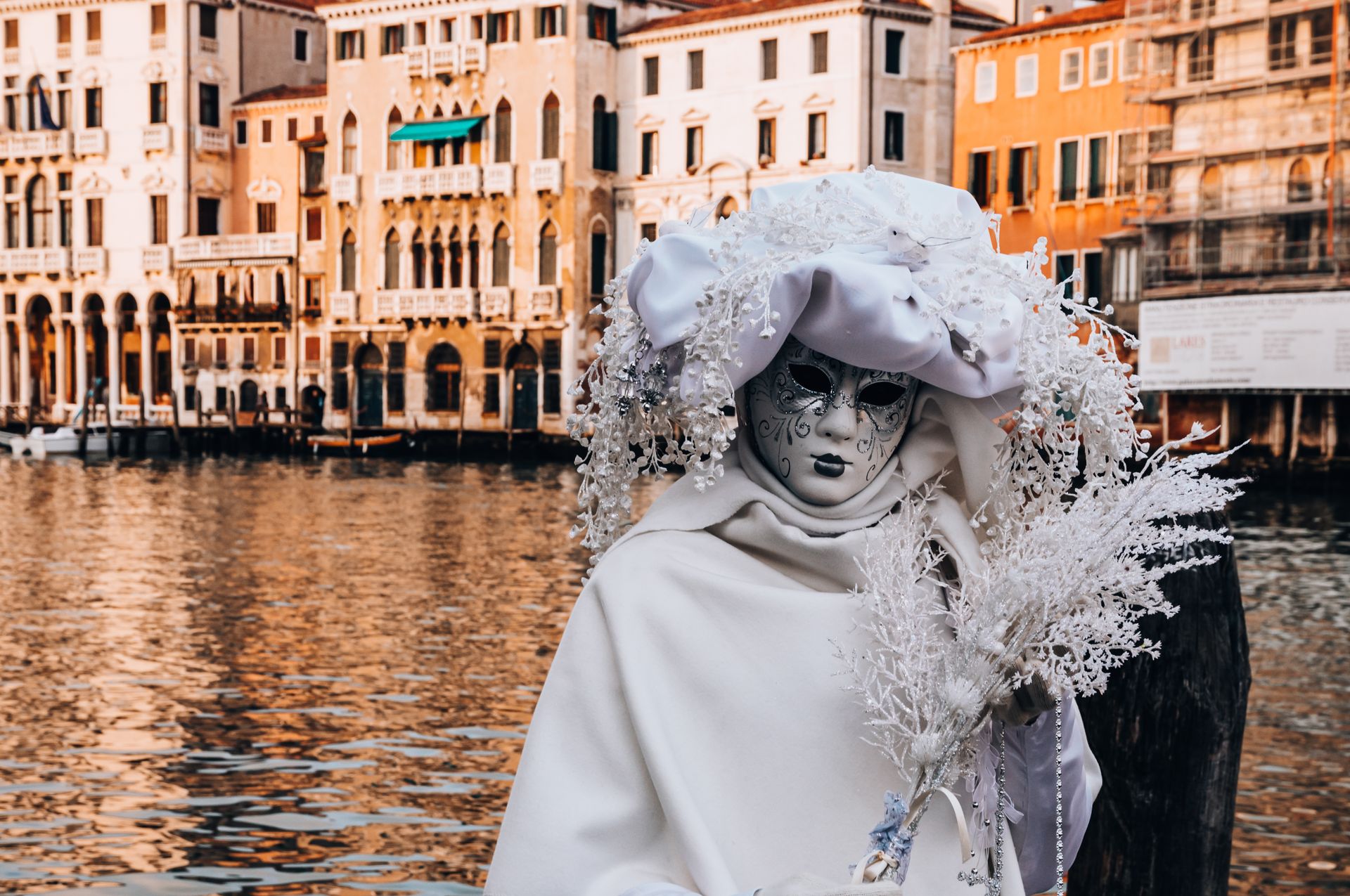

Carnival of Venice 2027 runs Saturday 23 January to Tuesday 9 February, ending on Shrove Tuesday. The street carnival is free: masks, parades, and shows fill St Mark's Square and the canals. Masked balls in palaces are ticketed. Book stays and balls months ahead.
When is Carnival of Venice 2027
Carnival of Venice 2027 runs from Saturday 23 January to Tuesday 9 February, ending on Shrove Tuesday, the day before Ash Wednesday and the start of Lent. The first weekend, 23 to 24 January, is a pre-carnival weekend with street shows and a boat parade. The dense main programme runs from Saturday 30 January to Tuesday 9 February, with the busiest days on the final weekend. Carnival dates move each year because they follow Easter, so always check the current year's schedule before you book. See the Venice Carnival 2027 dates, free events, and ball prices guide for the official dates and the programme timing.
| Date 2027 | What happens |
|---|---|
| Saturday 23 – Sunday 24 January | Pre-carnival weekend: free street theatre, music, and a parade of traditional boats on the Grand Canal. |
| Saturday 30 January – Tuesday 9 February | Main programme: daily costume parades in St Mark's Square, street shows, and ticketed balls. |
| Thursday 4 February | Giovedì Grasso (Fat Thursday), one of the two biggest days. |
| Tuesday 9 February | Martedì Grasso (Shrove Tuesday): closing day, final mask contest, and the Festa delle Marie parade. |
| Wednesday 10 February | Ash Wednesday. Lent begins and the Carnival ends. |
What is the Carnival of Venice
Carnevale di Venezia is Venice's pre-Lenten festival, about two weeks of masks, costumes, parades, and balls across the whole city, centred on St Mark's Square. The word carnival likely comes from the Latin carnem levare, meaning to remove meat: a last indulgence before the fasting of Lent. The festival is one of Venice's biggest annual events, drawing about 567,000 presences across the carnival period in 2026 by the organiser's count. See the full list of cultural festivals in this category.
What happens on the day
Most of the Carnival is free and outdoors. Costumed figures parade and pose in St Mark's Square, where a daily Best Mask Contest runs. Street performers, musicians, and actors fill the squares and bridges. A water parade of decorated boats opens the festival on the Grand Canal. In the evenings, ticketed masked balls take over historic palaces, with dinner, music, and dancing in period costume. The Festa delle Marie brings twelve costumed young women by gondola and on foot to St Mark's Square, recalling a 9th-century legend in which twelve poor girls were given clothes, jewels, and a dowry, then kidnapped by pirates and rescued by the Doge's men. The feast was revived in 1999 after being cancelled in 1379. Read the history of the Festa delle Marie and the twelve Maries for the full story.
The Flight of the Angel
The Flight of the Angel, the Volo dell'Angelo, is a performer descending on a wire from the top of the Campanile bell tower down to the square below. It has been the Carnival's signature opening spectacle. But it has been cancelled in several recent editions over safety concerns tied to work on the tower rigging, and its sister flights, the Eagle and the Lion, have followed the same pattern. Do not build a day around it until the official programme confirms it. Check the official Carnival programme when it appears in the autumn for the confirmed time and day.
The masks
Masks are the heart of the Carnival. In the old Republic, they let people of every rank mix, gamble, and speak freely with a degree of anonymity that daily life never allowed. Three classic masks still define the festival. The Bauta is a white mask with a square jaw that juts out, so the wearer can eat, drink, and speak with a distorted voice; worn with a tricorn hat and cape, it hid identity completely. The Moretta is a small oval black velvet mask with no straps, held in place by a button gripped between the teeth, so the wearer could not speak; it was worn by women. The Medico della Peste, the Plague Doctor, has a long beak once stuffed with herbs and spices; it comes from a real 17th-century plague-doctor outfit, not from a costume shop. Traditional masks are papier-mâché, shaped over a mould and hand-painted. Buy from a real Venetian mask maker, and skip the cheap plastic copies on tourist stalls.
Tickets
Watching the Carnival costs nothing. There is no ticket for St Mark's Square, the campi, the canal banks, the costume parades, or the street shows. What costs money is a ball, a costume hire, and a bed. The city's own Official Dinner Show at Ca' Vendramin Calergi runs on 30 and 31 January and from 4 to 9 February 2027, starts at 21:00, admits over 18s only, and requires period costume. Published rates start from €650 per person. Private palace balls are priced by their own venues and agencies, and they vary widely, so check the seller before you buy. Balls sell out months ahead. Read the Official Dinner Show 2027 dates, prices, and dress code before you book.
| What | Ticket | Notes |
|---|---|---|
| Street carnival, parades, Best Mask Contest, Festa delle Marie | Free | No ticket. The square can close briefly at capacity. |
| Official Dinner Show, Ca' Vendramin Calergi | From €650 per person | 30–31 Jan and 4–9 Feb, 21:00, 18+, period costume required. |
| Private palace balls | Priced by venue | Varies widely. Check the seller; book months ahead. |
| Mask hire or purchase | Varies | Simple masks cost little; full costumes cost far more. |
What to eat
Carnival food is sweet and indulgent, one last treat before Lent. Frittelle are small fried dough balls, often filled with custard, cream, or raisins, and they are the festival's signature pastry. Galani, also called crostoli or chiacchiere, are thin, crisp ribbons of fried dough dusted with powdered sugar. Vin brulé, a spiced mulled wine, and hot chocolate are the usual ways to stay warm while wandering the outdoor festivities in February.
How the Carnival began
The first mention of the festival dates to 1094, when the Doge's charter promoted public gatherings in Venice. The Venetian Senate later declared the day before Lent a public holiday, giving the Carnival formal civic status. The tradition grew out of the strict, class-bound society of the Venetian Republic, offering weeks each year when masked citizens of any rank could mingle, gamble, and criticise authority with a degree of anonymity that was otherwise unthinkable. The Carnival fell with the Republic itself: when Napoleon's forces conquered Venice in 1797, French and later Austrian authorities banned public masks and celebrations, fearing they could organise resistance. A brief attempt to revive the festival in 1930 under Italy's Fascist regime was suppressed again. The true modern revival began in 1979, led by the City of Venice with local cultural associations and artists. It has not run entirely uninterrupted since: the Carnival was cancelled in 1991 because of the Gulf War and cut short in 2020 as the COVID-19 pandemic spread across Italy.
Another great pre-Lenten carnival is the Rio Carnival dates, tickets, and visitor guide. For the full list of festivals across the world, go back to the World Festival and Holiday Calendar.
Safety and visiting tips
- Crowds: the main risk is pickpocketing. Keep your bag closed and in front, carry little cash, and agree a meeting point with your group.
- Photos: ask before you photograph costumed people up close. Many pose gladly; a tip is polite, not required.
- Etiquette: do not sit or eat on bridges and church steps, and do not feed the pigeons in St Mark's Square. Both can draw fines.
- Acqua alta: high water is possible in winter. Check the tide forecast, carry waterproof boots, and use the raised walkways where they are set out.
- Access fee: Venice has charged day visitors on selected spring and summer days. No 2027 calendar has been published, and overnight guests are exempt. Check the city's page before you travel.
- Getting around: there are no cars on the historic islands. Use vaporetto water buses, buy a pass, and validate it before you board.
- Stay: book months ahead. The final weekend fills first and prices rise. Staying on the main island saves travel time on event days.
- Clothes: dress warm. February in Venice is cold and damp, often with fog and rain.
Sources
- Visit Venice: Venice Carnival 2027 dates, free events, and ball prices
- Italyscapes: Official Dinner Show 2027
- History Walks in Venice: Festa delle Marie
- The Culture Trip: A Guide to the Masks of Venice
- Official Carnevale di Venezia site (carnevale.venezia.it) - programme and dates, cited via Visit Venice