

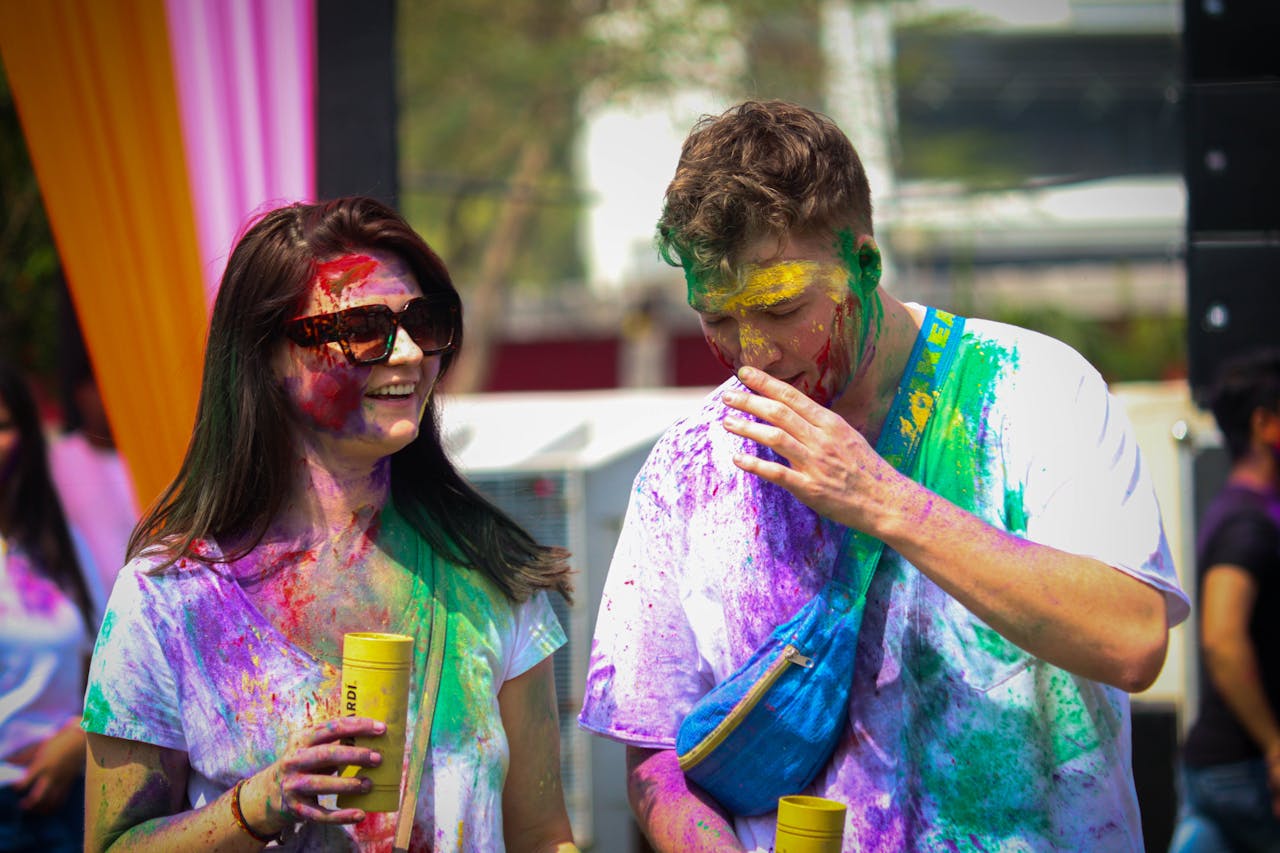
Holi 2027 runs Sunday 21 to Monday 22 March. Holika Dahan, the bonfire night, is Sunday 21 March, and Rangwali Holi, the main colour day, is Monday 22 March. Street and temple celebrations are free. The heart of it is Braj: Mathura, Vrindavan, Barsana, and Nandgaon.
When is Holi 2027
Holi 2027 runs from Sunday 21 March to Monday 22 March. Holika Dahan, the bonfire night, is Sunday 21 March, on the full moon of the Hindu month of Phalguna. Rangwali Holi, the day of colours, is Monday 22 March. Holi dates move each year because they follow the lunar calendar, and exact timings can vary slightly by region and panchang, so check your local temple calendar before you travel. See the Holi 2027 dates and Braj celebration calendar for the full day-by-day rundown.
| Date 2027 | What happens |
|---|---|
| Wednesday 17 March | Lathmar Holi, Barsana: women playfully chase men with sticks. |
| Thursday 18 March | Lathmar Holi, Nandgaon: the return visit, sticks again. |
| Days before 22 March | Phoolon wali Holi, Banke Bihari Temple, Vrindavan: flower petals, not colour. Check the temple schedule. |
| Sunday 21 March | Holika Dahan: bonfires lit at dusk across India. |
| Monday 22 March | Rangwali Holi: the main colour day, everywhere. |
What Holi means
The Holi Festival marks the end of winter and the arrival of spring, and the victory of good over evil. Two legends sit behind it. The first is the story of Prahlad and Holika. King Hiranyakashipu demanded that everyone worship him as a god, but his son Prahlad stayed devoted to the god Vishnu. The king asked his sister Holika, who was protected from fire by a magic cloak, to sit on a pyre with Prahlad on her lap. The cloak flew from Holika and covered Prahlad, and Holika burned. The bonfire lit on Holi eve recalls that night. Read the HISTORY guide to Holi origins and legends for the full stories.
The second legend is the love of Krishna and Radha. The young Krishna, troubled by the difference between his dark skin and Radha's fair skin, coloured her face, after his mother suggested he change her skin tone. That playful act is the origin of throwing colour. Holi also honours Krishna's playful side, and Braj, the region around Mathura and Vrindavan, is the land of his childhood.
Where Holi is celebrated
Holi is a major festival in India and Nepal, and it is celebrated in countries with large Indian communities, including Bangladesh, Pakistan, Sri Lanka, Mauritius, Fiji, South Africa, and the Caribbean, as well as in cities from London to New York. The grandest celebrations are in Braj, in the state of Uttar Pradesh. In Mathura, Krishna's birthplace, the main colour day fills the streets and the temples, with the Dwarkadhish Temple and the Janmabhoomi Temple at the centre. In Vrindavan, where Krishna grew up, the temples lead the celebrations, and the ISKCON temple holds a calmer, more organised Holi with devotional songs. In Barsana, Radha's village, and Nandgaon, Krishna's village, Lathmar Holi re-enacts the old teasing: women playfully drive men off with sticks, while the men defend themselves with shields. See the full list of religious festivals in this category.
What happens on the day
Holika Dahan opens the festival. At dusk on Sunday, communities light large bonfires, sing, and pray. The fire stands for the burning of Holika and the clearing away of winter. The next morning is Rangwali Holi, the day of colours. People gather in streets, parks, and temple courtyards with gulal, dry coloured powder, and pichkaris, water guns filled with coloured water. Friends smear colour on faces, strangers become friends in minutes, and the cry "Holi Hai!" means "It is Holi!" Music plays, groups dance, and the colour clouds hang in the air. By afternoon, everyone looks the same under the colour, which is part of the point: for a day, rank and status fade.
Lathmar Holi is the one event to watch rather than join blindly. It is a staged, traditional re-enactment, and the crowds at Barsana and Nandgaon are dense. Stand where the local guides stand, keep your distance from the stick play, and follow temple staff directions.
What to eat
Food is a big part of Holi. Gujiya, a fried pastry filled with sweetened khoya and dried fruit, is the classic Holi sweet. Malpua, a sweet pancake, and dahi bhalla, lentil dumplings in yoghurt, are common too. Thandai, a cooling milk drink with almonds, fennel seeds, rose petals, and spices, is served everywhere. Some thandai contains bhang, a paste made from cannabis leaves. It is traditional in some places, but the rules around it vary, so skip it unless you know the local rules. Families prepare large feasts to share with guests, and eating together after playing with colours is a key part of the day.
Tickets
Street and temple Holi celebrations are free. You do not need a ticket to join the colour play in Mathura or Vrindavan, though temple entry is controlled and you should arrive early for a good spot. What costs money is an organised event: hotel Holi parties and private celebrations sell tickets, and prices vary by organiser. Check the organiser before you buy, and be wary of sellers who cannot name a venue. If you want a calmer first Holi, an organised event or an ISKCON temple celebration is a good choice.
Safety and visiting tips
- Consent: ask before you put colour on anyone, especially women, children, and strangers. Never throw colour at people who do not want to play, at animals, or at sacred places.
- Colours: use natural or herbal colours. Cheap chemical powders can irritate skin and eyes. Oil your skin and hair first, so colour washes off more easily.
- Eyes and mouth: wear cheap sunglasses to shield your eyes, and keep your mouth and eyes shut during big colour throws. Rinse eyes at once with clean water if powder gets in.
- Clothes: wear old clothes you do not mind staining, with full sleeves and closed shoes you can throw away. Avoid white if you are worried about transparency when wet.
- Group: go with a group, stay near the main celebrations, and avoid isolated lanes. Agree a meeting point in case you get separated.
- Valuables: leave valuables at your hotel. Carry a waterproof pouch for your phone and a little cash.
- Heat and water: March can be hot. Drink water through the day, and eat before you play.
- Stay: book months ahead. Mathura and Vrindavan fill fast for Holi week, and a 3 to 5 day trip covers Lathmar Holi, flower Holi, and the main colour day.
Read the Holi in India safety and planning guide before you travel. Another festival of lamps and sweets in the same tradition is the Diwali dates, five days, and visitor guide. For the full list of festivals across the world, go back to the World Festival and Holiday Calendar.
Sources
- HISTORY: Holi 2027, Origins, Mythology, Traditions and Dates
- Travebrate: Holi 2027 Dates, Types and Where to Celebrate Across India
- BhaktiBharat: Holi (Holika Dahan), Holi 2027 Date
- Alpha Travel Insurance: Celebrate in Colours, A Guide to Holi in India
- Vrindavan Package: Holi Date and Grand Celebration in Mathura Vrindavan