

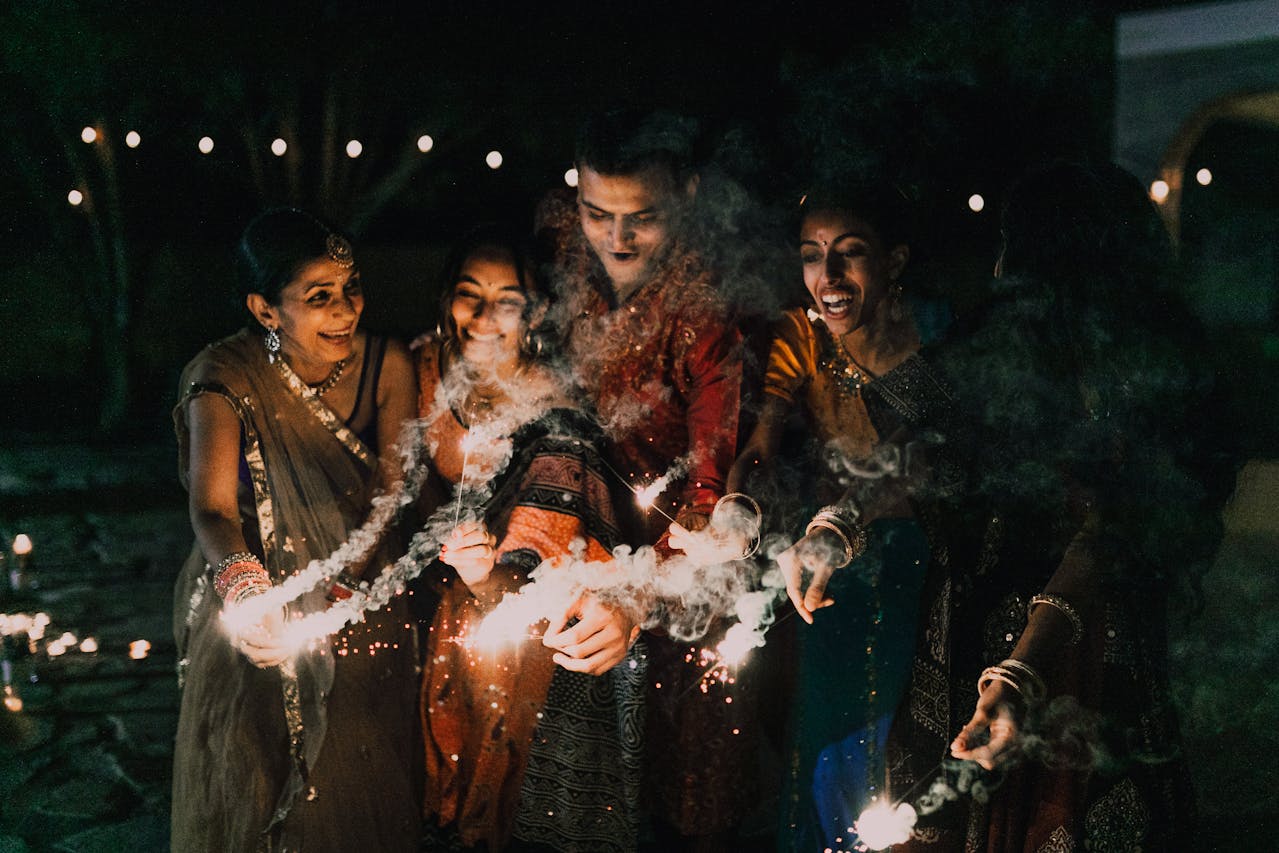
Diwali 2026 is on Sunday 8 November. That is the main night, Lakshmi Puja, in the middle of a five-day festival that runs from Friday 6 November to Tuesday 10 November. Homes and streets fill with small oil lamps, called diyas, families pray, share sweets, and let off fireworks.
When is Diwali 2026
Diwali 2026 falls on Sunday 8 November. The five days run from Friday 6 November to Tuesday 10 November, with the main night on the third day. The date comes from the Hindu lunar calendar: the main night is Amavasya, the new moon night in the month of Kartik. Because the lunar year is shorter than the solar year, the date moves each year, landing somewhere from mid-October to mid-November. See the Britannica guide to Diwali dates and traditions for how the calendar sets the festival.
One note on dates: some panchangs place Govardhan Puja on 10 November and Bhai Dooj on 11 November. Check your local panchang if you plan around day four or five.
The five days of Diwali 2026
| Day | Date 2026 | What happens |
|---|---|---|
| 1. Dhanteras | Friday 6 November | Homes are cleaned and made ready. Many families buy gold, silver, or a new utensil, and pray for health and wealth. |
| 2. Naraka Chaturdashi (Choti Diwali) | Saturday 7 November | A pre-dawn oil bath, then the first lamps. In much of south India this is the main Deepavali day, marking Krishna's defeat of the demon Narakasura. |
| 3. Diwali (Lakshmi Puja) | Sunday 8 November | The main night. Families pray to Lakshmi, goddess of wealth, and Ganesha, then light rows of diyas, share sweets, and let off fireworks. |
| 4. Govardhan Puja (Annakut) | Monday 9 November | A mound of food is offered to Krishna, who is said to have lifted Govardhan Hill. In Gujarat this day is the new year. |
| 5. Bhai Dooj | Tuesday 10 November | Brothers and sisters mark their bond. Sisters pray for their brothers and both sides exchange gifts. |
Why the date changes each year
Diwali follows the moon, not the fixed calendar. The main night must fall on Amavasya, the darkest night of the month, when lamps matter most. That is why the date shifts, and why the puja, the prayer ritual, is held in the evening after sunset. The exact puja window varies by city, so check a panchang for your city rather than using one time for the whole country.
What Diwali means
Diwali means "row of lights". The lamps stand for light over darkness and good over evil. The stories differ by region. In north India, Diwali marks Rama's return to Ayodhya after 14 years in exile and his victory over Ravana. In south India it marks Krishna's defeat of Narakasura. For many, the night honours Lakshmi, goddess of wealth, who is said to visit clean, well-lit homes. In Bengal, Kali is worshipped instead. For Sikhs the day marks Bandi Chhor Divas, the release of Guru Hargobind from prison. For Jains it marks the day Mahavira reached nirvana.
What happens on the main night
Families clean and decorate the house, draw rangoli patterns at the door from coloured powder, rice, or flower petals, and set out rows of diyas. A diya is a small clay oil lamp. In the evening families hold Lakshmi puja, a prayer ritual for Lakshmi and Ganesha, with flowers, sweets, and coins as offerings. After the prayers come sweets, gifts, new clothes, and fireworks. Streets, shops, and temples stay lit late, and doors and windows are often left open to welcome Lakshmi.
Where to see Diwali
Diwali is a public festival across India, Nepal, and Sri Lanka, and in cities with large Indian communities around the world, including London, Leicester, New York, Singapore, and Sydney. Ayodhya draws large crowds for Deepotsav, its festival of lamps on the Saryu river. In 2025 organisers reported 2,617,215 diyas lit there, a Guinness record. If you want the big public shows, go to a city with a large community event. If you want a quieter night, a small town or a family home visit gives you the lamps and prayers without the crowds.
If you like festivals with colour and crowds, read the Holi dates, colours, and safety tips. See the full list of religious festivals in this category.
Fireworks, safety, and rules
Fireworks are part of Diwali, but the rules differ by city and change each year. In Delhi and nearby areas, courts have moved to time-restricted, green-cracker-only rules rather than a full ban. The exact hours for 2026 were still being set at the time of writing, so check the local advisory before you buy or light anything. Read the Supreme Court ruling on Diwali firecrackers in 2026 for the latest position.
- Keep a bucket of water nearby and light fireworks in open ground, away from people and homes.
- Keep children at a safe distance and never let them light fireworks alone.
- Air quality can drop sharply after the main night. If you have asthma or a breathing condition, stay indoors that evening and wear a mask outside.
- Expect crowds, noise, and slow traffic on the main night. Plan to walk short distances and allow extra time.
Visiting tips
- Dress: smart and modest. Many people wear Indian clothes such as a kurta or salwar suit. Cover your shoulders in temples and remove your shoes before you enter.
- Photos: ask before you photograph people, prayers, or inside temples. Do not use flash during puja.
- Food: sweets, called mithai, are the heart of Diwali. Gulab jamun, barfi, and laddoos are common. Accept a sweet when offered. Tell your host about allergies.
- Gifts: a box of sweets, fruit, or dried fruit is a safe gift. Avoid alcohol unless you know the family drinks.
- Stay: book early for the festival week. Rooms near city centres fill up fast, and prices rise.
For the full list of festivals across the world, go back to the World Festival and Holiday Calendar.
Sources
- Britannica: Diwali, Hindu festival
- USPS: Diwali falls on Nov. 8 in 2026
- Bhaktiras: Diwali 2026 five-day dates and rituals
- IANS: Supreme Court rules out total firecracker ban ahead of Diwali 2026
- EIN Presswire: Deepotsav 2025 diya record in Ayodhya