

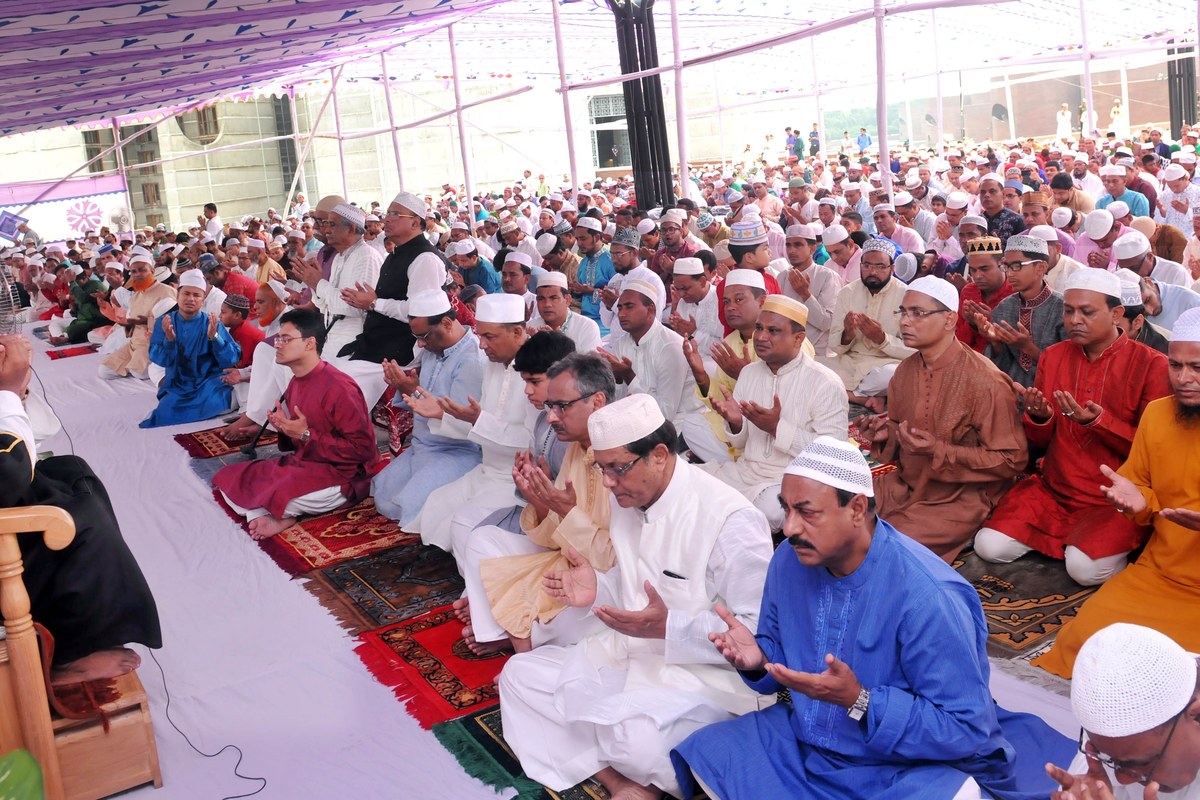
Eid Ul Fitr 2027 is expected on Tuesday 9 March 2027, subject to the sighting of the Shawwal crescent moon. It marks the end of Ramadan, the month of fasting. The day begins with a special morning prayer, followed by charity, family visits, and feasts. The Eid prayer is free, and there is no ticket.
When is Eid Ul Fitr 2027
Eid Ul Fitr 2027 is expected on Tuesday 9 March 2027. That is 1 Shawwal 1448 AH on the Islamic calendar. The date is expected, not fixed: it is confirmed by the sighting of the Shawwal crescent moon on the evening of Monday 8 March. If the crescent is not sighted that evening, Ramadan completes 30 days and Eid moves to Wednesday 10 March. Each country has its own moon-sighting committee, so some countries may observe Eid a day later than others. Check your local mosque or national announcement in the last week of Ramadan for the confirmed date. See the Umm al-Qura calendar page for the expected Eid al-Fitr 2027 date and moon-sighting note for the civil calendar position.
| Date 2027 | What happens |
|---|---|
| Monday 8 February (expected) | Ramadan begins, subject to moon sighting. |
| Evening of Monday 8 March | Shawwal crescent looked for. If sighted, Eid is the next day. |
| Tuesday 9 March (expected) | Eid al-Fitr: morning prayer, charity, family visits, feasts. |
| Wednesday 10 March (fallback) | Eid moves here if the crescent is not sighted on 8 March. |
| 9–11 March | Holiday period in many countries, typically 1–3 days depending on the country. |
What is Eid Ul Fitr
Eid Ul Fitr, also written Eid al-Fitr, means the Festival of Breaking the Fast. It marks the end of Ramadan, the month in which Muslims fast from dawn to sunset. Ramadan is the month in which Muslims believe the Quran was first revealed. Eid is the celebration at the end of that month: a day of thanks for completing the fast, of charity, and of gathering with family. It is one of the two great festivals in Islam, alongside Eid al-Adha. The date moves each year because the Islamic calendar follows the moon and is about 11 days shorter than the Gregorian calendar. See the full list of religious festivals in this category.
What happens on Eid Ul Fitr
The day starts early. Muslims bathe, put on their best clothes, often new, and eat something sweet before leaving for prayer. The Eid prayer is a special congregational prayer of two units, held in the morning in mosques or open prayer grounds, about 15 to 30 minutes after sunrise. The call of Takbir, the declaration "Allahu Akbar", begins at sunset on the last day of Ramadan and continues until the imam starts the prayer. After the prayer, people greet each other with "Eid Mubarak", meaning "Blessed Eid", visit relatives, friends, and neighbours, and share food and sweets. Children commonly receive small cash gifts, called Eidiyah, from elders. Many families visit the graves of loved ones and give extra charity on the day.
Zakat al-Fitr
Before the Eid prayer, every Muslim who can afford it must give Zakat al-Fitr, a special charity that belongs to this festival. It is one saa' of staple food per person, about 2.5 to 3 kilograms of wheat, barley, dates, raisins, rice, or whatever the local staple is. Many scholars allow giving the cash value instead. The head of the household gives on behalf of dependents, including children. The purpose is simple: no one should go hungry on Eid. Charity given before the prayer counts as Zakat al-Fitr; given after the prayer, it counts as ordinary charity. Check your local mosque or charity for the 2027 cash value, which is set each year from local staple-food prices. Read the Islamic Relief guide to Zakat al-Fitr amount, timing, and who must pay for how the charity works.
What to eat
Food is central to Eid, and the dishes vary by country. Sheer khurma, a vermicelli pudding with milk and dates, is a classic Eid sweet in Pakistan and India. Baklava and other syrup sweets appear across Turkey and the Middle East. Kahk, date-filled cookies, and ma'amoul, filled semolina cookies, are Eid staples in Egypt and the Levant. Savoury feasts often feature biryani, lamb stew, kebabs, or slow-cooked curries, shared with guests. The pattern is the same everywhere: a table full of food, open to family, neighbours, and visitors.
How the festival began
The first Eid al-Fitr was celebrated in 624 CE, in the second year of the Islamic calendar, in Medina, after the first Ramadan fast. When the Prophet Muhammad arrived in Medina, he found the people marking two festival days from before Islam. He told them that Allah had given them two better days in their place: Eid al-Fitr and Eid al-Adha. Since then, Eid al-Fitr has been celebrated on the first day of Shawwal, the month that follows Ramadan, by Muslims around the world.
The other great Eid is the Eid Ul Adha date, meaning, and how it is marked. For the full list of festivals across the world, go back to the World Festival and Holiday Calendar.
Safety and visiting tips
- Confirm the date: Eid depends on the moon sighting and can move by a day. Check the local mosque or national announcement in the last week of Ramadan before you travel.
- Public holiday: Eid is a public holiday in Muslim-majority countries, typically 1 to 3 days. Shops, banks, and offices may close. In most non-Muslim-majority countries it is not a public holiday.
- Prayer grounds: the Eid prayer is for Muslims. Visitors are welcome to watch respectfully from outside the prayer area. Dress modestly and ask before photographing people at prayer.
- Greeting: "Eid Mubarak" is the standard greeting and is always welcome. Accept food and hospitality graciously when it is offered.
- Crowds: prayer grounds and markets are busy on Eid morning and the night before. Keep your bag closed and in front, and agree a meeting point with your group.
- Travel: flights and roads are busy around Eid in Muslim-majority countries. Book travel and stays early.
- Charity: if you want to give, use a registered mosque or charity. Do not hand cash to strangers at prayer grounds.
- Ramadan week: if you arrive before Eid, remember many people are still fasting. Eat and drink discreetly in public during fasting hours.
Sources
- Umm al-Qura Calendar: Eid al-Fitr 2027 date and moon-sighting note
- Embrace Relief: When Is Ramadan 2027? Dates and Moon Sighting Guide
- Islamic Relief UK: Zakat al-Fitr amount, timing, and who must pay
- Islam Question and Answer: The rate of Zakat al-Fitr
- Almosafer: Eid al-Fitr 2027 date, prayer, and traditions