

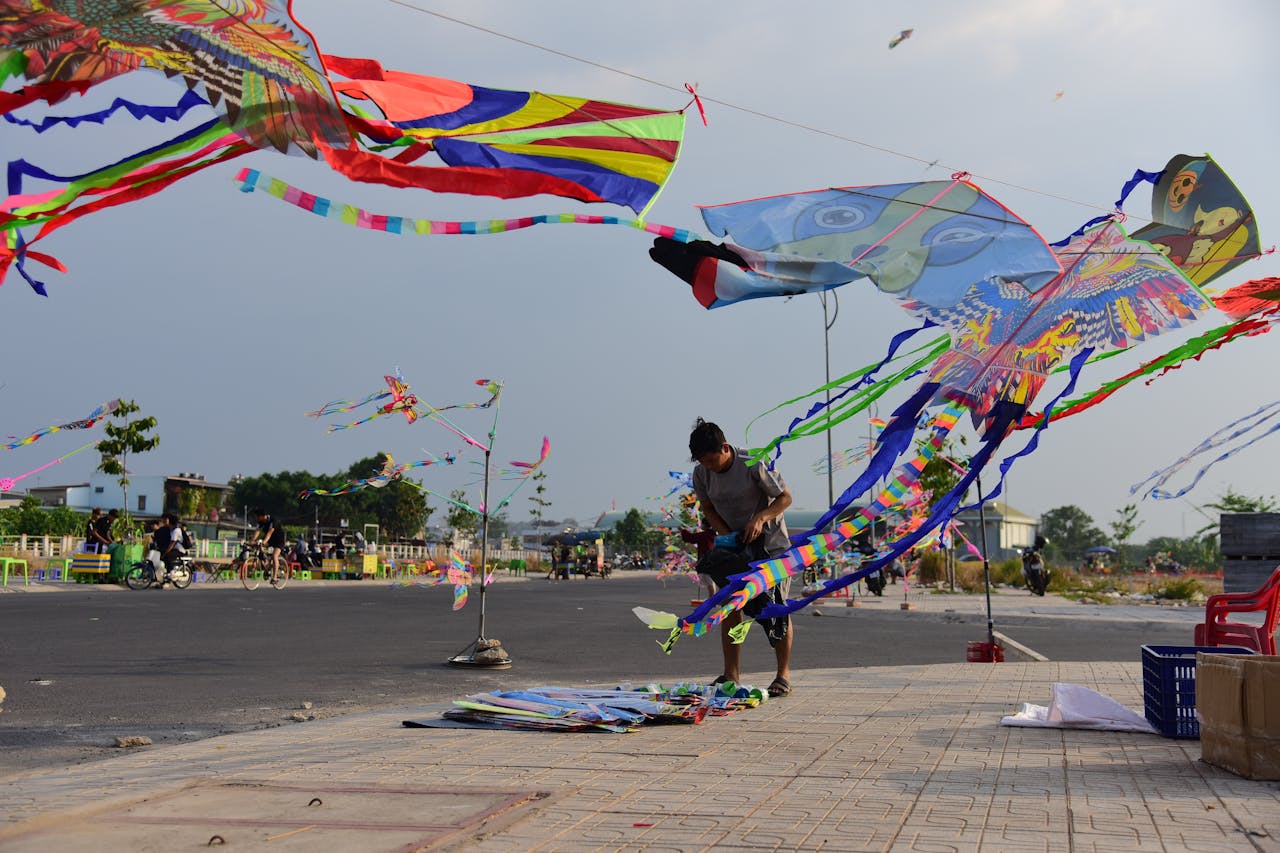

Basant Kite Festival 2027 is approved for 29 January to 7 February 2027 in Lahore, with a one-day pause on 5 February for Kashmir Day. Kite flying is legal only on the notified festival days, with approved kites and cotton string. There is no official ticket, and watching from public areas is free. Read the safety rules before you go: in 2026, at least 17 people died during the three-day revival.
When is Basant 2027
Basant Kite Festival 2027 is approved for 29 January to 7 February 2027 in Lahore. The festival pauses for one day on 5 February for Kashmir Day. These are government-set festival dates for Lahore, not the religious date of Basant Panchami, which falls on 11 February 2027. The dates have already changed twice, so check the official Basant portal before you travel: kite flying stays illegal until the Deputy Commissioner issues the notification that permits it. Read the The News report on the approved 10-day Basant festival in Lahore for the latest schedule.
| Date 2027 | What happens |
|---|---|
| Friday 29 January to Sunday 7 February | Basant festival in Lahore, kite flying on notified days only. |
| Friday 5 February | Pause for Kashmir Day. No festival flying. |
| Thursday 11 February | Basant Panchami, the religious spring festival. Separate from the Lahore kite festival dates. |
What is Basant
Basant is a spring festival that marks the end of winter and the start of spring in Punjab. Its name comes from the Sanskrit word Vasant, meaning spring. In Hindu tradition it is tied to Basant Panchami, a day that honours Saraswati, the goddess of knowledge, music, and arts. In Lahore, Basant grew into something else as well: a citywide kite festival, where families gather on rooftops to fly kites and compete to cut each other's kites from the sky. Yellow is the colour of the day, worn in clothes and turbans, standing for the mustard flowers that bloom across Punjab fields each spring. See the full list of cultural festivals in this category.
What happens at Basant
The heart of Basant is the kite duel. Flyers launch kites from rooftops and try to cut rivals' kites down by crossing strings in the crowded sky, calling out "Bo kata", meaning cut, when they succeed. Rooftops fill with families, music, and food. Festive meals often include Meethe Chawal, a saffron-sweetened yellow rice dish with nuts and dried fruit, Sarson ka Saag with Makki ki Roti, mustard greens with cornbread, and Kadhi Pakora, a yogurt curry with fried gram flour fritters. Folk music and bhangra dancing run through the day. This is a kite festival Lahore has waited nearly two decades to hold legally again, and the mood in 2026 was joyful. It was also dangerous, which is why the rules below matter.
Tickets
There is no official ticket for Basant. Watching from public areas is free. Rooftop gatherings are private family events, not ticketed shows. Do not pay strangers for rooftop access, and do not buy kites or string from unregistered sellers. Only buy approved kites and cotton string from registered sellers, and only during the notified festival days.
| What | Ticket | Notes |
|---|---|---|
| Watching from public areas | Free | No ticket needed. Keep well back from roads where strings hang low. |
| Rooftop gatherings | Private, not ticketed | Family events. Join only through a local host you know. |
| Kites and string | Paid per item | Buy approved material from registered sellers only. Prices vary. |
The law: what is allowed and what is banned
Kite flying in Punjab is banned by default under the Punjab Regulation of Kite Flying Act 2025, which came into force on 2 January 2026. This general kite flying ban lifts only on days the Deputy Commissioner notifies, with Punjab government approval. Outside those days, flying a kite is an offence. Read the FAFEN guide to how kite flying law in Punjab has changed since 2001 for the full legal background.
Even on festival days, the banned list stays in force. Chemical, metallic, and glass-coated string are banned at all times. Charkhis, the large reels used to wind string, are banned; string must be wound in a pinna ball with its own QR code. Aerial firing and fireworks are banned. Makers, traders, and sellers must register with the district administration. Selling glass-coated string brings 5 to 7 years in jail, a Rs5 million fine, or both, and is non-bailable. Police enforce the rules with checks, and in early 2026 Lahore police registered nearly 2,000 cases and seized more than 100,000 kites for flying outside the allowed days.
Why kite flying was banned
The ban came from the string, not the kites. To gain an edge in kite duels, some flyers reinforced their string with wire or coated it in ground glass, turning it into a blade-like line. Low-hanging strings cut motorcyclists and pedestrians, and celebratory gunfire took more lives. Pakistan's Supreme Court first restricted kite flying in 2005, and Punjab imposed a full ban in 2007 after a season of deaths. Basant stayed officially banned for nearly two decades, even as some residents kept flying unofficially. The 2025 Act replaced the old ban with regulated permission: strict rules, registered sellers, and a set window for flying.
The 2026 revival showed both sides of that deal. Basant returned to Lahore for three days, 6 to 8 February 2026, the first legal Basant since 2007. Only cotton string made of nine threads was allowed, kite size was fixed at 35 by 30 inches, and more than 700,000 motorcycles were fitted with safety rods. The Punjab Home Department later told the Lahore High Court that at least 17 people died during those three days, including 12 from rooftop falls, three from electrocution, and two after falling from trees, with more than 100 accidents reported. No deaths were directly caused by kite string that year, which suggests the string rules helped, even as other risks stayed high. Read the LHR Times report on the changed 2027 dates and the 2026 safety record for how the dates moved and why.
How the festival began
Basant began as a seasonal and religious festival, and Lahore turned it into a kite spectacle. Maharaja Ranjit Singh, the Sikh ruler who controlled Lahore from 1799 until his death in 1839, held an elaborate ten-day darbar in Lahore during Basant, where soldiers dressed in yellow turbans and the Maharaja himself, along with his queen Moran, wore yellow and flew kites. In 1825, he donated 2,000 rupees to the Golden Temple in Amritsar to fund food distribution during Basant, and he sponsored annual fairs that made kite flying their central attraction. Under his patronage, what had been a seasonal observance grew into a citywide social event that crossed Punjab's religious communities rather than belonging to any single one.
Another spring festival worth knowing is the Holi date, colours, and how it is marked. For the full list of festivals across the world, go back to the World Festival and Holiday Calendar.
Safety and visiting tips
- Rooftops: most 2026 deaths came from falls, not string. Stay well back from roof edges, never lean over a parapet to watch a kite, and keep children away from edges at all times.
- Power lines: kites and string near power lines can electrocute. Never fly near lines, and never pull down a kite caught on a line.
- Roads: if you ride a motorcycle during Basant, fit a safety rod and wear a helmet with the visor down. As a pedestrian, watch for low strings and stay off the road edge.
- String: never touch a fallen string with bare hands. Glass-coated and chemical string can cut deeply. Report banned string to police.
- Aerial firing: celebratory gunfire has killed people at past Basant festivals. It is banned. If you hear gunfire, move indoors.
- Children: keep children off rooftops without a high parapet, and never let a child fly a kite near a road or a roof edge.
- Watching: the safest way to enjoy Basant is as a watcher from a public area or a hotel rooftop with a high parapet. Book a hotel with a safe rooftop well ahead, since Lahore fills fast for the festival.
- Transport: check local listings before you travel. In 2026 the government offered free public transport during the festival. Confirm 2027 arrangements closer to the dates.
- Do not fly early: kite flying outside the notified days is illegal, even with safe string. Wait for the notification.
Sources
- The News: Lahore to host 10-day Basant festival from Jan 29 to Feb 7
- LHR Times: Basant 2027 dates changed again, Lahore gets 10 days from Jan 29
- Pakera: Basant 2027 Lahore, registration, kite rules and penalties
- FAFEN: Kite flying regulation, how it evolved since 2001
- Wikipedia: Basant Kite Festival, Punjab (history, Ranjit Singh, ban)
- Wikipedia: Vasant Panchami (date, Saraswati, spring festival)