
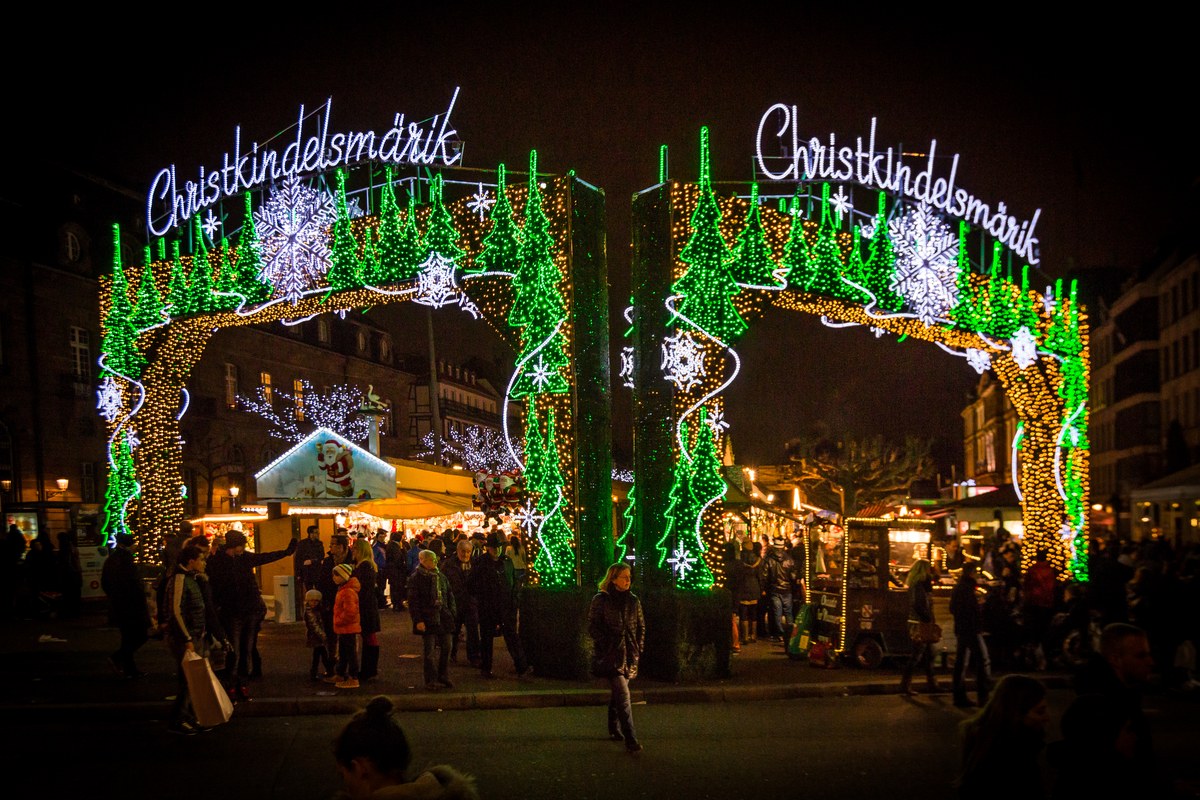
Christmas in Europe turns the whole continent into a season of markets, lights and long dark evenings, from the Arctic Circle to the Mediterranean. The best Christmas markets in Europe open from mid-November, and the best cities in Europe at Christmas range from snowy Rovaniemi to mild Rome, so the right trip depends on the dates you pick and the weather you want. This guide covers Christmas in Europe in 2026: the best Christmas markets in Europe, the cities that suit them, and the practical planning that makes the trip work, including when to go, how to get around, what to pack and what it costs. For the Nordic detail, our Copenhagen at Christmas guide covers Tivoli lights, harbour markets and what stays open over Christmas, and our Lapland in December guide covers Santa Claus Village, husky and reindeer safaris and about two hours of daylight. Christmas in Europe rewards an early December trip, before the 24 December cliff closes most German and French markets.
Christmas in Europe at a glance
Christmas in Europe runs from mid-November to early January, and the best window for markets is late November to mid-December. Every market in the table below is open in that window, and the crowds stay lighter than in Christmas week. The season turns on 24 December: most German and French markets close that day and do not reopen, while the Nordic and several Central European markets run on into January. Copenhagen street markets close on 20 to 21 December, and only Tivoli stays open from 22 December. Plan around the dates in the table, and check the official site before you travel, because hours and dates can change. For the two Nordic guides in full, see our Copenhagen at Christmas and Lapland in December guides.
| City | Market | 2026 dates | Entry |
|---|---|---|---|
| Vienna | Rathausplatz | 13 Nov to 26 Dec | Free |
| Vienna | Schonbrunn Palace | 6 Nov 2026 to 6 Jan 2027 | Free |
| Prague | Old Town Square and Wenceslas Square | 28 Nov 2026 to 6 Jan 2027 | Free |
| Strasbourg | Christkindelsmarik, Grande Ile | 27 Nov to 24 Dec | Free |
| Colmar | Six old town markets | 23 Nov to 29 Dec; Gourmet Market to 3 Jan 2027 | Free |
| Nuremberg | Christkindlesmarkt, Hauptmarkt | 27 Nov to 24 Dec | Free |
| Tallinn | Town Hall Square | 20 Nov 2026 to 6 Jan 2027 | Free |
| Edinburgh | East Princes Street Gardens | 14 Nov 2026 to 3 Jan 2027 | Free |
| Bruges | Markt and Simon Stevinplein | 20 Nov 2026 to 3 Jan 2027 | Free |
| Budapest | Advent Bazilika | 13 Nov 2026 to 1 Jan 2027 | Free |
| Budapest | Vorosmarty Classic Xmas | 13 Nov 2026 to early hours of 1 Jan 2027 | Free |
| Dresden | Striezelmarkt, Altmarkt | 25 Nov to 24 Dec | Free |
| Krakow | Rynek Glowny | Opens 27 Nov 2026; closing date to be confirmed | Free |
| Copenhagen | Tivoli Christmas | 13 Nov 2026 to 3 Jan 2027 | Paid (Tivoli entry) |
| Copenhagen | Nytorv and Gammeltorv | 6 Nov to 21 Dec | Free |
| Copenhagen | Hojbro Plads | 14 Nov to 20 Dec | Free |
| Rovaniemi | Santa Claus Village | Village open year round; Office 08:00 to 20:00, 30 Nov 2026 to 3 Jan 2027 | Free entry to grounds |
| Rovaniemi | Lions Club market, Santasport | 5 to 6 Dec, 10:00 to 16:00 | Free |
The best Christmas markets in Europe in 2026
The best Christmas markets in Europe share the same ingredients: wooden huts, local food, handmade gifts and a historic square, but each city gives them a different character. The shortlist below covers the top Christmas markets in Europe that earn the trip, with a link to each official site for dates, hours and the full programme. Christmas markets in Europe are free to enter in almost every city on this list, so the cost sits in travel, hotels and food, not in the market itself.
The Viennese Christmas Market fills Rathausplatz, the square in front of Vienna City Hall, with around 150 stalls and a huge tree, and the adjoining City Hall Park holds the Vienna Ice World skating rink. The Schonbrunn Palace market sits in the palace courtyard and suits visitors who want a quieter, more elegant setting than the main square.
The Prague Christmas markets fill Old Town Square and Wenceslas Square, run by the same organiser, and the Old Town Square market centres on a tall decorated tree in front of the Church of Our Lady Before Tyn, with around 100 wooden huts and a stage for live music. Prague counts among the top Christmas markets in Europe for its setting alone: the medieval square, the Gothic church and the tower views give the market a backdrop no other city matches.
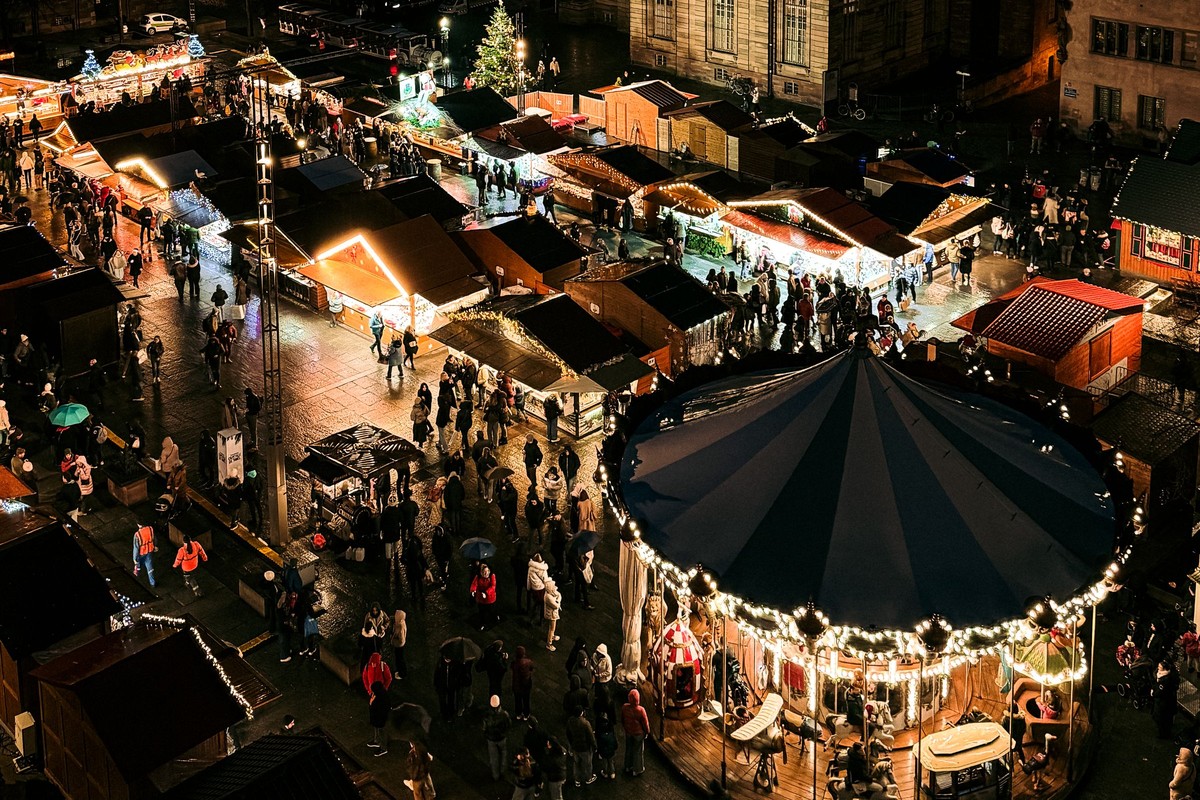
The Strasbourg Christkindelsmarik spreads across eight markets on the Grande Ile, including Place Broglie, the cathedral square and Place Kleber, with more than 300 chalets and the giant Christmas tree on Place Kleber. Strasbourg calls itself the Capital of Christmas, a title it has used since 1992, and its market dates back to 1570, which makes it the oldest Christmas market in France.
The Colmar Christmas markets run across six sites in the old town, including Place des Dominicains, Place de l'Ancienne Douane and the children's market in Petite Venise. Colmar stands out because it stays open over Christmas itself, including Christmas Day, and the Gourmet Market and the Ferris wheel run on to 3 January 2027.
The Nuremberg Christkindlesmarkt fills the Hauptmarkt and opens with the Christkind, a young woman in gold robes, reading the prologue from the balcony of the Frauenkirche; in 2026 Nora Falk takes that role at 17:30 on 27 November. The market restricts its stalls to traditional, often handmade goods, and it is famous for Nuremberg Lebkuchen (gingerbread) and Rostbratwurst, with a separate Children's Christmas Market nearby.
The Tallinn Christmas Market gathers on Town Hall Square around a Christmas tree the city traces to 1441, when the Brotherhood of the Blackheads put up a tree here, a tradition Tallinn presents as Europe's first public Christmas tree. Tallinn took the Best Christmas Market in Europe title in 2019, and the 2026 market is its 26th edition.
The Edinburgh Christmas markets fill East Princes Street Gardens directly beneath Edinburgh Castle, with around 70 stalls, the Big Wheel and the Star Flyer as ticketed rides alongside the free market, and the season runs straight into Edinburgh's Hogmanay celebrations from 29 December. Edinburgh suits travellers who want a big city market with a castle backdrop and a New Year party to follow.
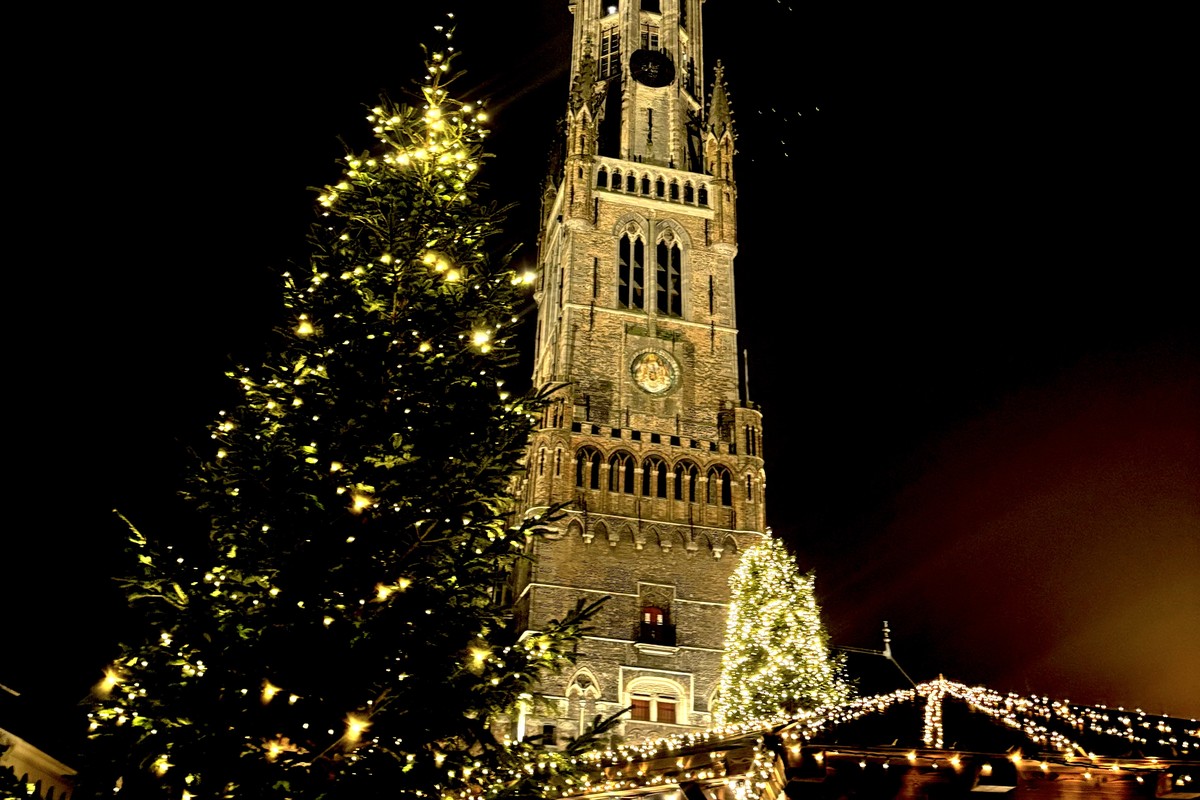
The Bruges Christmas markets run on the Markt beneath the Belfry and on Simon Stevinplein, as part of the city-wide Winter Glow programme, which adds a light experience trail across the old town and a covered ice rink that is new for 2026. Bruges suits a short break: the old town is compact, the markets sit a short walk apart, and the canals and medieval streets give the whole trip a Christmas card feel.
Budapest runs two separate main markets a short walk apart. Advent Bazilika fills the square in front of St Stephen's Basilica with a light projection show on the Basilica facade every afternoon from 17:30 and a small ice rink circling the tree. Vorosmarty Classic Xmas fills Vorosmarty Square and is Budapest's oldest Christmas fair, running on this square since 1998, with jury-selected Hungarian crafts and a free children's mini train.
The Dresden Striezelmarkt fills the Altmarkt and is the 592nd edition in 2026. The city presents it as Germany's oldest Christmas market, dating to 1434, and it features the world's largest Erzgebirge step pyramid at 14.61 metres high and the world's largest walk-in Schwibbogen candle arch, alongside the famous Dresdner Christstollen.
The Krakow Christmas market fills Rynek Glowny, the Main Market Square, and is famous for its szopki, the elaborate Krakow nativity scenes. UNESCO added the szopki tradition to its Intangible Cultural Heritage list in 2018, and the 84th Krakow Szopka Contest takes place on Thursday 3 December 2026.
The Nordic Christmas: Copenhagen and Lapland
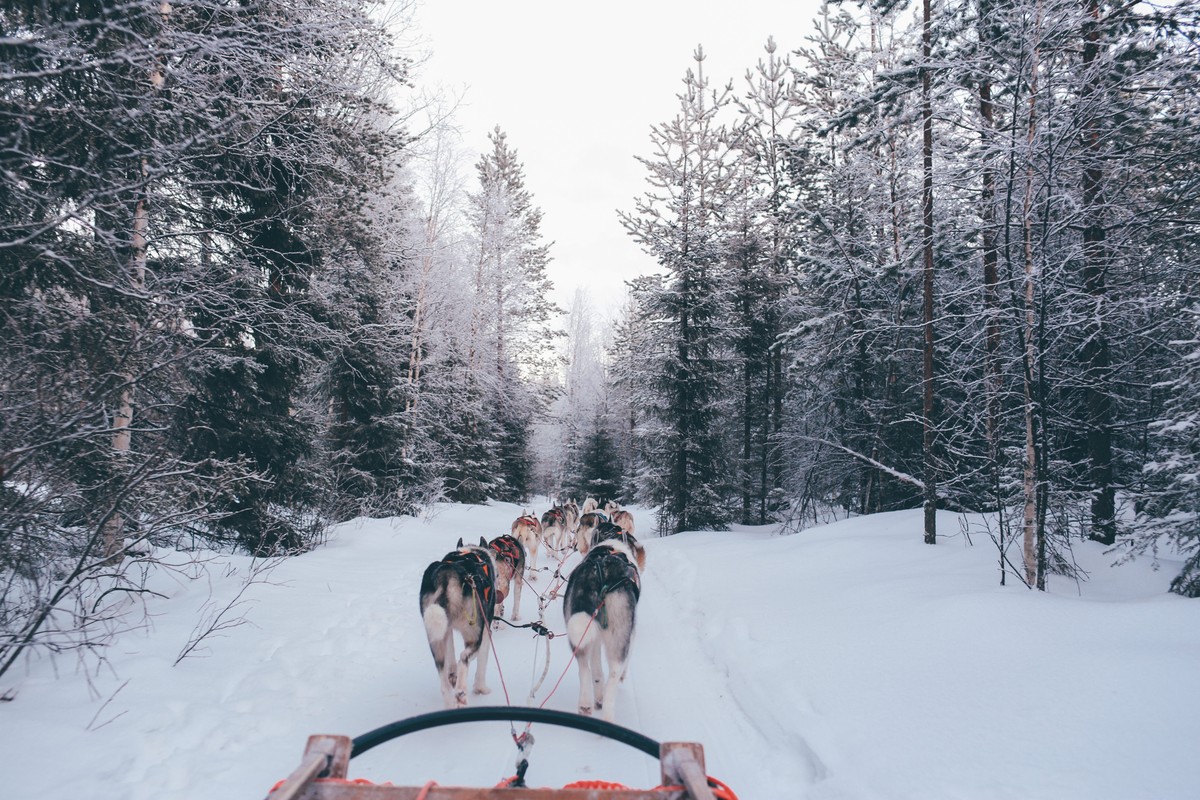
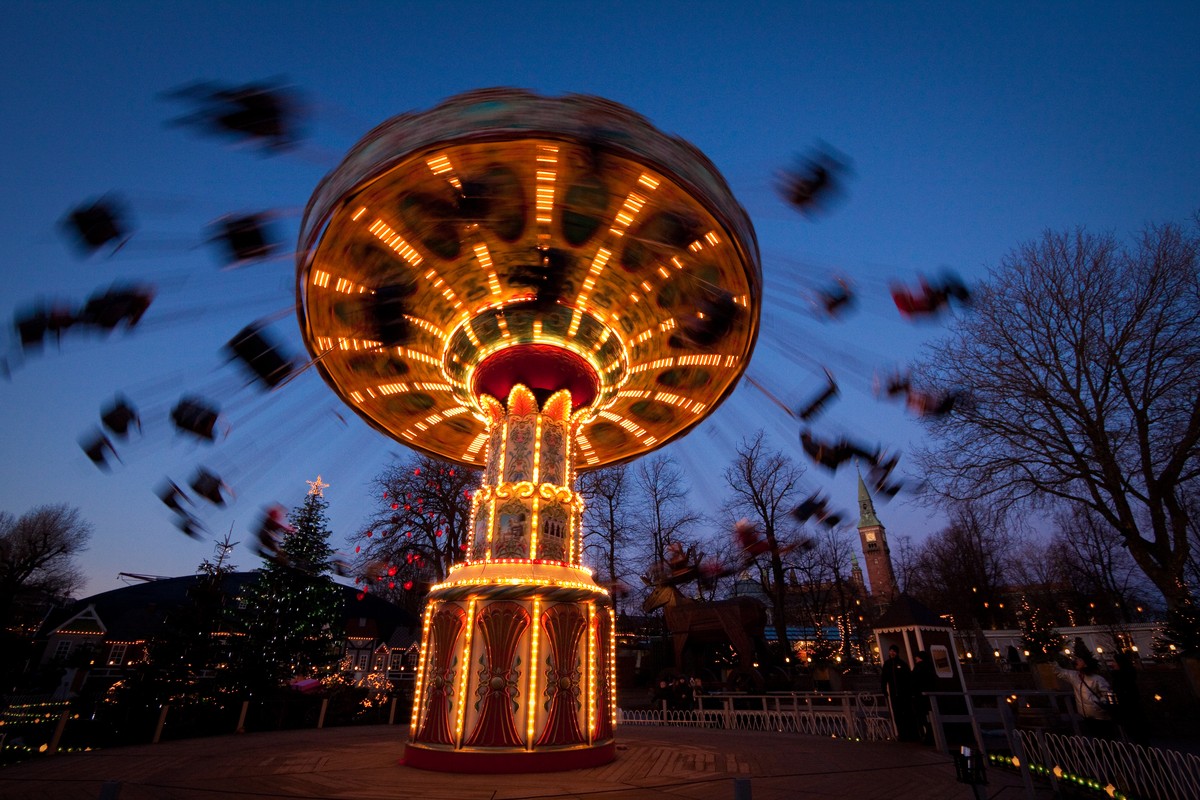
The Nordic Christmas means snow, darkness and lights, and Copenhagen and Lapland give you two very different versions of it. Copenhagen and Lapland stand out as good Christmas destinations in Europe for travellers who want the full winter, and they rank among the best Christmas holiday destinations in Europe for a snowy break. Copenhagen and Lapland lead the best cities in Europe at Christmas for snow and lights. Copenhagen at Christmas brings Tivoli lights, harbour markets and a city that stays open over the holiday, with the Santa Lucia parade on 13 December and a clear picture of what is open on Christmas Eve, Christmas Day and Boxing Day. Lapland in December brings Santa Claus Village on the Arctic Circle, husky and reindeer safaris, and about two hours of daylight, with honest Rovaniemi prices, opening hours and packing advice. Copenhagen suits a city break with markets and lights; Lapland suits a once-in-a-lifetime Santa trip with snow and safaris. Both guides carry the full detail, including dates, hours, prices and itineraries, so this section keeps it short and points you to them.
Christmas in the UK and Ireland
The UK and Ireland offer Christmas markets without a flight to the continent, and RoamFeast already covers them in full. Our Best Christmas Markets UK 2026 guide rounds up six UK markets, Birmingham, Manchester, Edinburgh, Bath, York and London, with 2026 dates, train access and day trip advice, and it is the single place to start for a UK market trip. York at Christmas covers the St Nicholas Fair on Parliament Street and St Sampson's Square, the THOR'S on ICE rink in Museum Gardens and Yorkshire's Winter Wonderland, with JORVIK and York Minster alongside. Leeds at Christmas covers the Leeds Christmas market, THOR'S Winter Village in City Square and the Ice Cube rink on Millennium Square, with settled ticket prices. Dublin at Christmas covers TwinkleTown at Smithfield and St Patrick's Park, and it warns that Dublin shuts down almost completely on Christmas Day, so plan around that. Christmas in London covers Winter Wonderland in Hyde Park, the West End lights, the Southbank market and Christmas at Kew, with dates, prices and what is open on Christmas Day. Christmas in Chester covers the market on Northgate Street and Town Hall Square, the Rows and the city walls, the cathedral and the Thursday parades, with dates, hours, traders and tips. Belfast Christmas Market covers the market in the grounds of Belfast City Hall, with dates, hours and tips. The UK and Ireland suit a short break by train, with no currency change and no language barrier.
Christmas further south: Rome and the Mediterranean
Rome gives you Christmas in Europe without the cold. Rome at Christmas covers Piazza Navona, the tree and crib in St Peter's Square and the 100 Presepi exhibition, with the markets, lights and church services that fill the city in December. Rome averages a high of 12.6C and a low of 4.2C in December, so expect mild days, cool evenings and showers, not snow. Rome counts among the good Christmas destinations in Europe for travellers who want Christmas atmosphere, history and good food without Arctic gear, and it works as a warmer stop after a cold northern market trip. Rome also stays open and lively over Christmas itself, with the Vatican and the piazzas drawing crowds through the holiday. For the full Rome detail, including dates, hours and what to book, see the Rome guide.
When to go: early December, Christmas week and New Year
Christmas in Europe has three distinct windows, and the best one depends on what you want. Early December, about 1 to 20 December, gives you the full market experience with lighter crowds: every market in the table above is open, and the cities feel festive without the Christmas week crush. The first Advent weekend, 28 to 29 November 2026, is busy everywhere, so book hotels early if you travel then. The best cities in Europe at Christmas reward an early December visit, when the markets are open, the lights are on and the queues are short.
Christmas week, 21 to 26 December, brings the atmosphere but also the 24 December cliff. Strasbourg, Nuremberg and Dresden all close on 24 December and do not reopen. Copenhagen street markets close on 20 to 21 December, and only Tivoli stays open from 22 December. In Denmark, 24 December is the main Christmas evening, larger shops close all day, and Tivoli closes on 24 December but opens on 25 and 26 December from 11:00 to 23:00. In Germany, shops may open only until about 14:00 on 24 December, and 25 and 26 December are public holidays with shops closed. In Czechia, large shops over 200 sq m must close at noon on 24 December and stay closed on 25 and 26 December by law, but the Prague main markets stay open to 6 January 2027. In Austria, shops close around midday on 24 December, and 25 and 26 December are public holidays, with many museums and restaurants open on reduced hours. In Italy, 25 and 26 December (Santo Stefano) are holidays, and the Vatican Museums close on 25 and 26 December.
New Year, 27 December to 1 January, is quieter for markets and better for city sightseeing, concerts and New Year events. Prague markets run to 6 January 2027, Vienna Schonbrunn runs to 6 January 2027, Tivoli runs to 3 January 2027, and Tallinn, Edinburgh, Bruges and Budapest all stay open past Christmas Day. Vienna Rathausplatz and most other Vienna markets close after 26 December. 1 January 2027 is a public holiday in most of Europe, with shops closed and transport reduced. For the calendar: 24 December 2026 is a Thursday, 25 December a Friday, 26 December a Saturday, 31 December a Thursday and 1 January 2027 a Friday.
Getting around Europe in December
Christmas in Europe is easy to reach from the UK by air, and easy to cross by train once you are there. Direct flights from the UK take about 1 hour 50 minutes to Copenhagen, about 2 hours to Prague, about 2 hours 15 minutes to 2 hours 30 minutes to Vienna, about 2 hours 9 minutes to Rome and about 1 hour 15 minutes to Strasbourg. British Airways and SAS fly to Copenhagen from Heathrow, Norwegian and easyJet from Gatwick, and Ryanair from Stansted. British Airways flies to Prague from Heathrow, easyJet and Wizz Air from Gatwick and Luton, and Ryanair from Stansted. British Airways and Austrian Airlines fly to Vienna from Heathrow, Ryanair from Stansted, and easyJet, Jet2 and Ryanair from Gatwick, Stansted, Manchester and Edinburgh on seasonal routes. easyJet flies to Rome from Gatwick, alongside ITA Airways, TUI Airways and Vueling, and to Strasbourg from Gatwick about 3 times a week. Nuremberg has no direct UK flight, so reach it via Munich, Frankfurt or Prague and then by train. Rovaniemi has 47 direct routes in winter 2026 to 2027, with easyJet from Gatwick, Manchester, Luton, Southend, Bristol, Edinburgh, Birmingham and Belfast, Ryanair from Stansted, Manchester, Birmingham, Bristol and Liverpool, British Airways from Gatwick and Norwegian from Gatwick.
Trains work well for a multi-city Christmas trip. Eurostar runs from London St Pancras to Brussels Midi in about 2 hours, to Paris in about 2 hours 15 minutes and to Amsterdam in about 4 hours, and no sleeper train runs through the Channel Tunnel. Nightjet sleepers run from Brussels Midi to Vienna Hauptbahnhof on Monday, Wednesday and Friday evenings, leaving about 19:00 and arriving about 10:15 the next morning via Cologne, Munich and Salzburg, and from Amsterdam to Vienna nightly, arriving about 09:50. The Paris to Vienna Nightjet ended in December 2025, so do not plan a trip around it. European Sleeper runs from Brussels to Berlin and Prague on Monday, Wednesday and Friday from Brussels and Tuesday, Thursday and Sunday from Prague, and from Paris to Berlin via Brussels on Tuesday, Thursday and Sunday. A Vienna to Rome Nightjet also runs overnight, with times that vary. Day trains connect the market cities: Vienna to Prague takes about 4 hours by Railjet, Vienna to Budapest about 2 hours 40 minutes by Railjet or EuroCity, and Prague to Nuremberg and Munich by direct rail and coach links. Timetables change on 13 December 2026, so check sleeper times for the exact travel date, and book sleepers and December weekend flights months ahead.
What the weather is like and what to pack
Christmas in Europe spans a wide range of weather, from Arctic cold in Lapland to mild days in Rome, so pack for the region you visit. Rovaniemi averages a high of about minus 5C and a low of about minus 11C in December, with about 2.5 to 3 hours of daylight around the solstice, snow expected and cold spells that can reach minus 30C. Copenhagen averages a high of about 4C and a low of about minus 1C to 0C, with about 7 hours of daylight, and you should expect wind, rain and grey skies more than heavy snow. Vienna averages a high of 4.0C and a low of minus 0.5C. Prague averages a high of 3.4C and a low of minus 1.1C. Strasbourg averages a high of 5.9C and a low of 0.8C. Nuremberg averages a high of about 4C and a low of about 0C, with about 8 hours of daylight, and you should expect cold, cloudy days with rain or snow possible. Rome averages a high of 12.6C and a low of 4.2C, with mild days, cool evenings and showers, and Rome is not a snow city in December. These figures are long-term averages, not a forecast.
Pack with the three-layer system, and adjust the weight by region. The base layer sits next to the skin: a merino wool or synthetic thermal top and leggings. Avoid cotton as a base layer in Lapland, because it holds moisture and cools. The mid layer adds warmth: a fleece or wool jumper, plus fleece or wool trousers for Lapland, and a thin down jacket or extra fleece for standing still outdoors, for example for aurora watching or queuing for Santa. The outer layer blocks wind and water: a windproof and water-resistant jacket and trousers, or a long insulated parka. For Lapland, an insulated parka with a hood is the main coat, not a fashion wool coat. Cover your feet, hands and head with insulated waterproof boots with good grip and room for thick wool socks, a hat that covers the ears, a neck warmer or balaclava, and mittens rather than gloves for Lapland, with thin liner gloves underneath. Many husky, reindeer and snowmobile operators lend thermal overalls, boots, mittens and a balaclava, so check what your operator lends before you pack, and still bring your own base and mid layers, hat and liner gloves. Bring a head torch for dark afternoons, lip balm and rich hand cream, and hand warmers. For a city break in Copenhagen, Vienna, Prague, Strasbourg, Nuremberg or Rome, pack a waterproof coat or umbrella, a warm scarf and gloves, comfortable waterproof walking shoes with grip for cobbles and ice, layers you can remove indoors, a small day bag and a portable charger. Rome needs a lighter jacket and layers, not Arctic gear. Pack for the cold snap, not the average, in Lapland.
How much a Christmas trip in Europe costs
Christmas in Europe costs more in December than in the shoulder season, because December is peak season for flights and hotels. The best sourced benchmark is the Post Office Travel Money City Costs Barometer 2026, priced in May 2026, with hotels priced 5 to 7 June 2026. It gives a per person per day figure for two people sharing a central 3-star room, including dinner with wine, one day of transport, one top sight, a coffee and a beer, plus half a hotel night, and it excludes breakfast, lunch, tourist tax and travel to the city. On that measure, Prague runs EUR 78 to EUR 144 a day, Vienna EUR 139 to EUR 218, Copenhagen EUR 140 to EUR 246, and Rome sits in the EUR 120 to EUR 160 band. The same source groups the cities as EUR 90 to EUR 100 in Bucharest and Riga, EUR 120 to EUR 160 in Lisbon, Budapest, Berlin, Krakow, Prague, Athens and Rome, and EUR 190 to EUR 260 in Madrid, Amsterdam, Paris, Barcelona, Vienna, Copenhagen and Oslo.
Approximate daily ranges from travel guides give a rougher picture, and you should treat them as approximate, not as official prices. For a budget trip, with a hostel or budget hotel, self-catering or market food, public transport and free sights, allow about EUR 50 to EUR 75 a day in Prague, EUR 80 to EUR 110 in Vienna, EUR 100 to EUR 140 in Copenhagen, EUR 70 to EUR 100 in Rome, and EUR 120 to EUR 180 in Rovaniemi before paid activities. For a mid-range trip, with a 3-star hotel, a restaurant meal a day, one paid sight and transport, allow about EUR 120 to EUR 150 a day in Prague, EUR 180 to EUR 220 in Vienna, EUR 200 to EUR 250 in Copenhagen, EUR 150 to EUR 180 in Rome, and EUR 200 to EUR 300 in Rovaniemi before activities. Rovaniemi activities push the total far higher. Solo travel costs more per person, because a hotel room costs nearly the same for one as for two. Book hotels and Rovaniemi activities months ahead for December, budget for Tivoli entry and a Ride Pass separately in Copenhagen, budget for paid Santa photos in Lapland, and check whether a city card includes transport and entry before you buy it.
Conclusion
Christmas in Europe gives you a choice no other season matches: the best Christmas markets in Europe in one trip, from the Arctic Circle to the Mediterranean, with snow, lights and long dark evenings in the north and mild days in the south. The best cities in Europe at Christmas span the whole continent, and the best Christmas holiday destinations in Europe are the ones that fit your dates and your weather tolerance. Pick the destination that fits your dates, go in early December for the markets, and use the detailed guides to plan the trip. Our Copenhagen at Christmas guide covers Tivoli, the harbour markets and what stays open over Christmas, and our Lapland in December guide covers Santa Claus Village, the safaris and the packing list. York, Leeds, Rome and Dublin each have their own guide too, and the UK markets round-up covers the six best UK markets in one place. Book early, pack for the cold snap, and check the official site for the market you plan to visit before you travel.