What a cheese scone is
A cheese scone is a British savoury quick bread: a rubbed-in scone dough with grated cheese, baked without yeast. It suits afternoon tea, a picnic, or a plate beside soup, and it freezes well for later. The best time to eat one is the day it is made, warm from the oven, when the cheese on top is still crisp. This recipe makes 8 scones in 30 minutes from 225g of self-raising flour and 120g of mature Cheddar.
The egg question
The top recipes split on the egg. BBC Good Food leaves it out and uses milk only, which gives a lighter scone. Mary Berry includes one egg, and this recipe does the same, because the egg gives a richer crumb and a more golden top. The milk is kept to 100ml with the egg in the dough, and it goes in gradually, because flour takes up liquid differently from brand to brand. If the egg is left out, the dough needs a little extra milk to come together.
Cold butter and the rise
Cold butter is the single most important technique in this recipe. Cold butter hitting a hot oven turns its water to steam, pushes the dough apart and leaves flaky pockets. Warm butter melts into the flour before baking starts and gives a dense, cookie-like scone. Keep the butter fridge cold, or grate it frozen, and chill the bowl of flour for ten minutes before starting. Rub the butter in with the fingertips until the mixture looks like breadcrumbs, and stop as soon as the dough holds together.
Choosing the cheese
Mature Cheddar is the standard cheese for this recipe: 120g, finely grated, with 100g in the dough and 20g kept back for the tops. Grate a block of cheese rather than buying it ready grated, because the coating on pre-grated cheese stops it melting properly in the dough. Red Leicester is sweeter and browns a little faster, so start checking a minute earlier. Wensleydale and Cheshire both work in their own versions, and Parmesan goes well on top. Brazilian cheese bread is a different bake altogether: it is tapioca based and naturally gluten free, so it is not a scone, but it is the nearest cheese bake on this site.
Serving, storage and reheating
Serve the scones warm, split open with butter. They go well beside soup: creamy potato soup, roasted pumpkin soup and tomato bisque soup are all on this site. Any scones left over stay fresh in an airtight container for 2 to 3 days on the counter, or up to 4 days chilled. Freeze them on the day they are made, cooled completely and wrapped individually, for up to 3 months. Defrost overnight in the fridge and warm through in a 150C oven for 5 minutes, or in the microwave for 10 to 20 seconds. Unbaked cut scones can be frozen too and baked from frozen with about 5 minutes added.
Plain flour variation
This variation is NOT the main method. The main method uses self-raising flour above. If the cupboard holds only plain flour, swap it in with 2 tsp of baking powder for the 225g, and leave out the extra 1 tsp entirely: 2 tsp is the total raising agent for this version, not the starting point. Everything else in the recipe stays exactly as written, and the steps do not change. The plain flour version is lower in sodium from the flour itself, because plain flour carries almost none.
Air fryer variation
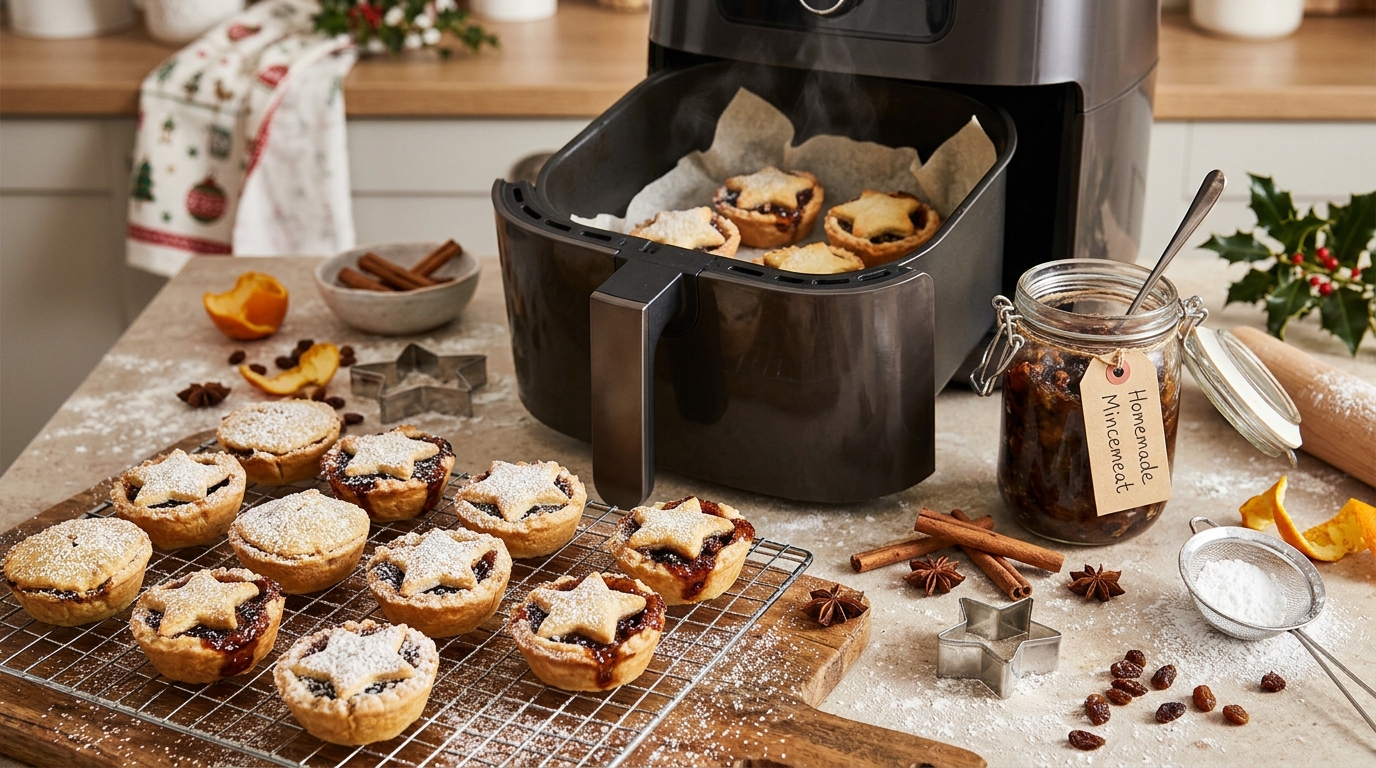
This variation is NOT the main method. The main method bakes the scones in the oven above. Use the same dough. Preheat the air fryer to 180C for 2 to 3 minutes. Space the scones at least 2cm apart so the air can move, brush them with milk and sprinkle the reserved cheese on top. Cook for 10 to 12 minutes, checking at 10 minutes, and work in batches rather than crowding the basket. Reheat leftover scones at 160C for 3 to 4 minutes.