
Halloween 2026 is on Saturday 31 October. It falls on the same date every year. People mark it with costumes, pumpkin lanterns, trick-or-treating, parties, and haunted houses. Trick-or-treating is free, and the main street events in Salem and Derry are free too.
When is Halloween 2026
Halloween falls on 31 October every year. In 2026, that date is a Saturday, so trick-or-treating and parties fall on a weekend night rather than a school night. The name comes from All Hallows' Eve, the night before All Saints' Day on 1 November.
What Halloween is
Halloween is a seasonal festival marked in many countries, most widely in the United States, Canada, Ireland, and the United Kingdom, and in growing form in Australia, New Zealand, and parts of Europe. Halloween traditions today mix costumes, candy, pumpkin lanterns, parties, and haunted houses. Children go door to door for treats. Adults host parties, visit haunted houses, and watch scary films. Shops sell costumes, decorations, and candy from September onward.
Where Halloween came from
Halloween grew from two strands: Samhain, a Gaelic festival marking the end of summer, and All Hallows' Eve, the night before All Saints' Day. Samhain was a festival of the Celts of ancient Ireland. It marked the start of the winter half of the year, around 1 November. People believed the souls of the dead returned to visit their homes, lit bonfires on hilltops to relight their hearth fires for winter, and sometimes wore masks and disguises to avoid being recognised by ghosts. Read the Britannica guide to where Halloween came from for how Samhain and All Saints' Day meet in the modern holiday.
In the 7th century, Pope Boniface IV set what became All Saints' Day on 13 May. In the 8th century, Pope Gregory III dedicated a chapel in St Peter's, Rome, on 1 November in honour of all saints, and the day was kept on that date after. The night before became All Hallows' Eve, later shortened to Halloween. How much of Samhain survives in Halloween is debated by historians. Some customs may have carried over, while others may come from the Christian observance itself.
Two later customs fed into the modern night. In medieval England, poor people went door to door on All Souls' Day asking for soul cakes, small cakes given in return for prayers for a household's dead. This was called souling. In Ireland and Scotland, children in costume performed a song, poem, or joke in return for food or coins. This was called guising. Irish and Scottish immigrants carried these customs to North America in the 19th century, where they merged into trick-or-treating. The phrase "trick or treat" first appeared in Canadian newspapers in the 1920s.
Pumpkin lanterns came from turnips. Irish folk tales told of Stingy Jack, a trickster left to wander with only a burning coal inside a hollowed-out turnip to light his way. Irish and Scottish families carved faces into turnips and set them near doors to frighten away wandering spirits. Irish immigrants in North America found pumpkins larger, softer, and easier to carve, and the pumpkin lantern took over.
Halloween vs Day of the Dead
Halloween is often confused with Dia de los Muertos, or Day of the Dead, because the two fall days apart and both use imagery tied to death. They are not the same tradition. Day of the Dead is a Mexican observance held on 1 and 2 November. Families welcome deceased loved ones home with altars called ofrendas, marigolds, and the favourite foods of the dead. Halloween grew from Celtic and Christian European traditions centred on warding off spirits, not welcoming them home.
What happens on the night
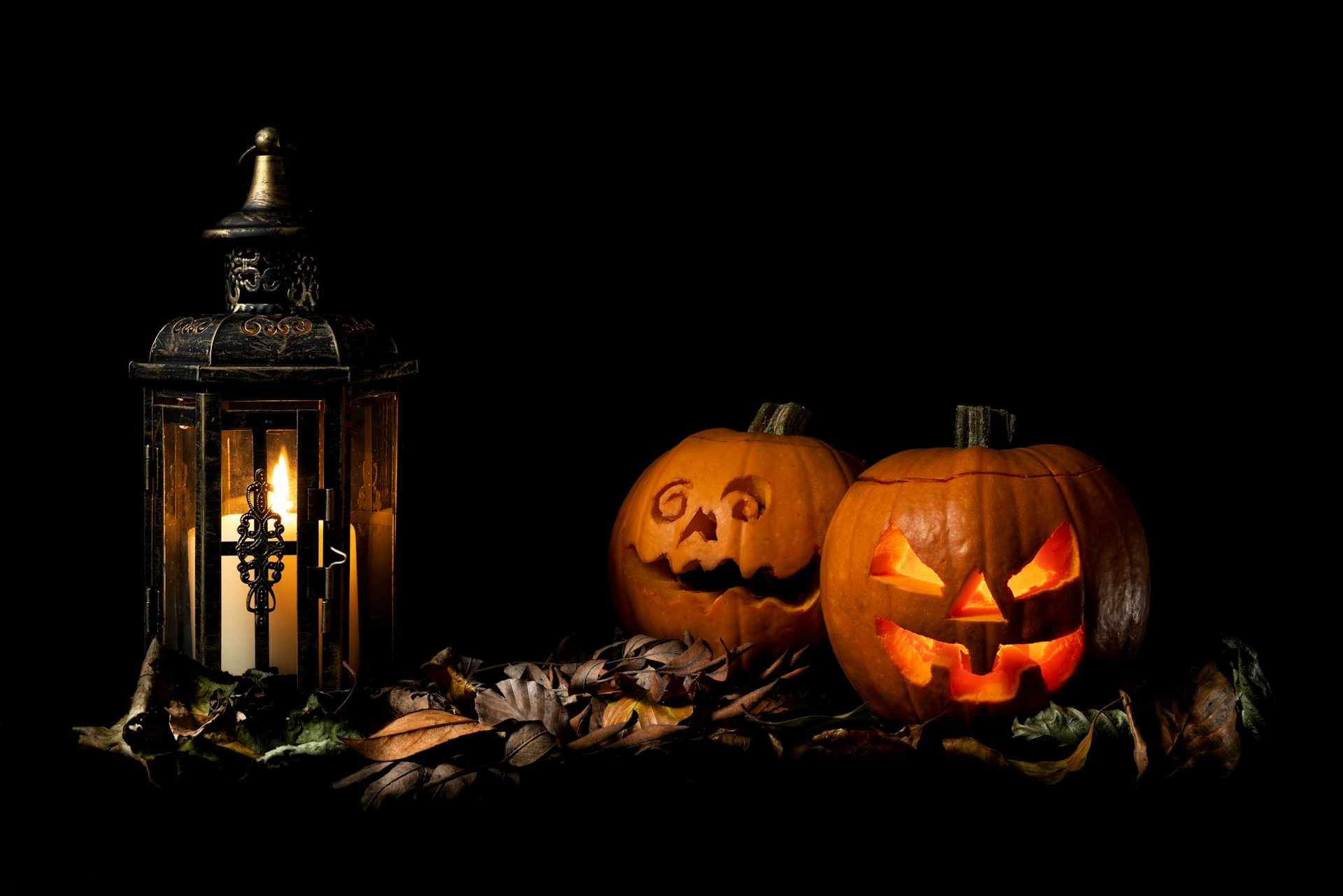
Trick or treating is the main event for children. Children in costume knock on doors and ask for treats, and houses taking part leave a porch light on. A porch light off means the house is not taking part. Halloween costumes range from witches and ghosts to film characters and jokes. Pumpkin carving is the other centrepiece: families cut faces into pumpkins and set a light inside. Many homes also decorate yards with skeletons, webs, and lights, and many towns run parties, trails, and haunted houses.
Spending in the United States
Halloween is one of the largest seasonal retail events in the United States. The National Retail Federation's 2026 survey, run with Prosper Insights and Analytics, finds spending is expected to reach $13.5 billion this year, up from $13.1 billion in 2025. Shoppers plan to spend an average of $115.14 each, close to $114.45 last year, and 74% plan to celebrate. See the NRF Halloween 2026 spending survey for the full figures. These are survey plans, not final sales.
| What shoppers plan to buy | Expected 2026 spending |
|---|---|
| Costumes | $4.4 billion (71% of shoppers) |
| Decorations | $4.3 billion (78% of shoppers) |
| Candy | $4.1 billion (96% of shoppers) |
| Greeting cards | $0.8 billion (42% of shoppers) |
Nearly half of shoppers, 49%, began shopping in September or earlier, up from 34% a decade ago. If prices run higher than expected, about a third of shoppers plan to compare prices and a quarter plan to look for coupons or sales.
Where to mark Halloween in 2026
Salem in Massachusetts runs Haunted Happenings through the whole month of October. The Grand Parade opens the month on Thursday 1 October at 6:30pm. The Howl-o-ween Pet Parade follows on Saturday 10 October at 10:30am. Salem Night Faire fills Pioneer Village on the Fridays and Saturdays of 16-17 and 23-24 October, 5pm to 10pm. The month closes with a Halloween Night Finale and Drone Show on Saturday 31 October at 10pm. Many Salem events are free to watch, while tours and shows are ticketed.
Derry in Northern Ireland holds its Halloween festival from 28 October to 1 November 2026, its 40th anniversary year. Awakening the Walled City runs 28-30 October from about 6pm to 9pm. The Carnival Parade steps off on 31 October at about 7pm, with fireworks at about 8:15pm. Main events are free. One section of the City Walls needs a free timed ticket. Check the Derry City and Strabane Council Derry Halloween listing for the final programme before you travel.
Staying safe on the night
Halloween safety comes down to being seen, staying with your group, and checking treats. Walk on sidewalks, and if there is no sidewalk, walk facing traffic. Carry a torch or glow stick, and add reflective tape to costumes. Use face paint instead of masks, which block sight. Check all treats at home before eating, and throw out anything opened or unwrapped. Children under 12 should stay with an adult. Never enter a stranger's home, and never take a lift from someone you do not know.
- Cross streets at corners and crosswalks. Walk, do not run.
- Keep costumes short enough to walk in, and wear shoes that fit.
- Use a torch or glow stick inside a pumpkin instead of a candle.
- Drivers: slow down in residential streets between 5:30pm and 9:30pm, and watch for children at crossings.
Visiting tips
- Book stays early for Salem and Derry. Both fill up for the festival week.
- If you go to a ticketed haunted house, book ahead. Popular slots sell out.
- Carry cash for small stalls and street food, and check local opening hours before you go.
- If you have asthma or a breathing condition, note that fog machines and bonfire smoke can irritate airways.
Halloween sits at the start of the autumn season. See the full list of seasonal festivals in this category, or go back to the World Festival and Holiday Calendar.