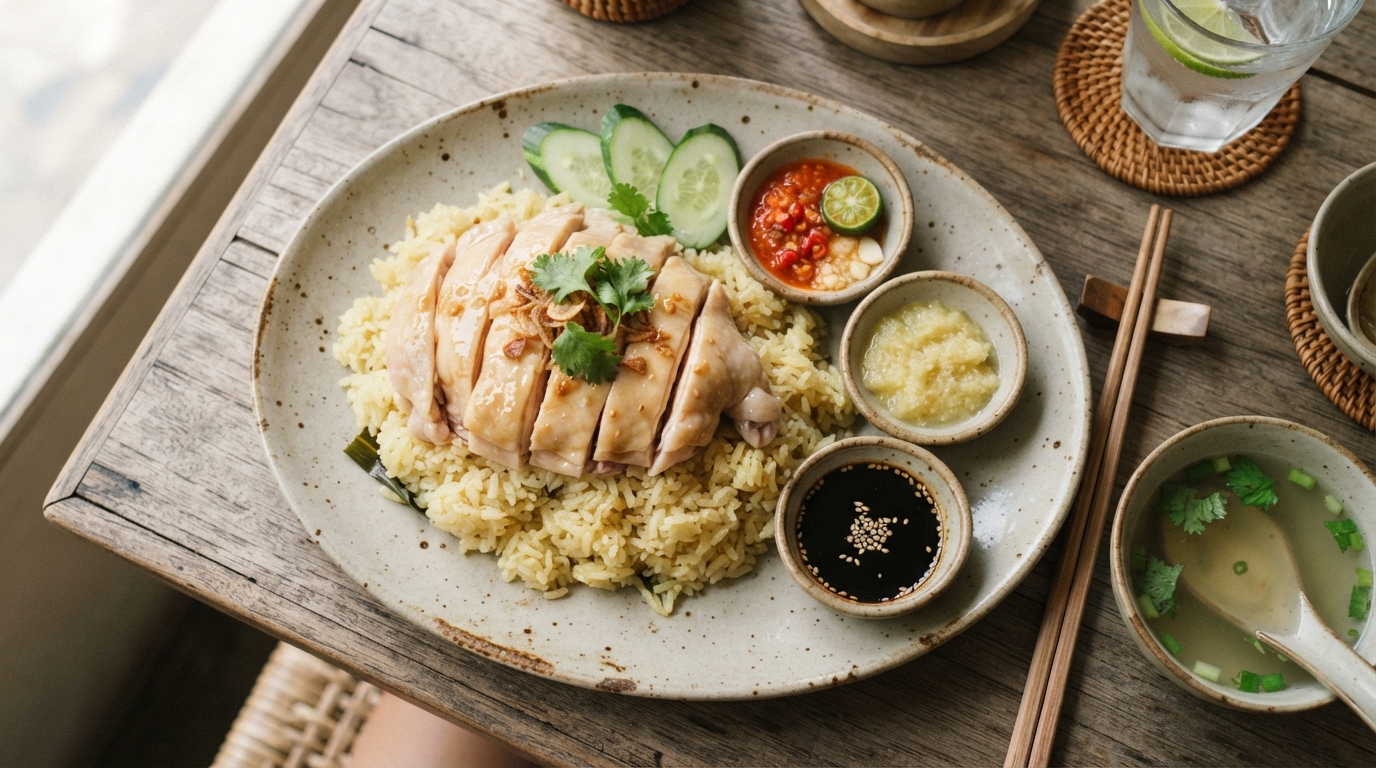
Thai fried rice is not Chinese fried rice with fish sauce swapped in. The two dishes share a technique and a pan, but the flavor profile is entirely different. Thai fried rice uses fish sauce and soy sauce together, jasmine rice specifically, Thai basil for a peppery, anise-forward finish, and a cooking approach that prioritizes wok breath over everything else.
What is Thai fried rice?
It's day-old jasmine rice stir-fried at extremely high heat with egg, protein, aromatics, and a simple fish sauce and soy sauce seasoning. The rice grains stay separate, each one slightly toasted and coated in the seasoning rather than steamed back to softness. The egg scrambles directly in the wok and folds through the rice in irregular, soft pieces. Thai basil goes in last, off or near the end of the heat, so it wilts without turning black and bitter.
Where does Thai fried rice come from?
Thailand, where it's called khao phat and appears on virtually every restaurant menu in the country. It's everyday food, the kind of dish that Thai home cooks make in 10 minutes from leftover rice. The street version cooked over a gas burner cranked to maximum is the benchmark. At home, the closest you can get to that is a screaming hot wok or cast iron pan, one or two servings at a time, and moving fast.
Why does fried rice require day-old rice?
Freshly cooked rice has too much moisture. The steam in the grains turns the rice soft and clumpy the moment it hits a hot pan, producing a sticky, mushy result that's closer to rice porridge than fried rice. Day-old rice that's been refrigerated overnight has lost surface moisture and the grains have dried slightly and firmed up. They separate in the pan, toast in the oil, and absorb the seasoning without softening back to mush.
What makes Thai fried rice taste different from other fried rice styles?
Fish sauce is the primary difference. It adds a deep, savory, fermented umami that soy sauce alone doesn't produce. The combination of fish sauce and thin soy sauce together gives Thai fried rice its distinctive savory depth. Thai basil adds a peppery, slightly anise-scented finish that no other herb replicates. And the cooking is faster and hotter than most home cooks expect, which creates the slightly smoky, charred quality called wok hei that defines street-cooked Thai fried rice.
The protein is flexible. Chicken, shrimp, pork, crab, or no protein at all. What doesn't change is the rice, the seasoning, the egg, and the heat.