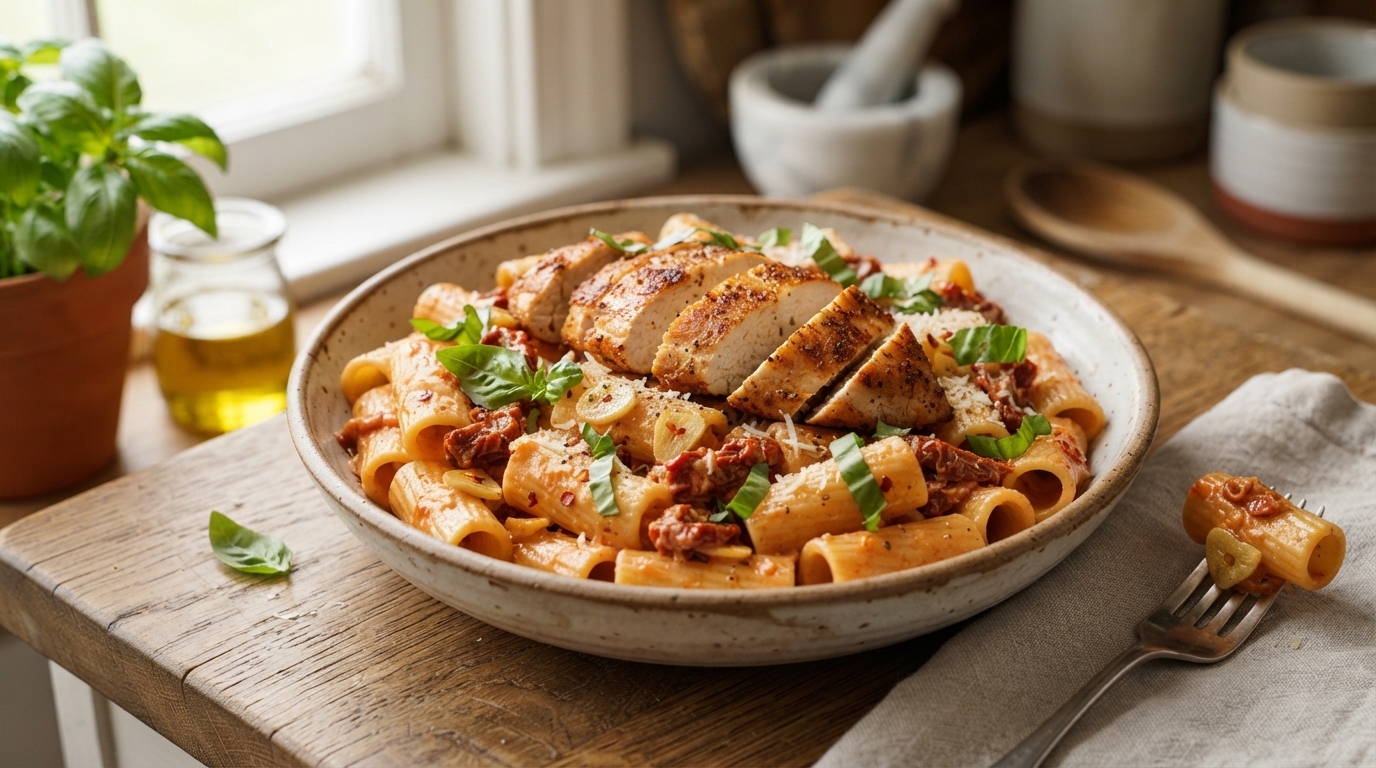
Chicken Parmigiana is a breaded, pan-fried chicken cutlet topped with marinara sauce and melted mozzarella, finished under the broiler until the cheese is golden and bubbling. It's an Italian-American dish, not Italian. You won't find it in Italy the way Americans know it. It came from Southern Italian immigrants in the early 20th century who adapted their eggplant parmigiana using the chicken they found more readily available in the United States.
What makes a great chicken parmigiana? Three things done correctly: a thin, evenly breaded cutlet fried to a deep golden crust, a marinara with enough body to sit on the chicken without making it soggy, and cheese applied in the right ratio so it melts completely without drowning the cutlet underneath.
The cutlet needs to be thin. 1cm or just under. Pound it even. Thick cutlets take longer to cook through, which means the breading overcooks and turns dark before the center is done. Thin cutlets sear in 3 to 4 minutes per side, stay juicy, and hold their crust when the sauce goes on.
Why does the crust go soggy? Two reasons. The marinara is too wet and soaks straight through the breading. Or the chicken goes into the oven immediately after saucing without any resting time. Let the fried cutlets sit on a wire rack for 2 minutes before sauce goes on. That brief rest firms the crust slightly and gives it a better chance against the moisture of the sauce.
The cheese layer is mozzarella first, a small amount of Parmesan on top. Mozzarella melts and stretches. Parmesan browns and adds a savory, nutty crust. Both together give you a cheese layer that looks and tastes like something worth eating rather than a flat white pool.
Breading order: flour, egg wash, seasoned panko. Panko creates a lighter, crispier crust than fine breadcrumbs. Season the panko directly, not just the flour layer. Every layer of the breading should taste like something.